
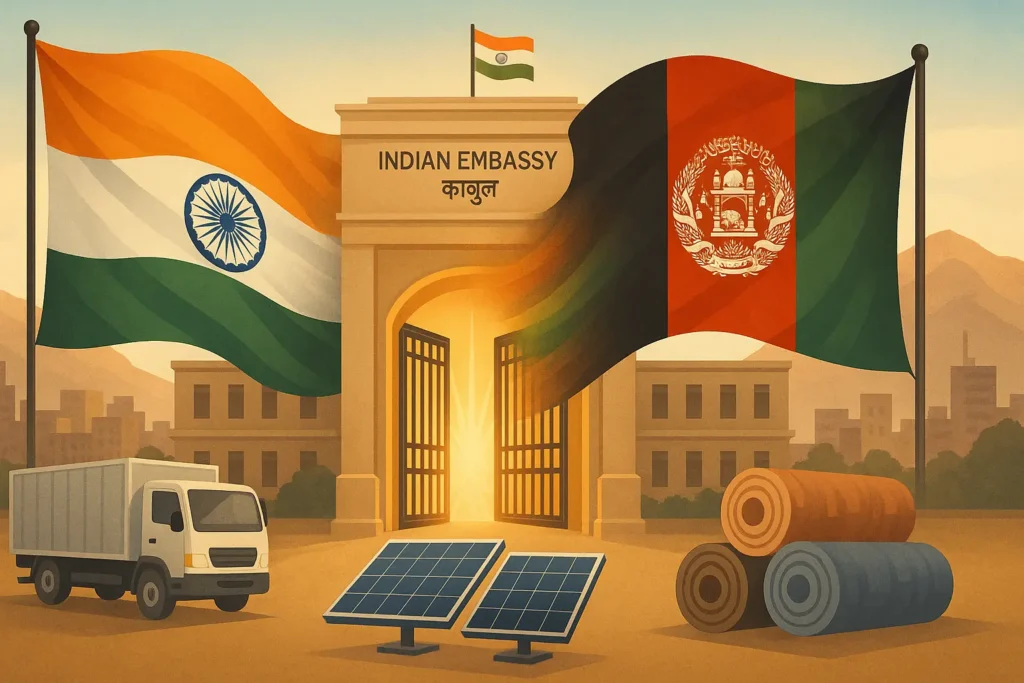
India has officially announced the reopening of its embassy in Kabul, a move that marks a major shift in how New Delhi engages with Afghanistan under Taliban rule. External Affairs Minister S. Jaishankar confirmed that India will upgrade its existing “technical mission” to a full-fledged embassy, signaling a new phase of diplomatic presence in the war-torn nation.
But what does this reopening actually mean? Let’s break it down.
You may also like to read:DGFT Temporarily Relaxes Inspection Certificate Requirement for Rice Exports to Non-EU European Countries
What Does Reopening the Embassy Really Mean?
When India shut down its Kabul embassy in 2021 after the Taliban takeover, it lost its direct diplomatic channel to Afghanistan. In place of the embassy, a technical mission was set up in 2022 — focused mainly on humanitarian aid, overseeing development projects, and providing limited consular support.
Now, by reopening the full embassy, India is doing three key things:
- Restoring Diplomatic Presence: Indian diplomats will once again operate in Kabul at a full scale — handling visas, trade issues, cultural exchange, and political dialogue.
- Enhancing Economic & Business Engagement: Indian businesses, investors, and exporters will now have an official platform to resolve disputes, negotiate trade deals, and seek regulatory assistance.
- Building Strategic Confidence: It signals to Afghan authorities, international partners, and Indian industries that New Delhi is serious about long-term engagement — even without formally recognizing the Taliban government.
In short: it’s not just a symbolic move; it’s a practical doorway for business, trade, and investment to function more smoothly.
Implications for India–Afghanistan Business Ties
Afghanistan has always been a natural partner for India, and the reopening of the embassy could bring multiple benefits:
1. Easier Trade & Market Access
With embassy officials on ground, Indian exporters of textiles, pharmaceuticals, machinery, and agro products will have better support in logistics, paperwork, and dispute resolution.
2. New Trade Corridors
India may now push for smoother trade through Chabahar Port in Iran, bypassing the Pakistan route. This could be a game-changer for MSMEs looking to export or import.
3. Big Scope in Reconstruction
Afghanistan needs hospitals, schools, housing, power supply, and roads. This is a massive opportunity for Indian MSMEs in construction, solar energy, water treatment, modular housing, and more.
4. Services & Knowledge Transfer
Indian MSMEs in education, IT, healthcare, and consulting can expand into Afghanistan through training programs, telemedicine, and skill-building initiatives.
5. Mineral Imports
Afghanistan is rich in minerals like lithium and copper. This creates a supply chain opportunity for Indian MSMEs engaged in electronics, EV components, and renewable energy sectors.
Benefits for Indian MSMEs
The embassy reopening is not just a diplomatic headline — it’s a green light for small businesses to think about Afghanistan as a potential market.
- Textile & Handicraft exporters → Access Afghan buyers directly
- Agro & food processing MSMEs → Supply food products & machinery
- Solar & renewable MSMEs → Participate in energy projects
- Logistics providers → Gain from expanded trade routes
- Service-based startups → Offer IT, healthcare, and educational solutions
Of course, risks like political instability, weak banking systems, and international sanctions remain. But with embassy support, Indian MSMEs now have an official safety net to operate with greater confidence.
The Bigger Picture
India reopening its Kabul embassy is not about recognising the Taliban; rather, it’s about protecting Indian interests, supporting Afghan people, and creating pathways for business growth. For MSMEs, this is a chance to explore a new frontier market where early movers may benefit the most.
Authentic Sources Used
- Economic Times – India upgrades Mission in Kabul to full Embassy, expands cooperation
- Reuters – India to reopen its embassy in Kabul
- Times of India – Upgrading technical mission: Jaishankar meets Afghan FM
- Indian Express – Jaishankar meets Afghanistan FM, announces upgrade