
On December 31, something remarkable happened in India’s food delivery ecosystem.
While the country celebrated New Year’s Eve at home, at parties, and in small gatherings — food delivery platforms were racing through their busiest night ever.
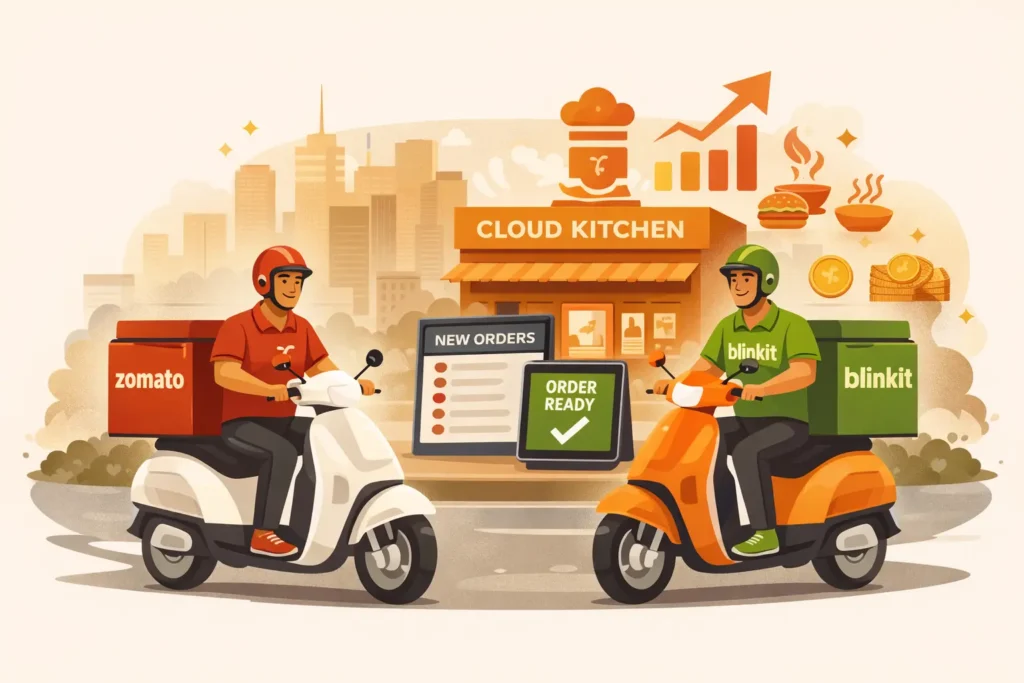
Together, Zomato & Blinkit delivered a record 75 lakh orders in a single day.
Not just a number.
Not just a festival spike.
Not just another “New Year rush story”.
This moment reveals something much bigger —
how India is rapidly moving toward a delivery-first food culture, and why this shift has deep implications for cloud kitchens, food startups, and delivery-only brands.
Let’s break down what this milestone really means — and what the future looks like for cloud kitchens in India.
You may also like to read: Blinkit Zomato December 31 Orders: India’s 10-Minute Delivery Moment, Labour Reforms & Lessons for Businesses
A Milestone That Signals More Than Celebration Demand
The fact that millions of orders were delivered in one day — across metros, tier-2 cities and rapidly urbanising towns — shows that food delivery has evolved from:
❌ occasional convenience
into
✔ a mainstream lifestyle behaviour
Peak-time delivery isn’t just about special occasions anymore.
It suggests:
- people are celebrating more at home
- gatherings are becoming delivery-centric
- digital consumption habits are deepening
- food discovery happens on apps first
And right behind these platforms are thousands of cloud kitchens powering that order volume.
For them — this isn’t just a busy night.
It’s a glimpse into their future growth environment.
What This Means for Cloud Kitchens in India
Cloud kitchens are designed for exactly this kind of world:
- delivery-heavy ordering
- app-first customer behaviour
- meal-time spikes
- surge-driven capacity utilisation
Here’s how this milestone connects directly to the cloud kitchen ecosystem.
1️⃣ Delivery Demand in India Is Becoming Structural — Not Seasonal
Earlier, demand spikes were linked to:
- weekends
- festivals
- events
- celebrations
Now, the trend is shifting toward:
✔ frequent ordering
✔ higher comfort with online meals
✔ food as an on-demand service
For cloud kitchens, this means:
💡 revenue no longer depends only on festive rush —
daily demand cycles are deepening.
That stabilises:
- kitchen utilisation
- menu planning
- staffing decisions
- inventory forecasting
Cloud kitchens are increasingly operating like data-driven delivery businesses, not just food outlets.
2️⃣ Platform-Driven Surge = Opportunity for Scalable Delivery Brands
When platforms experience massive order spikes, who benefits the most?
👉 Delivery-optimised brands
👉 Multi-brand cloud kitchens
👉 Kitchens with efficient workflows
Because they can:
✔ process high-volume orders
✔ run multiple cuisine brands
✔ adjust prep windows
✔ leverage app-based visibility boosts
Cloud kitchens that understand platform algorithms —
menu ranking, ratings impact, fulfillment time —
naturally scale faster during these surge moments.
3️⃣ The Rise of Home-Centric Celebrations
One of the biggest cultural shifts this milestone reveals is:
🎉 Celebrations are increasingly happening at home.
Which means:
- larger group food orders
- multiple-cuisine combinations
- family-size combos
- late-night ordering windows
This environment favours:
✔ combo-focused menus
✔ multi-brand kitchens
✔ cuisine-specific niche brands
Cloud kitchens that design menus for:
- sharing
- convenience
- value bundles
…create stronger repeat demand.
4️⃣ Operational Readiness Is Now a Competitive Advantage
Handling large-scale surge demand requires:
- standardised prep processes
- reliable cooking workflows
- disciplined packaging systems
- staff coordination readiness
Cloud kitchens that invest in:
✔ training
✔ SOPs
✔ hygiene systems
✔ time benchmarking
…outperform kitchens that treat operations casually.
The future belongs to process-led kitchens, not improvisational ones.
5️⃣ Platform Dependency Also Brings Business Risks
The same surge also revealed ecosystem realities:
- delivery workforce challenges
- rising commissions
- algorithm dependency
- discoverability pressure
For entrepreneurs, this is a reminder:
💡 owning direct customers is as important as scaling on platforms.
Balancing:
- platform-driven sales
with - brand-driven repeat customers
…creates long-term sustainability.
Key Lessons for Cloud Kitchen Entrepreneurs
Here are meaningful takeaways for founders, operators and aspirants.
✔ Build Delivery-First Menus
Choose dishes that:
- travel well
- retain texture
- maintain temperature
- minimise spillage risk
Delivery experience = brand experience.
✔ Invest in Process — Not Just Recipes
Cloud kitchens that grow successfully focus on:
- workflow design
- prep batching
- time consistency
- packaging standards
Operational discipline beats improvisation.
✔ Use Data — Don’t Just Chase Orders
Analyse:
- peak time windows
- high-margin items
- repeat order behaviour
- city-based cuisine demand
Data-mature kitchens scale smarter.
✔ Diversify Discovery Channels
Don’t stay 100% dependent on platforms.
Build:
- WhatsApp repeat customer groups
- Google Business presence
- local community partnerships
Owning customers → improves unit economics.
What This Record Moment Tells Us About the Future
The Zomato & Blinkit’s Record 75 Lakh Orders milestone is not just a delivery success story.
It signals a structural shift in India’s food economy.
The future of food in India will be:
✔ delivery-heavy
✔ convenience-led
✔ app-first
✔ brand-driven
✔ cloud-kitchen powered
Cloud kitchens won’t replace restaurants —
but they will increasingly become the growth engine of the industry.
For entrepreneurs, the message is clear:
📌 the opportunity is real
📌 but success requires discipline
📌 and strong operational thinking
Cloud kitchens are no longer just a trend —
they are becoming a core pillar of India’s evolving food ecosystem.
📚 Sources & References
(Use these as clickable links in your post)
Economic Times — Record Order Coverage
https://m.economictimes.com/tech/technology/food-delivery-q-comm-firms-handle-record-orders-despite-rider-strike/articleshow/126289753.cms
Economic Times — Platform Order Insights
https://m.economictimes.com/tech/startups/zomato-blinkit-deliver-record-high-of-75-lakh-orders-on-december-31-deepinder-goyal/articleshow/126286254.cms
The Statesman — Delivery Workforce Context
https://www.thestatesman.com/india/swiggy-zomato-blinkit-zepto-amazon-facebook-strike-31st-december-delivery-workers-1503533285.html
(You may format them as bullets in your article.)
👤 About the Author
Tabrez writes about MSMEs, startups, entrepreneurship trends and emerging digital business models in India. Through BusinessZindagi, he turns market developments and real-world business shifts into practical insights, relatable stories and learning resources for small business owners and aspiring entrepreneurs.
⚠️ Disclaimer
This article is intended for educational and informational purposes only. The data, statistics and news references mentioned here are based on publicly available reports at the time of writing. Actual delivery volumes, business performance and platform operations may vary over time.
Readers should verify information independently and seek professional or business advisory support before making investment or strategic decisions.
Some portions of this article may have been structured or researched with the assistance of AI tools such as ChatGPT, while the final interpretation, analysis and editorial judgement belong to the author.