
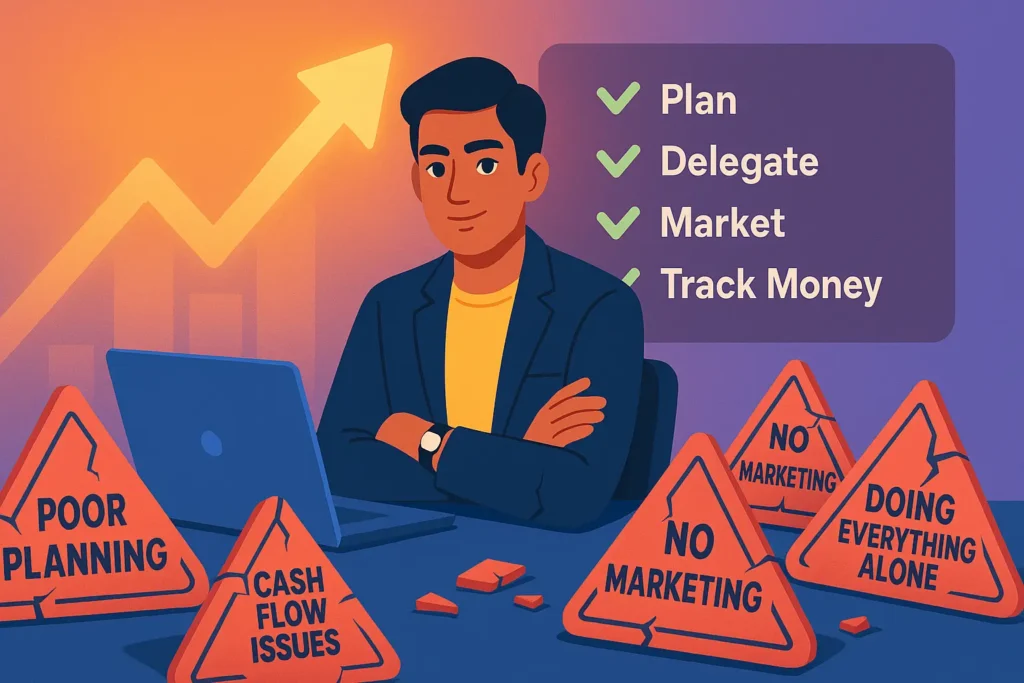
Starting a business is exciting—but these common mistakes can waste your money, time and energy before your business gets a real chance to grow.
Starting your first business is exciting.
You have an idea. You see an opportunity. You are ready to become your own boss.
But many new entrepreneurs don’t fail because they lack passion or hard work.
They struggle because they make a few expensive mistakes before properly understanding their customers, money and market.
The good news? Most of these mistakes can be avoided.
Here are 5 costly mistakes new entrepreneurs often make when starting their first business—and what you can do differently.
❌ Mistake #1: Falling in Love With Your Idea Before Talking to Customers
One of the biggest mistakes new entrepreneurs make is assuming:
“My idea is good, so people will definitely buy it.”
Unfortunately, a good idea does not automatically mean a successful business.
Before investing heavily, talk to the people who may actually become your customers.
Ask yourself:
- Who exactly is my customer?
- What problem am I solving?
- How are customers solving this problem today?
- Why would they choose my product or service?
- How much are they willing to pay?
💡 A Simple Rule:
Don’t spend months building something before checking whether people actually want it.
Talk to potential customers first. Test your idea on a small scale. Learn from their feedback.
⚡ Quick new Entrepreneurs Reality Check
Before investing serious money, answer these questions honestly:
☐ Have I spoken to at least 10 potential customers?
☐ Do I clearly understand the problem I am solving?
☐ Do I know who my first customers could be?
☐ Do I know what competitors are offering?
☐ Do I know whether customers are willing to pay?
😬 Checked fewer than 3?
Don’t panic.
But you may need to spend more time understanding your market before spending more money.
❌ Mistake #2: Spending Too Much Before Making Your First Sale
A new business can quickly become expensive.
New entrepreneurs often spend heavily on:
- Fancy offices
- Expensive furniture
- Premium websites
- Large inventories
- Unnecessary software
- Expensive branding
- Equipment they don’t immediately need
The problem?
The business has spent money—but has not yet proved that customers will buy.
💡 A Better Approach:
New entrepreneurs Start Small. Test Early. Spend Carefully.
Try to get real customer feedback and, where possible, your first paying customer before making major investments.
You don’t always need a perfect business setup to start.
Sometimes you need:
✔ A clear offer
✔ A customer
✔ A way to deliver value
✔ A simple system to collect payment
Your business can improve as it grows.
❌ Mistake #3: Confusing Revenue With Profit
This is one of the most dangerous mistakes for a new entrepreneur.
Imagine your business sells products worth ₹10 lakh.
That does not mean you earned ₹10 lakh.
You may still need to pay for:
- Product costs
- Salaries
- Rent
- Transport
- Marketing
- Loan interest
- Packaging
- Technology
- Taxes
- Other business expenses
💰 The Most Important Question:
After paying all my business costs, how much money does my business actually keep?
A business can have impressive sales and still struggle with cash flow.
That is why every entrepreneur should understand:
Revenue ≠ Profit
Profit ≠ Cash in the Bank
Keep track of your income, expenses and loan obligations from the beginning.
🔎 Before Taking Another Loan
Use the BusinessZindagi Business Debt Health Calculator to get an indicative view of your business debt pressure, repayment capacity and financial health.
❌ Mistake #4: Waiting for Customers Instead of Building a Sales System
Many entrepreneurs spend most of their time improving their product.
But they forget one important question:
Who will actually buy it?
A great product without customers is still not a successful business.
Don’t simply wait for people to discover your business.
Start building a simple sales system.
You can begin with:
✔ Talking directly to potential customers
✔ Asking existing contacts for referrals
✔ Using WhatsApp professionally
✔ Following up with interested customers
✔ Creating professional quotations
✔ Building an online presence
✔ Tracking customer enquiries
💡 Remember:
Your first customers are unlikely to appear automatically. You usually have to go and find them.
📄 Make Your Business Look More Professional
When a potential customer asks for your price, avoid sending a confusing message with random numbers.
A professional quotation can help you clearly present:
- Products or services
- Quantity
- Price
- Taxes
- Discounts
- Payment terms
👉 Try the BusinessZindagi Free Quote Generator
Create professional business quotations and organise your pricing more clearly before sending an offer to a potential customer.
❌ Mistake #5: Trying to Do Everything Alone
A new entrepreneur often becomes:
😂 CEO
😂 Salesperson
😂 Accountant
😂 Marketing Manager
😂 Customer Support
😂 Operations Manager
😂 Delivery Person
😂 Problem Solver
All at the same time.
Doing everything yourself may be necessary in the beginning—but trying to do everything forever can slow your business down.
💡 The Better Approach:
You don’t need to immediately hire a large team.
Instead, gradually build:
- Simple systems
- Checklists
- Templates
- Digital tools
- Reliable suppliers
- Professional advisors
- A small support network
Focus your time on the work where you create the most value.
🚀 The First 90 Days: What Should a New Entrepreneur Focus On?
Starting a business can feel overwhelming.
Instead of trying to do everything at once, focus on the basics.
📅 First 30 Days: Understand Your Customer
Focus on:
✔ Customer problems
✔ Market research
✔ Competitors
✔ Pricing
✔ Testing your business idea
Your goal is simple:
Understand what customers actually need.
📅 Days 31–60: Get Your First Paying Customers
Now focus on sales.
Talk to potential customers.
Send quotations.
Follow up.
Improve your offer based on feedback.
Your goal:
Get real customers—not just likes, compliments or opinions.
📅 Days 61–90: Improve What Is Working
Once you start getting customers, look closely at:
- What customers are buying
- Which products are profitable
- Where your leads come from
- Which expenses are unnecessary
- What customers complain about
- What you can improve
Your goal:
Do more of what works—and stop wasting money on what doesn’t.
⚠️ One More Mistake: Taking Debt Without Understanding the Risk
Business loans can help you grow.
But borrowing money without understanding repayment pressure can create serious problems.
Before taking a new loan, ask:
- Can my business comfortably pay the EMI?
- What happens if sales fall?
- How much debt do I already have?
- Will this loan generate enough additional income?
- Do I have enough cash flow for unexpected expenses?
💰 Check Your Business Debt Health
Use the BusinessZindagi Debt Health Calculator to analyse your existing debt, repayment pressure and financial capacity before making another borrowing decision.
The Biggest Lesson for New Entrepreneurs
You don’t need to know everything before starting.
But you should be willing to learn quickly.
Successful entrepreneurs don’t avoid every mistake.
They:
✔ Test before investing heavily
✔ Listen to customers
✔ Watch their money carefully
✔ Focus on sales
✔ Learn from mistakes
✔ Improve continuously
Remember:
A successful business is rarely built perfectly on the first attempt.
The goal is not to make zero mistakes.
The goal is to avoid the mistakes that can seriously damage your business.
Start small.
Learn fast.
Watch your money.
Listen to your customers.
And keep improving.
🔗 Useful BusinessZindagi Tools
💰 Business Debt Health Calculator
Check your business debt pressure, repayment capacity and overall financial health before taking additional borrowing.
📄 Free Quote Generator
Create professional business quotations for customers and present your prices, products and commercial terms clearly.
🏦 CGTMSE Fee Calculator
Estimate CGTMSE guarantee coverage and Annual Guarantee Fee scenarios for eligible MSME borrowing.
❓ Frequently Asked Questions
What is the biggest mistake new entrepreneurs make?
One of the biggest mistakes is investing heavily in a business idea before properly understanding whether customers actually need and are willing to pay for the product or service.
Should I quit my job immediately to start a business?
That depends on your financial situation, business model and personal responsibilities. Many entrepreneurs first test their idea and understand customer demand before making major financial decisions.
How much money should I invest in my first business?
There is no single answer. Start by understanding the minimum amount required to test your idea and begin serving customers. Avoid unnecessary spending before validating demand.
Why do new businesses struggle with cash flow?
A business may generate sales but still face cash-flow problems because of expenses, delayed customer payments, inventory costs, loan repayments and other financial obligations.
Should a new entrepreneur take a business loan?
A loan can help finance a business opportunity, but repayment obligations should be carefully evaluated. Consider your existing debt, expected cash flow and ability to repay if business conditions change.
📌 Disclaimer
AI-Assisted Content: This article may be prepared with AI assistance and editorial review.
Editorial Disclaimer: This article is provided for general business education and informational purposes.
Financial Disclaimer: BusinessZindagi does not provide personalised financial, legal or investment advice. Consider consulting qualified professionals before making important financial or business decisions.
📚 Authentic Sources & References
- Ministry of MSME, Government of India
👉 https://msme.gov.in - Startup India Official Portal
👉 https://www.startupindia.gov.in - Harvard Business Review – Entrepreneurship Insights
👉 https://hbr.org - Investopedia – Business & Finance Basics
👉 https://www.investopedia.com
✍️ About the Author
BusinessZindagi shares practical, experience-based content for entrepreneurs, MSMEs, exporters, and small business owners in India.
Our mission is simple: simplify business, reduce mistakes, and help founders grow smarter in the digital age.
⚠️ Disclaimer
This article is written for informational and educational purposes only and reflects general business experience and opinions. It does not constitute legal, financial, or professional advice. Business outcomes may vary based on individual circumstances. Readers are advised to do their own research and consult professionals before making any business decisions. BusinessZindagi is not responsible for any loss or outcome resulting from the use of this information.