
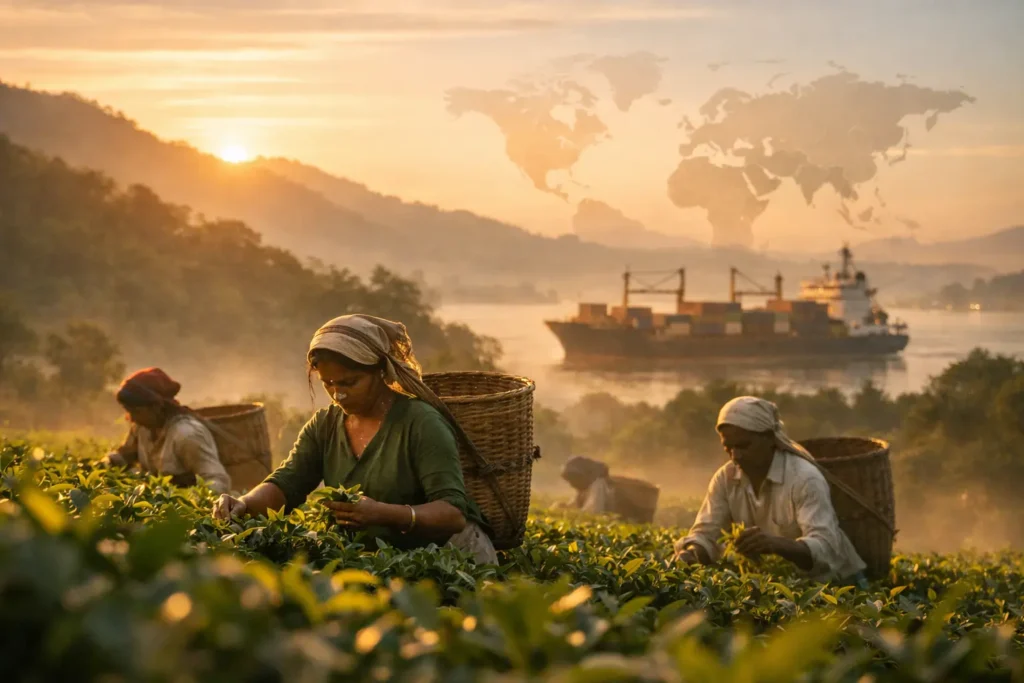
The escalating US–Iran war and the rising tensions across West Asia have created fresh anxiety for India’s tea industry, particularly for producers of Assam orthodox black tea.
For decades, the Middle East has been one of the most important export markets for Indian tea. Countries such as Iran, the United Arab Emirates, Iraq, and Saudi Arabia together account for a large portion of India’s tea shipments.
At the moment, the new season of orthodox tea production in Assam is yet to begin. Tea estates are waiting for proper rainfall and the start of the harvesting cycle. While this means there is no immediate production pressure, exporters are closely watching global developments.
The reason is simple: if geopolitical tensions worsen just as the new tea season begins, the export outlook for Assam orthodox tea could face serious uncertainty.
related article: Tea Exports to Iran: How Assam’s Orthodox Tea Rose, Fell, and Why the Next Season Is Critical
US–Iran War: A Strong tea Export Story That Could Face Disruption.
India’s tea exports have shown strong performance in recent years.
In 2025, India exported about 280 million kilograms of tea, one of the highest levels recorded in recent years.
A significant portion of this demand came from West Asian markets, which imported nearly 122 million kilograms of Indian tea during the year.
Some key importing countries included:
- Iraq – about 52.59 million kg
- United Arab Emirates – about 50.71 million kg
- Iran – about 11.25 million kg
- Saudi Arabia – about 7.94 million kg
These figures clearly show how important the Middle East has become for India’s tea exporters.
Why Iran Loves Assam Orthodox Tea
Iran has long been one of the most loyal buyers of Assam orthodox tea.
Consumers in Iran prefer strong, bright, and brisk black tea, and Assam tea perfectly matches that taste preference. Among the different varieties, Assam orthodox second flush tea is particularly popular.
This tea, harvested during late spring and early summer, is known for its:
- rich malty flavour
- deep amber colour
- strong aroma
Industry estimates suggest that nearly 50 percent of Assam’s orthodox tea production is consumed in Iran, highlighting how important this market is for the region’s tea economy.
Last year also saw healthy demand from Iranian buyers, which helped support better prices for orthodox tea in Indian auctions.
US–Iran War:The Timing Problem: The New tea production Season About to Start
One reason the industry is concerned about the US–Iran war and tea export from India is the timing.
The Assam tea season is about to begin. Once rainfall starts and plucking begins in full swing, production volumes rise quickly.
If export markets suddenly become unstable during this period, several problems could emerge:
- excess supply in auctions
- falling prices for orthodox tea
- slower export orders
- financial stress for tea gardens and exporters
Industry observers say the situation is still evolving, but exporters are watching developments very closely.
The Bigger Risk of US–Iran War: Impact on tea export to GCC Countries
While Iran itself is an important buyer of indian black tea, the larger concern is the potential disruption of tea exports to GCC countries.
India exports significant volumes of tea to the Gulf region, including:
- Saudi Arabia
- United Arab Emirates
- Kuwait
- Qatar
- Oman
- Bahrain
Many shipments also pass through major regional trading hubs such as Dubai.
If tensions escalate in the region, exporters could face several challenges:
- shipping disruptions in the Persian Gulf
- higher freight costs
- rising cargo insurance premiums
- delays in payment settlements
This means the conflict could impact not only exports to Iran but also the wider Middle East tea market, which is extremely important for India.
What Could Happen to Tea Prices
If the conflict continues and exports slow down, one possible outcome could be pressure on orthodox tea prices in India.
Here’s why.
Orthodox tea is largely an export-driven product. If major international buyers temporarily reduce purchases, the supply may remain within the domestic market.
This could lead to:
- oversupply at auction centres
- lower prices for orthodox tea
- slower sales for exporters
Industry bodies have warned that if the Middle East market weakens, prices of premium orthodox tea could see a correction.
Why This Matters for Assam
For Assam, tea is not just a beverage—it is a major economic pillar.
The state produces more than half of India’s total tea output, supporting thousands of tea gardens and millions of workers.
Orthodox tea production has also been encouraged in recent years because it earns better export prices compared to CTC tea.
If geopolitical tensions disrupt exports, the impact could be felt across:
- tea estates
- small tea growers
- factories
- exporters
- auction markets
This is why industry stakeholders in Assam are hoping that the geopolitical situation stabilizes quickly.
The Road Ahead for Indian Tea Exporters
Despite the concerns, there is still optimism within the tea industry.
Global demand for quality black tea remains strong, and Assam tea continues to enjoy a strong reputation in international markets.
However, the US–Iran war and tea export from India is a reminder that global trade is closely linked to geopolitics.
For the Assam tea industry, the coming months will be critical. If stability returns to West Asia, exports could continue growing. But if tensions escalate further, exporters may have to navigate a challenging season.
Authentic Sources and References
Tea Board of India Export Statistics
https://www.teaboard.gov.in
Tea export trade reports and market insights
https://www.business-standard.com
Assam tea industry concerns regarding Iran conflict
https://assamtribune.com
Indian tea export news and updates
https://timesofindia.indiatimes.com
About the Author
Tabrez Khan
Founder and Editor, BusinessZindagi.com
Tabrez Khan writes about entrepreneurship, MSME growth, trade, and business opportunities in India. Through BusinessZindagi, he focuses on delivering practical insights, real-world business lessons, and economic developments that affect entrepreneurs and small business owners.
AI Transparency Disclaimer
This article was prepared with the assistance of artificial intelligence. The information used in this article was first gathered from credible news reports, industry data, and publicly available sources. AI tools were then used to help organize, refine, and present the information in a clearer and more meaningful way for readers.
Frequently Asked Questions (FAQ)
How does the US–Iran war affect tea export from India?
The conflict can disrupt shipping routes, increase logistics costs, and create payment uncertainties for exporters. Since Iran and nearby countries are major tea buyers, the war can slow down Indian tea exports.
Why is Iran important for Assam orthodox tea?
Iran is one of the largest consumers of Assam orthodox tea. Many Iranian consumers prefer strong black tea, which makes Assam tea particularly popular.
Which Middle East countries import Indian tea?
Major Middle East buyers include Iraq, UAE, Iran, Saudi Arabia, Kuwait, and Oman. These countries collectively import a large share of India’s tea exports.
Has the Assam tea season started?
The new tea season in Assam typically begins once sufficient rainfall arrives. Currently, full-scale production is yet to start, giving exporters time to monitor global market conditions.
Could the conflict affect tea prices in India?
Yes. If exports to the Middle East slow down, excess supply could remain in the domestic market, potentially leading to lower prices for orthodox tea.