
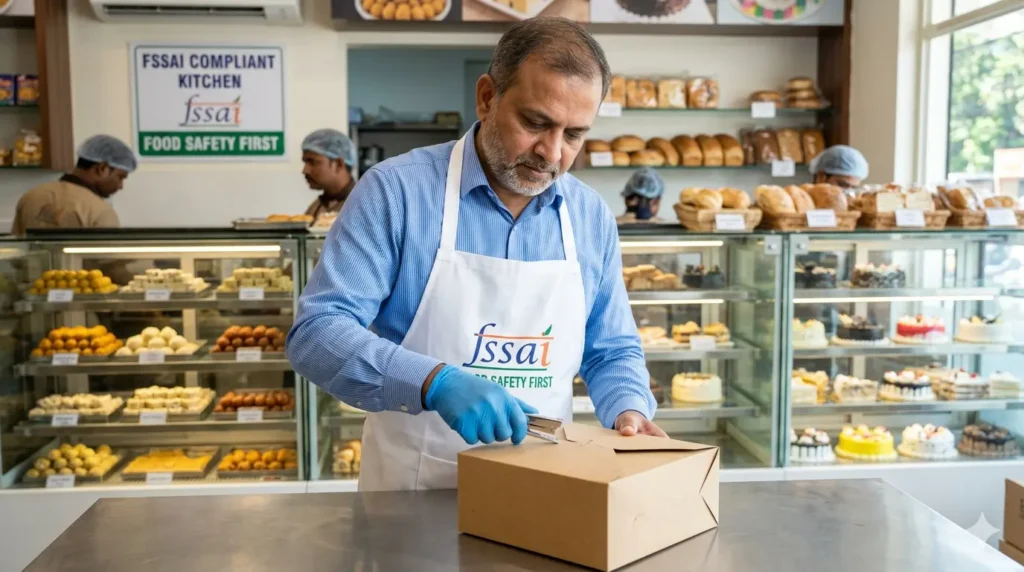
A tiny metallic pin may seem insignificant, but for a food business it can become a major safety risk, customer complaint, legal issue and reputation disaster.
In a significant move to strengthen food safety, the Food Safety and Standards Authority of India (FSSAI) has directed all Food Business Operators (FBOs) to immediately discontinue the use of metallic pins, staple pins, wires and similar materials for sealing, fastening or securing food products and food packaging.
For bakery owners, sweet shop operators, snack manufacturers, caterers, cloud kitchens and takeaway food businesses, this advisory is not just another compliance update—it is a reminder that customer safety must always come first.
Related article: FSSAI Central License 2025: Do You Really Need It for Your Food Business or Export?”
FSSAI Metallic Pin Ban: What Exactly Has FSSAI Announced ?
On 12 June 2026, FSSAI issued an advisory directing food businesses to stop using metallic pins, staple pins and wires in food products and packaging materials with immediate effect. The regulator noted that such materials are being used in decorative cakes, food packets, cake boxes, sweet boxes, snack pouches and takeaway food parcels. Several incidents have reportedly been observed where metallic pins were found embedded in food items or attached to food packaging, creating a serious safety hazard for consumers.
The advisory warns that consumers may accidentally ingest these metallic objects, leading to injuries and other adverse health consequences. Non-compliance can attract action under the Food Safety and Standards Act, 2006.
Which Businesses Are Most Affected by FSSAI Metallic Pin Ban?
Although the advisory applies to all food businesses, the following sectors are likely to be most affected:
- Bakeries
- Cake manufacturers
- Sweet shops
- Snack manufacturers
- Cloud kitchens
- Restaurants offering takeaway services
- Caterers
- Food parcel services
- Small home-based food businesses
Many small businesses still use staple pins or metallic wires because they are inexpensive and easily available. However, what appears to be a low-cost solution can become a high-cost mistake.
Why Is FSSAI Concerned About Metallic Pins?
Imagine a customer biting into a cake and accidentally swallowing a metallic pin hidden beneath a decorative element.
The consequences can include:
- Cuts and injuries in the mouth
- Damage to the digestive tract
- Medical emergencies
- Consumer complaints
- Social media backlash
- Legal liabilities
- Loss of customer trust
In today’s digital world, a single photo shared online can damage a brand’s reputation much faster than any regulatory penalty.
FSSAI Metallic Pin Ban: Is This the First Time FSSAI Has Acted Against Metallic Pins?
No.
Many food business owners believe this is a completely new rule. However, the reality is slightly different.
The Earlier Position
FSSAI had previously expressed concerns regarding the use of staple pins in food packaging and has consistently promoted safer food-contact practices through its packaging and food safety framework.
The regulator’s broader packaging regulations already require businesses to use safe and suitable food-contact materials that do not create contamination risks. Food safety has always been the core objective of these regulations.
What Makes the 2026 FSSAI Metallic Pin Ban Advisory Different?
The latest advisory is stronger and more direct.
Earlier discussions largely focused on avoiding unsafe packaging practices. The June 2026 advisory specifically identifies metallic pins, staple pins and wires as a significant food safety hazard and explicitly directs food businesses to stop using them immediately. It also warns that non-compliance may attract penal action under the Food Safety and Standards Act.
In simple words:
Earlier: General emphasis on safe packaging.
Now: Clear instruction to immediately discontinue the use of metallic pins and wires in food products and packaging.
That makes the current advisory much harder for businesses to ignore.
Common Packaging Mistakes Small Food Businesses Make
Many food MSMEs unknowingly create safety risks through packaging practices such as:
- Using staple pins to seal snack packets
- Using metal wires around food parcels
- Securing cake decorations with pins
- Stapling bills directly onto food packages
- Using makeshift fastening methods during delivery
These practices may save a few rupees but expose businesses to much larger risks.
What Alternatives Can Food Businesses Use to comply with FSSAI Metallic Pin Ban ?
Fortunately, safe alternatives are widely available.
For Snack Packets
- Heat sealing machines
- Food-grade adhesive seals
- Tamper-evident seals
For Cake Boxes
- Lock-tab packaging
- Food-grade stickers
- Self-locking cardboard designs
For Sweet Boxes
- Adhesive labels
- Security seals
- Interlocking box structures
For Takeaway Meals
- Tamper-proof packaging
- Paper seals
- Food-safe tape solutions
Many of these alternatives not only improve safety but also enhance brand presentation.
How This Affects Small MSMEs Financially
Some business owners may worry about increased packaging costs.
However, consider the alternative:
- Customer injury claims
- Product recalls
- Food safety penalties
- Brand damage
- Negative online reviews
When viewed from a risk-management perspective, safer packaging is often cheaper than dealing with a single serious complaint.
A Simple Compliance Checklist for Food Businesses
Ask yourself these questions:
✅ Do we attach bills with metallic staples?
✅ Are decorative cakes secured using metallic objects?
✅ Are takeaway parcels fastened using wires or pins?
✅ Have we trained staff about the new advisory?
✅ Have we switched to food-safe alternatives?
If any answer is “No,” immediate corrective action is advisable.
The Bigger Lesson for Entrepreneurs
The most successful businesses are rarely built on shortcuts.
Customers may never notice premium ingredients, advanced machinery or backend processes. But they immediately notice a safety issue.
The latest FSSAI advisory is about more than metallic pins. It is a reminder that trust is built through attention to detail.
For a food MSME, every package that reaches a customer is a reflection of the brand. Safe packaging is not just compliance—it is customer care, risk management and long-term business growth.
Final Thoughts
The FSSAI Metallic Pin Ban may appear to be a small regulatory update, but its implications are significant. Food businesses that proactively adopt safer packaging methods will not only avoid compliance issues but also strengthen customer confidence.
In a competitive market where reputation matters more than ever, replacing a staple pin with a safer alternative could be one of the simplest business improvements you make this year.
FAQs
Has FSSAI completely banned metallic pins in food packaging?
Yes. FSSAI has directed food businesses to immediately discontinue the use of metallic pins, staple pins and wires for sealing, fastening or packaging food products.
Which businesses are affected?
Bakeries, sweet shops, snack manufacturers, restaurants, cloud kitchens, caterers and takeaway food operators are among the businesses affected.
Can businesses be penalized for non-compliance?
Yes. FSSAI has stated that action may be taken under the Food Safety and Standards Act, 2006 for failure to comply.
What are the best alternatives?
Heat sealing, tamper-evident seals, food-grade adhesives, lock-tab packaging and security stickers are among the safer alternatives.
Yes. In fact, this can become a very useful MSME-focused article rather than just reporting the news.
Many small businesses still use staple pins or metallic wires because they are inexpensive and easily available. However, what appears to be a low-cost solution can become a high-cost mistake.
Why Is FSSAI Concerned About Metallic Pins?
Imagine a customer biting into a cake and accidentally swallowing a metallic pin hidden beneath a decorative element.
The consequences can include:
- Cuts and injuries in the mouth
- Damage to the digestive tract
- Medical emergencies
- Consumer complaints
- Social media backlash
- Legal liabilities
- Loss of customer trust
In today’s digital world, a single photo shared online can damage a brand’s reputation much faster than any regulatory penalty.
Is This the First Time FSSAI Has Acted Against Metallic Pins?
No.
Many food business owners believe this is a completely new rule. However, the reality is slightly different.
The Earlier Position
FSSAI had previously expressed concerns regarding the use of staple pins in food packaging and has consistently promoted safer food-contact practices through its packaging and food safety framework.
The regulator’s broader packaging regulations already require businesses to use safe and suitable food-contact materials that do not create contamination risks. Food safety has always been the core objective of these regulations.
What Makes the 2026 Advisory Different?
The latest advisory is stronger and more direct.
Earlier discussions largely focused on avoiding unsafe packaging practices. The June 2026 advisory specifically identifies metallic pins, staple pins and wires as a significant food safety hazard and explicitly directs food businesses to stop using them immediately. It also warns that non-compliance may attract penal action under the Food Safety and Standards Act.
In simple words:
Earlier: General emphasis on safe packaging.
Now: Clear instruction to immediately discontinue the use of metallic pins and wires in food products and packaging.
That makes the current advisory much harder for businesses to ignore.
Common Packaging Mistakes Small Food Businesses Make
Many food MSMEs unknowingly create safety risks through packaging practices such as:
- Using staple pins to seal snack packets
- Using metal wires around food parcels
- Securing cake decorations with pins
- Stapling bills directly onto food packages
- Using makeshift fastening methods during delivery
These practices may save a few rupees but expose businesses to much larger risks.
What Alternatives Can Food Businesses Use?
Fortunately, safe alternatives are widely available.
For Snack Packets
- Heat sealing machines
- Food-grade adhesive seals
- Tamper-evident seals
For Cake Boxes
- Lock-tab packaging
- Food-grade stickers
- Self-locking cardboard designs
For Sweet Boxes
- Adhesive labels
- Security seals
- Interlocking box structures
For Takeaway Meals
- Tamper-proof packaging
- Paper seals
- Food-safe tape solutions
Many of these alternatives not only improve safety but also enhance brand presentation.
How This Affects Small MSMEs Financially
Some business owners may worry about increased packaging costs.
However, consider the alternative:
- Customer injury claims
- Product recalls
- Food safety penalties
- Brand damage
- Negative online reviews
When viewed from a risk-management perspective, safer packaging is often cheaper than dealing with a single serious complaint.
A Simple Compliance Checklist for Food Businesses
Ask yourself these questions:
✅ Do we use staple pins anywhere in our packaging?
✅ Do we attach bills with metallic staples?
✅ Are decorative cakes secured using metallic objects?
✅ Are takeaway parcels fastened using wires or pins?
✅ Have we trained staff about the new advisory?
✅ Have we switched to food-safe alternatives?
If any answer is “No,” immediate corrective action is advisable.
The Bigger Lesson for Entrepreneurs
The most successful businesses are rarely built on shortcuts.
Customers may never notice premium ingredients, advanced machinery or backend processes. But they immediately notice a safety issue.
The latest FSSAI advisory is about more than metallic pins. It is a reminder that trust is built through attention to detail.
For a food MSME, every package that reaches a customer is a reflection of the brand. Safe packaging is not just compliance—it is customer care, risk management and long-term business growth.
Final Thoughts
The FSSAI Metallic Pin Ban may appear to be a small regulatory update, but its implications are significant. Food businesses that proactively adopt safer packaging methods will not only avoid compliance issues but also strengthen customer confidence.
In a competitive market where reputation matters more than ever, replacing a staple pin with a safer alternative could be one of the simplest business improvements you make this year.
buy the best kitchen items here:
FAQs
Has FSSAI completely banned metallic pins in food packaging?
Yes. FSSAI has directed food businesses to immediately discontinue the use of metallic pins, staple pins and wires for sealing, fastening or packaging food products.
Which businesses are affected?
Bakeries, sweet shops, snack manufacturers, restaurants, cloud kitchens, caterers and takeaway food operators are among the businesses affected.
Can businesses be penalized for non-compliance?
Yes. FSSAI has stated that action may be taken under the Food Safety and Standards Act, 2006 for failure to comply.
What are the best alternatives?
Heat sealing, tamper-evident seals, food-grade adhesives, lock-tab packaging and security stickers are among the safer alternatives.
Disclosure
AI-Assisted Content Disclaimer
This article was prepared with the assistance of Artificial Intelligence (AI) based on publicly available information, official government notifications, and regulatory updates available at the time of writing. While every effort has been made to ensure accuracy, readers are advised to verify compliance requirements directly from official sources and consult qualified professionals for business-specific guidance.
Affiliate Disclosure
Some articles on BusinessZindagi.com may contain affiliate links. If a reader purchases a product or service through such links, BusinessZindagi.com may earn a commission at no additional cost to the reader. Editorial opinions remain independent, and affiliate partnerships do not influence our content, reviews, or recommendations.
About the Author
BusinessZindagi Editorial Team writes practical, easy-to-understand articles focused on MSMEs, entrepreneurship, government schemes, compliance updates and business growth opportunities for Indian entrepreneurs