
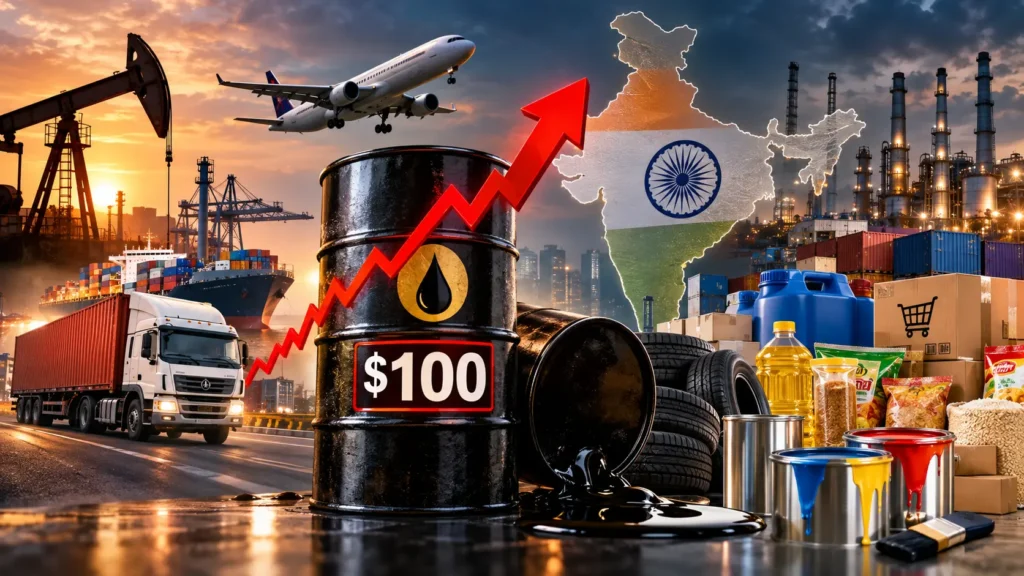
Brent crude is once again moving dangerously close to the $100-a-barrel mark—and that could become a serious concern for Indian businesses.
According to Reuters, Brent crude rose to around $99.33 per barrel on September 9, 2026, as fresh Middle East tensions raised fears of further disruptions to global oil supplies. Another Reuters market report put Brent at around $99.49, highlighting just how close the market has moved towards the psychologically important $100 level.
For India, a major crude oil importer, expensive oil can create a chain reaction:
Higher crude prices → Higher fuel and transport costs → Higher business expenses → Pressure on profits.
So, which businesses could feel the heat first?
🚛 1. Transport & Logistics Businesses
This is probably the most immediate impact.
Truck operators, courier companies, freight businesses and logistics providers depend heavily on fuel. If fuel costs rise, transporting goods becomes more expensive.
For MSMEs, this can be especially painful because they often have limited negotiating power.
The business impact:
- Higher freight bills
- More expensive deliveries
- Rising operating costs
- Pressure to increase customer prices
👉 BusinessZindagi Tip: Businesses should closely track freight costs instead of waiting until profit margins disappear.
✈️ 2. Aviation and Travel Businesses
Aviation is another major fuel-sensitive sector.
Jet fuel is a significant operating expense for airlines. Higher crude prices can increase cost pressure on airlines, which may eventually affect:
- Air ticket prices
- Cargo charges
- Travel packages
- Tourism businesses
Small travel agencies and businesses dependent on affordable air travel could also feel the indirect impact.
🏭 3. Manufacturing Businesses
Oil is not just about petrol and diesel.
Crude oil and petroleum-based products are connected to numerous industrial inputs, including chemicals, plastics, packaging and other materials.
That means manufacturers could face pressure from:
- Higher transportation costs
- More expensive raw materials
- Higher packaging costs
- Increased energy expenses
The biggest challenge?
You cannot always immediately pass higher costs to customers.
That means profit margins can shrink.
🛒 4. FMCG and Consumer Goods Businesses
From biscuits to shampoo, many everyday products travel through long supply chains before reaching customers.
Higher fuel costs can make:
- Factory transportation more expensive
- Distribution costlier
- Packaging more expensive
- Last-mile delivery more costly
Large FMCG companies may absorb some of the increase.
But smaller brands and MSMEs may have fewer options.
👉 Small businesses may eventually face a difficult choice: raise prices or accept lower margins.
🚗 5. Tyre Industry
The tyre industry is particularly sensitive to crude-linked raw materials.
Higher crude prices can increase pressure on the cost of petroleum-based inputs used in tyre manufacturing.
This could affect:
- Tyre manufacturers
- Automobile suppliers
- Transport fleet owners
- Small automotive businesses
And if tyre prices rise, the impact could eventually spread across the transport ecosystem.
🎨 6. Paint & Chemical Businesses
Many chemicals and petrochemical products are linked directly or indirectly to crude oil.
That makes paint, chemical and related manufacturing businesses vulnerable to rising input costs.
Businesses could face:
- Higher raw-material costs
- Margin pressure
- Potential price increases
- More expensive inventory
For smaller manufacturers, managing inventory and cash flow could become particularly important.
🌍 7. Small Exporters and Importers
This is where the impact can become more complicated.
Exporters could face:
- Higher inland transportation costs
- Rising container and freight expenses
- More expensive packaging and production
- Pressure on export margins
Importers could face:
- Higher shipping costs
- More expensive imported goods
- Increased working-capital requirements
There is another risk too: rising crude prices can put pressure on India’s currency, making imports potentially more expensive.
For exporters, however, currency movements can sometimes provide an advantage—but only if rising costs do not eat away those benefits.
👉 Businesses involved in international trade should regularly calculate their actual shipment cost and profit margin before confirming new orders.
What Should MSMEs Do Now?
There is no need to panic—but this is the time to become more cost-conscious.
Smart MSMEs should:
✅ Review transport and logistics costs
✅ Check which products have shrinking margins
✅ Avoid blindly absorbing every cost increase
✅ Negotiate better freight rates
✅ Improve inventory planning
✅ Recalculate export and import costs regularly
✅ Build some flexibility into pricing contracts
The biggest mistake?
Waiting until the next quarterly loss to discover that your costs have already increased.
Why $100 Oil Matters So Much for India
India imports a significant part of the crude oil it needs.
That means sustained high international crude prices can affect much more than petrol pumps.
The impact can move through the economy:
Crude Oil ↑
⬇
Fuel & Transport Costs ↑
⬇
Business Costs ↑
⬇
Product Prices ↑
⬇
Inflation Pressure ↑
⬇
Consumer Spending Pressure
Not every business will be affected equally, and the final impact will depend on how long crude prices remain elevated.
But if oil stays close to—or moves above—$100 for a prolonged period, Indian businesses may need to prepare for a more expensive operating environment.
The Bottom Line
Oil nearing $100 is not just an international market headline.
For Indian businesses, it could eventually mean higher freight bills, rising raw-material costs and shrinking profit margins.
The sectors most exposed include:
- 🚛 Transport & logistics
- ✈️ Aviation & travel
- 🏭 Manufacturing
- 🛒 FMCG businesses
- 🚗 Tyre industry
- 🎨 Paint & chemicals
- 🌍 Exporters & importers
For MSMEs, the key message is simple:
Track your costs early. Recalculate your margins. Don’t wait for higher expenses to become a business crisis.
🔗 Related BusinessZindagi Articles
🚢 High fuel costs are already changing the logistics game:
👉 Inland Waterways in India: The Smart Logistics Shift for Northeast Businesses in 2026
🌍 Are you importing or exporting?
👉 Import Export Database: Reliable Sources, Uses & Real Lessons for Traders
🚀 Looking for international buyers?
👉 DGFT Source from India: How Indian Exporters Can Find Foreign Buyers
💻 Exploring online exports?
👉 Cross-Border E-Commerce: How Small Businesses Are Expanding Into Exports
📊 Authentic Sources & References
📰 Reuters — Oil Nears $100
👉 Oil Nears $100 as Fresh Middle East Strikes Raise Supply Risks
Reuters reported that Brent crude rose to around $99.33 per barrel on September 9, 2026, amid concerns about potential supply disruptions.
📰 Reuters — Global Markets
👉 Oil Heads for $100 as Middle East Tensions Escalate
This Reuters report showed Brent moving to around $99.49 per barrel, reinforcing the growing pressure towards the $100 level.
📰 Reuters — Earlier Crude Price Surge
👉 Oil Prices Rise to Six-Week Highs on Worsening Middle East Conflict
📝 Editorial Disclosure
BusinessZindagi aims to provide useful, practical and easy-to-understand business information for entrepreneurs, MSMEs, exporters and small business owners.
This article is based on publicly available information and reports from credible sources, including Reuters. Oil prices and market conditions can change rapidly. Readers should verify the latest market data before making important financial or business decisions.
The views and analysis in this article are for general informational and educational purposes only and should not be considered financial, investment or professional business advice.
⚠️ Affiliate Disclosure
Some articles on BusinessZindagi may contain affiliate links or references to third-party products and services. If you purchase or sign up through certain links, BusinessZindagi may earn a commission at no additional cost to you.
This helps support the website and allows us to continue creating free business content and tools.
However, this article does not contain any paid promotional recommendation related to the crude oil price information discussed above.