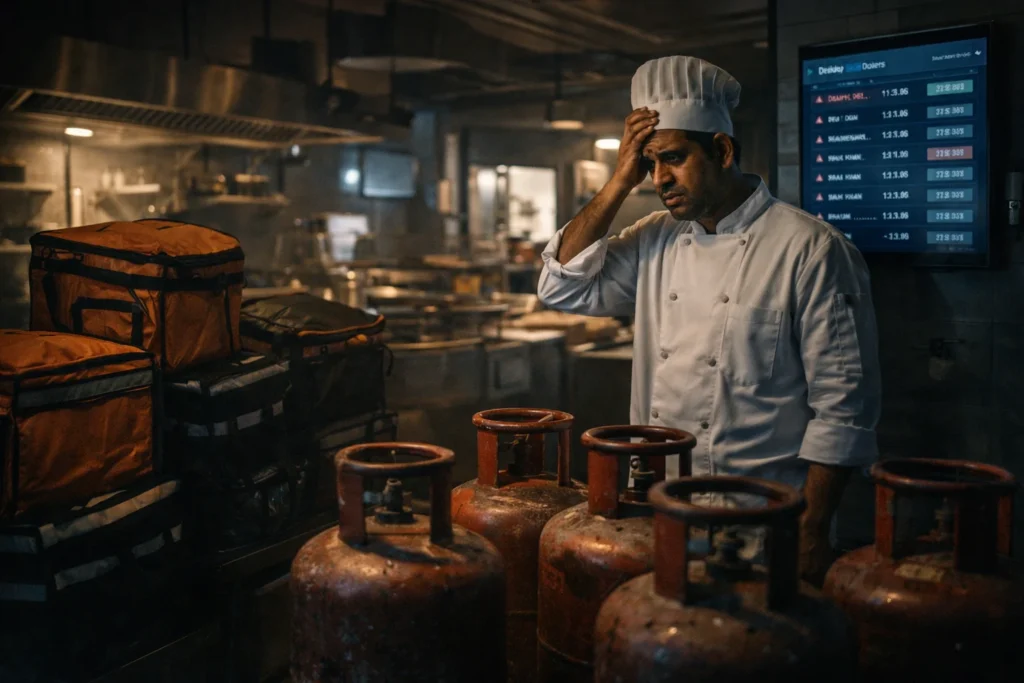
A Crisis That’s Hitting hard Behind the Scenes
From the outside, everything looks normal.
Food is still being delivered. Apps are still running. Orders are still coming in.
But inside thousands of cloud kitchens, a silent crisis is unfolding.
👉 No gas. No cooking. No business.
The ongoing commercial LPG shortage is not just increasing costs — it’s breaking the core model of cloud kitchens, one of the fastest-growing startup sectors in recent years.
What’s Really Causing This LPG Shortage?
This isn’t just a local supply issue — it’s part of a global energy disruption.
1. Global Supply Shock
iran -US war,, unfavourable shipping situation in the strait of hormuz and Geopolitical tensions in major oil-producing regions have disrupted LPG supply chains.
👉 Result:
- Reduced availability
- Higher prices
- Unpredictable supply
2. Priority Shift to Households
Governments are ensuring domestic cooking gas supply first.
👉 Which means:
- Commercial users (like cloud kitchens) get limited or delayed supply
3. Logistics Breakdown
- Import delays
- Transport cost surge
- Supply inconsistencies
👉 Together, this creates a perfect storm for businesses dependent on LPG
Why Cloud Kitchens Are Getting Hit the Hardest because of LPG shortages
Cloud kitchens look efficient on paper — but this crisis reveals their biggest weakness.
👉 They depend entirely on continuous cooking.
No dine-in. No backup revenue. No flexibility.
1. Operations Are Breaking Down
Many cloud kitchens today are:
- Running only a few hours a day
- Unable to fulfill peak demand
- Constantly waiting for cylinder supply
👉 Some are literally planning operations based on how much gas is left
2. Revenue Is Collapsing Fast
Real-world cases show shocking numbers:
👉 Daily revenue dropping from
₹25,000–₹30,000 → ₹5,000
💥 That’s not a slowdown — that’s a business shock
3. Menus Are Shrinking (And So Is Customer Interest)
To save fuel, kitchens are:
- Removing high-flame cooking dishes
- Cutting down variety
- Offering limited options
👉 Result:
- Customers lose interest
- Repeat orders drop
4. Delivery Platforms Are Also Feeling the Heat
Platforms like:
- Zomato
- Swiggy
are seeing:
- Fewer active kitchens
- Delayed deliveries
- Reduced order volumes
👉 When kitchens slow down, the entire ecosystem slows down.
5. Costs Are Rising From All Sides
Cloud kitchens are now dealing with:
- Higher LPG prices
- Expensive alternatives (electric/diesel)
- Lower efficiency
👉 And since margins are already thin — profitability is disappearing.
6. Even Big Brands Are Struggling
Large operators like:
- Jubilant FoodWorks
have already reported disruptions.
👉 If big players are affected, small cloud kitchens are under serious survival pressure.
What Smart Cloud Kitchens Are Doing to Survive
This is where things get interesting — and useful 👇
1. Moving to Hybrid Cooking Models
- LPG + electric cooking combined
- Reducing dependency on a single fuel
👉 This is becoming the new normal
2. Redesigning Menus
- Focus on low-energy dishes
- Faster cooking items
- Pre-prepared ingredients
👉 Less fuel, more efficiency
3. Operating Smarter, Not Longer
- Peak-hour focus
- Batch cooking
- Controlled order flow
👉 Survival through optimization
4. Experimenting With Electric Kitchens
- Induction stoves
- Electric ovens
👉 Not perfect, but a growing alternative
Bigger Picture: This Is More Than a Kitchen Problem
This LPG crisis is affecting:
- Cloud kitchen startups
- Delivery partners
- Food-tech investors
- Gig workers
👉 It’s a chain reaction across the entire ecosystem
The Big Lesson Most Founders Are Ignoring
Here’s the uncomfortable truth:
👉 Cloud kitchens are built for efficiency — not resilience.
They work perfectly when:
- Supply is stable
- Costs are predictable
But when disruption hits?
👉 The model struggles.
Final BusinessZindagi Insight
This crisis is a wake-up call.
Not just for cloud kitchens — but for every modern startup.
💬 The future will belong to businesses that are not just scalable, but adaptable.
For cloud kitchens, that means:
- Multi-energy systems
- Flexible menus
- Smart operations
👉 Because in 2026:
Efficiency builds growth — but resilience ensures survival.
❓ FAQs
1. Why are cloud kitchens more affected by LPG shortage?
Because they rely entirely on cooking and have no alternative revenue streams like dine-in.
2. Is this affecting food delivery apps?
Yes, platforms like Zomato and Swiggy are seeing reduced orders.
3. What are cloud kitchens doing to adapt?
Switching to electric cooking, simplifying menus, and optimizing operations.
4. Is this a temporary issue?
It depends on global supply conditions, but uncertainty may continue.
5. What is the biggest challenge right now?
Maintaining operations with limited fuel supply while keeping costs under control.
👤 About the Author
BusinessZindagi Editorial Team — Helping entrepreneurs understand real business challenges and opportunities in a fast-changing world.
⚠️ AI Disclaimer
This article is for informational purposes only. Readers should verify real-time updates from official sources.