Until recently, selling internationally was something only big corporations could afford to do. Complex logistics, high costs, and strict trade barriers kept most small entrepreneurs confined to local markets.
But in 2025, that story has changed dramatically.
Thanks to cross-border e-commerce, digital payments, and simplified export infrastructure, small businesses — especially in India — can now reach customers in every corner of the world.
From a handwoven saree seller in Varanasi to a craft brand in Jaipur or a startup in Coimbatore, the path to global markets has never been this open or affordable.
The Rise of Cross-Border E-Commerce
According to UNCTAD and Statista, global cross-border e-commerce sales are projected to exceed USD 2 trillion by 2025, representing nearly one-fourth of total e-commerce trade worldwide.
Platforms such as Amazon Global Selling, Shopify Markets, Etsy, and eBay International have simplified every step — from currency conversion to customs documentation — allowing even first-time exporters to sell internationally.
For Indian MSMEs, this shift represents more than a digital trend; it’s a gateway to global demand for Indian products — textiles, handicrafts, organic foods, leather goods, and eco-friendly innovations.
You may also like to read: MSME Insurance in India: Essential Policies Every Small Business Should Never Ignore
Why Cross-Border E-Commerce Matters for Small Businesses
1. Access to Global Buyers
Digital marketplaces give MSMEs direct access to millions of consumers abroad without relying on distributors. Even a single artisan brand can now sell globally.
2. Higher Margins and Brand Visibility
Exporting directly through digital platforms cuts out intermediaries, helping small businesses earn better margins and build an international brand identity.
3. Seamless Digital Payments
Platforms like Payoneer, Wise, Stripe, and RazorpayX provide secure, quick multi-currency payment solutions for small exporters.
4. Affordable Global Shipping
Cross-border logistics partners such as DHL GoTrade, Shiprocket X, and India Post Export Centers now make international delivery affordable — even for small-volume exporters.
5. The AI Advantage
Artificial Intelligence tools help MSMEs write multilingual listings, price products dynamically, and manage stock based on global demand patterns.
Small firms are now competing on the same digital playing field as large brands.
The India–UK CETA Agreement: New Doors for Indian MSMEs
One of the most significant trade policy milestones of 2025 is the signing of the India–UK Comprehensive Economic and Trade Agreement (CETA).
This pact is set to reduce tariffs, simplify customs, and open new export categories for Indian small businesses in sectors like textiles, food processing, handicrafts, IT services, and green technology.
How CETA Benefits Indian MSMEs:
- Zero or Reduced Tariffs: Many Indian goods entering the UK will now attract lower duties, improving price competitiveness.
- Simplified Standards: Easier regulatory compliance and mutual recognition of certifications for certain industries.
- Easier Service Access: Indian digital service providers, freelancers, and small IT firms can now serve UK clients with fewer restrictions.
- Boost for Green & Sustainable Exports: Special incentives for eco-friendly and low-carbon products — ideal for MSMEs in the sustainability space.
This agreement positions Indian MSMEs to become key suppliers in the UK’s growing demand for sustainable and affordable products, especially in sectors like organic goods, apparel, and digital services.
You may also like to read: India UK FTA (CETA): Benefits, Opportunities & Impact on Indian Exporters and MSMEs
India Post Export Initiative: Making Small Exports Cheaper
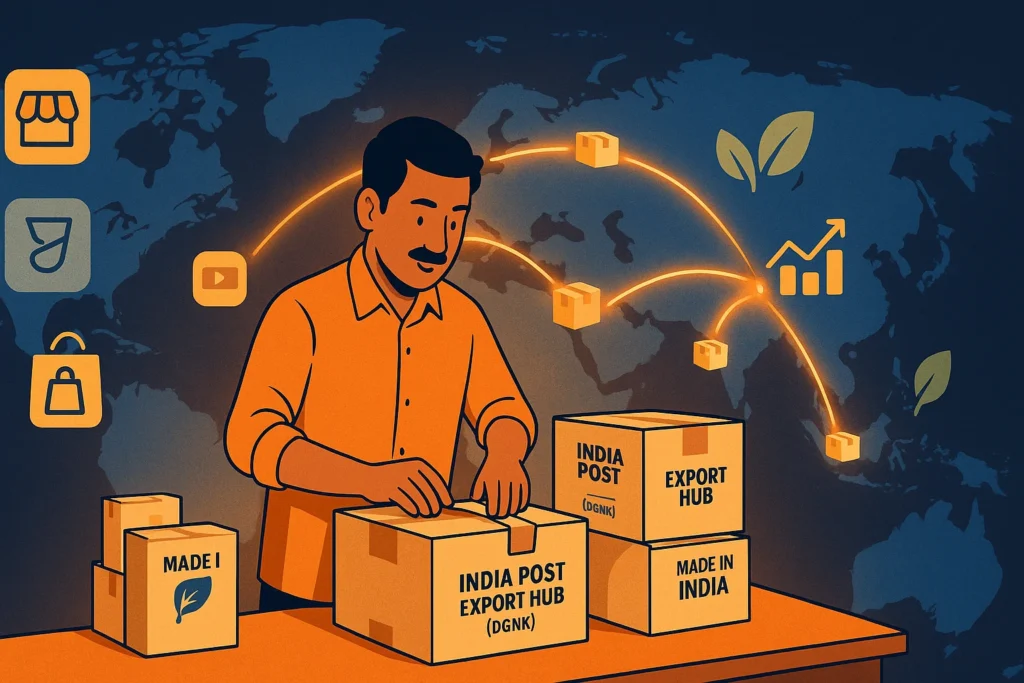
Another major enabler for small exporters is India’s Post Office Export Initiative, officially known as the “Dak Ghar Niryat Kendra” (DGNK) scheme.
This initiative by India Post and the Ministry of Commerce aims to make export logistics simple, affordable, and accessible for micro and small enterprises across the country.
Key Advantages for MSMEs:
- Low-Cost Export Option: Businesses can send export parcels (up to 30 kg) directly from post offices at rates far cheaper than private couriers.
- Customs Support at Source: DGNKs provide on-site customs clearance, packaging, and documentation support.
- Pan-India Access: Over 100 Dak Ghar Niryat Kendras already operational — especially benefiting rural and semi-urban entrepreneurs.
- Integration with E-Commerce Platforms: MSMEs selling through Amazon, Etsy, or Shopify can directly ship through India Post’s international service.
This initiative is a game changer for artisans, home-based sellers, and small-scale manufacturers — providing a low-barrier entry into international markets.
How Small Businesses Can Start Exporting Online
| Step | Action | Tools / Platforms |
|---|---|---|
| 1. Choose Your Platform | Register on platforms like Etsy, Shopify, or Amazon Global | Amazon Global Selling, Etsy |
| 2. Register as Exporter (IEC) | Apply for Import Export Code via DGFT | https://www.dgft.gov.in |
| 3. Localize Your Product Listings | Translate and adapt descriptions | Shopify Translate & Adapt, DeepL |
| 4. Set Up International Payments | Multi-currency payment gateways | Payoneer, Wise, Stripe |
| 5. Use Affordable Logistics | Send parcels via India Post Export or Shiprocket X | https://www.indiapost.gov.in |
| 6. Comply with Customs & GST Rules | Register on ICEGATE for customs filing | https://icegate.gov.in |
| 7. Promote Globally | Use Google Ads, TikTok, Pinterest, and influencer marketing | Meta Business Suite, Google Ads |
Opportunities Ahead for Indian MSMEs
With the CETA agreement, India Post Export Hubs, and a growing digital marketplace ecosystem, Indian MSMEs are at the edge of a historic export boom.
The combination of:
- simplified trade barriers,
- cheaper freight solutions,
- and growing international demand for Indian handmade, sustainable, and digital goods
makes 2025 the best year yet for small exporters to think beyond domestic markets.
Digital exports are no longer limited to big corporations — they are now a real, profitable, and achievable goal for every ambitious small business owner.
Conclusion
The world is buying — and small businesses are selling.
From cross-border e-commerce platforms to new trade agreements and postal export networks, the global stage has opened up for MSMEs like never before.
With the right digital tools, the right logistics partner, and the right mindset, your small business can go from local to global — one online order at a time.