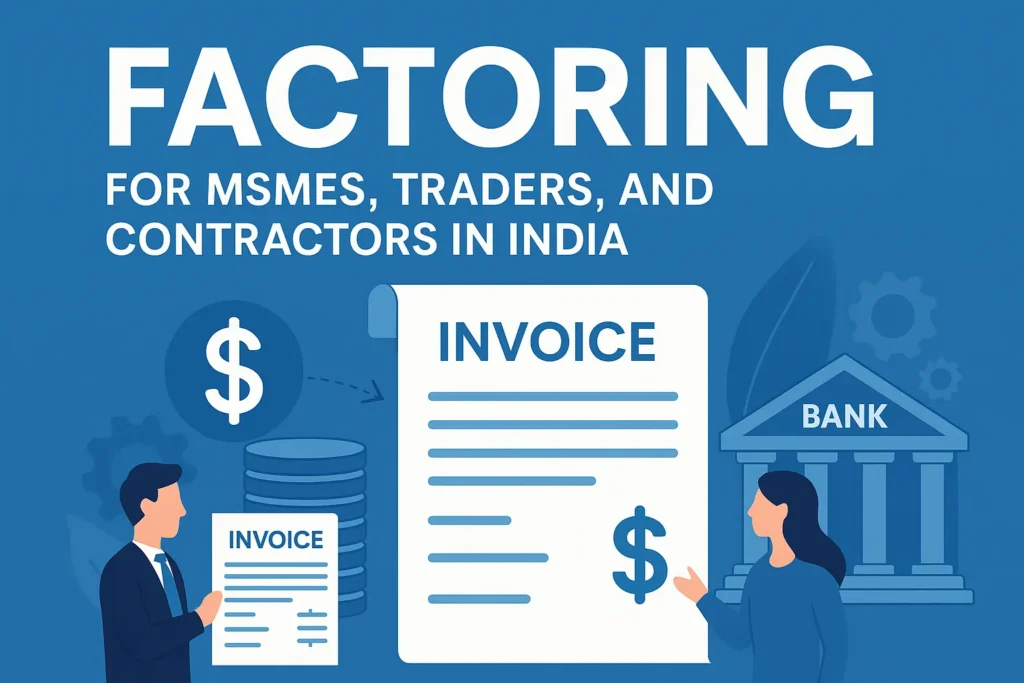
Factoring is the lifeline for many small businesses in India — whether you supply materials, trade goods, or take up contracts. Because in India, selling is easy, but getting paid on time isn’t. Factoring bridges that painful gap by turning your pending invoices into instant cash and keeping your business moving.
You deliver your goods, raise the invoice, and then wait. Sometimes 30 days, sometimes 90. Meanwhile, salaries need to be paid, new orders are waiting, and the bank balance is shrinking.
This waiting game is what kills the dreams of many honest MSMEs.
But here’s the good news — there’s a simple, smart, and legal way to turn your unpaid invoices into instant cash.
It’s called Factoring, and it’s quietly becoming one of the most powerful tools for small business growth in India.
You may also like to read: Supply Chain Finance & Factoring: Unlocking Working Capital for Indian MSMEs
What is Factoring?
Think of it as your payment accelerator.
You sell goods or services on credit. Instead of waiting months for your buyer to pay, you take that invoice to a factoring company. They pay you most of the amount — usually 80–90% — immediately. Later, when your buyer pays, the factor gives you the balance after a small fee.
No collateral. No debt. Just faster cash.
Factoring is not a loan. It’s your own money, unlocked early.
Why MSMEs Should Love it
1. It keeps your business alive and moving
Cash flow is the lifeblood of any MSME. Factoring turns your receivables into instant working capital — helping you pay suppliers, buy materials, or take new orders without waiting endlessly.
2. It frees you from chasing payments
No more awkward calls or reminders. The factoring company handles collections and credit checks, letting you focus on what really matters — growing your business.
3. It helps you scale faster
With cash in hand, you can confidently take on bigger orders, offer better credit terms to customers, and expand operations. Factoring converts growth opportunities into reality.
4. It doesn’t need property or security
Unlike bank loans, factoring is a type of asset-based lending where your invoice is the only asset. You don’t have to mortgage your home, land, or gold.
5. It works for exports too
If you export goods, export factoring ensures you get paid even if the foreign buyer delays. In non-recourse factoring, the risk of non-payment is handled by the factor — not you.
You may also like to read: TReDS in India 2025: Unlocking Instant Cash Flow for MSMEs & Startups
Factoring vs Invoice Discounting: What’s the Difference?
Many people confuse factoring with invoice discounting.
While both release funds against invoices, factoring is more comprehensive — the factoring company manages payment collection, credit protection, and record-keeping.
Invoice discounting, on the other hand, is usually just short-term funding against invoices — you still handle collections.
In short, factoring is finance + peace of mind.
The Trusted Factor Companies and Banks in India
Factoring in India has taken off after the Factoring Regulation (Amendment) Act, 2021, which allowed more NBFCs to offer this service.
Here are some of the most reliable names that have built trust among MSMEs:
SBI Global Factors Ltd.
Backed by the State Bank of India, this is one of India’s pioneers in domestic and export . Offers quick turnaround and strong credit coverage.
Canbank Factors Ltd.
A Canara Bank subsidiary providing invoice discounting and supply chain finance solutions for small businesses.
India Factoring and Finance Solutions Pvt. Ltd.
Part of FIMBank Group, this company provides customized export and domestic factoring options for MSMEs and contractors.
IFCI Factors Ltd.
A government-linked institution offering both recourse and non-recourse factoring — ideal for businesses supplying to large corporates or government projects.
TReDS Platforms – RXIL, M1xchange, and Invoicemart
These RBI-licensed digital marketplaces connect MSMEs, buyers, and banks for electronic invoice discounting. MSMEs can upload invoices and receive bids from multiple financiers — all online, all transparent.
Why India’s Factoring Usage Is Still So Low
Despite all the benefits, factoring is still underused in India.
Less than five percent of MSMEs actually use it. Why?
- Many small business owners still haven’t heard of it.
- Large buyers are often slow to confirm invoices digitally.
- MSMEs fear losing buyer relationships or appearing “desperate for cash.”
- Banks focus more on traditional secured lending.
In contrast, countries like China and the USA have deeply integrated factoring into their trade and supply chain systems. In China, it’s a default tool. In India, it’s still an opportunity waiting to be discovered.
Real Story: When Factoring Changed Everything
A small auto-parts manufacturer from Pune used to wait 60 days for payment from a leading automobile brand. The delay choked his cash flow and limited his production.
Then he joined M1xchange, an RBI-approved TReDS platform. Within three days of raising his invoice, he received 90% of the value at just a 1% fee. The steady cash flow allowed him to buy materials on time, take more orders, and double his turnover within a year.
He didn’t borrow a rupee. He simply used his invoices smartly. That’s the power of factoring.
What Needs to Change
To make factoring a mainstream tool for small businesses, India needs more awareness and participation.
Here’s what can help:
- Conduct “factoring Awareness Camps” in industrial clusters.
- Integrate factoring options into GST and GeM portals.
- Make it mandatory for large companies and PSUs to confirm invoices on TReDS.
- Offer incentives to first-time MSME users.
- Share regional-language success stories that inspire others.
When MSMEs start trusting this system, factoring will become as common as UPI or GST.
Final Thoughts
Factoring is more than a financial instrument — it’s a mindset shift.
It’s about saying, “I won’t wait for my money. I’ll make my business move faster.”
For India’s millions of MSMEs, small traders, and contractors, factoring offers a simple, digital, and stress-free way to keep business momentum strong.
It ensures payments, powers growth, and gives you something every entrepreneur needs — control over cash flow.
So the next time your buyer says, “We’ll pay next month,” remember — you can get your payment today.
Frequently Asked Questions (FAQ)
1. What is factoring in simple terms?
Factoring is a financial service that allows a business to get immediate cash by selling its invoices to a factoring company. Instead of waiting weeks or months for customers to pay, you receive most of the payment upfront, and the factor collects the money from your buyers later.
2. How factoring is different from a loan?
It is not a loan. You don’t borrow money; you simply receive early payment for sales you’ve already made. There’s no need for collateral, and it doesn’t add to your debt. It’s a smarter way to manage cash flow using your existing invoices.
3. Who can use factoring in India?
Any MSME, small trader, supplier, or contractor who sells goods or services on credit can use it. It’s especially useful for businesses supplying to large corporates, PSUs, or government departments with long payment cycles.
4. What are the benefits of factoring for MSMEs?
Factoring ensures faster payments, improves cash flow, and helps you grow your business without taking new loans. It also reduces the stress of chasing buyers and improves credit discipline in your supply chain.
5. What is the difference between recourse and non-recourse factoring?
In recourse factoring, you’re responsible if your buyer doesn’t pay the invoice.
In non-recourse factoring, also known as export factoring, the factoring company takes the risk — ideal for exporters or businesses dealing with new buyers.
6. What are TReDS platforms, and how are they connected to factoring?
TReDS (Trade Receivables Discounting System) is an RBI-approved digital platform where MSMEs can sell their invoices to multiple banks and NBFCs online. It’s a modern, transparent way of doing invoice discounting through factoring.
7. Which are the best factoring companies and banks in India?
Some of the top and most trusted names include SBI Global Factors, Canbank Factors, India Factoring and Finance Solutions, and IFCI Factors. Digital TReDS platforms like RXIL, M1xchange, and Invoicemart also enable easy access to invoice factoring.
8. How much does factoring cost?
The fees generally range between 0.8% to 2% per month, depending on the buyer’s creditworthiness and payment terms. Compared to the cost of waiting or taking short-term loans, it’s often a better deal.
9. Is factoring safe and regulated in India?
Yes. it is fully regulated by the Reserve Bank of India (RBI) under the Factoring Regulation Act. Only licensed banks and NBFCs can operate as factors or participate through RBI-approved TReDS platforms.
10. How can MSMEs start using factoring today?
You can start by registering on a TReDS platform like M1xchange, RXIL, or Invoicemart, or contact a factoring company or bank branch offering invoice discounting services.
Once your buyer approves invoices digitally, you can start receiving payments within days.
🔗 Sources & References
- SBI Factors – Factoring for MSMEs in India
- JSW One MSME – How Factoring Accelerates Cash Flow
- Drip Capital – Invoice Factoring Guide for Small Businesses
- RBI – Factoring Regulation Act & TReDS Framework
- M1xchange – TReDS Insights & Reports
- RXIL – Invoice Discounting Data & MSME Reports
✍️ About the Author
Tabrez writes about MSME finance, cash-flow tools, and digital business growth at BusinessZindagi.com — simplifying money matters so small businesses can scale with confidence.