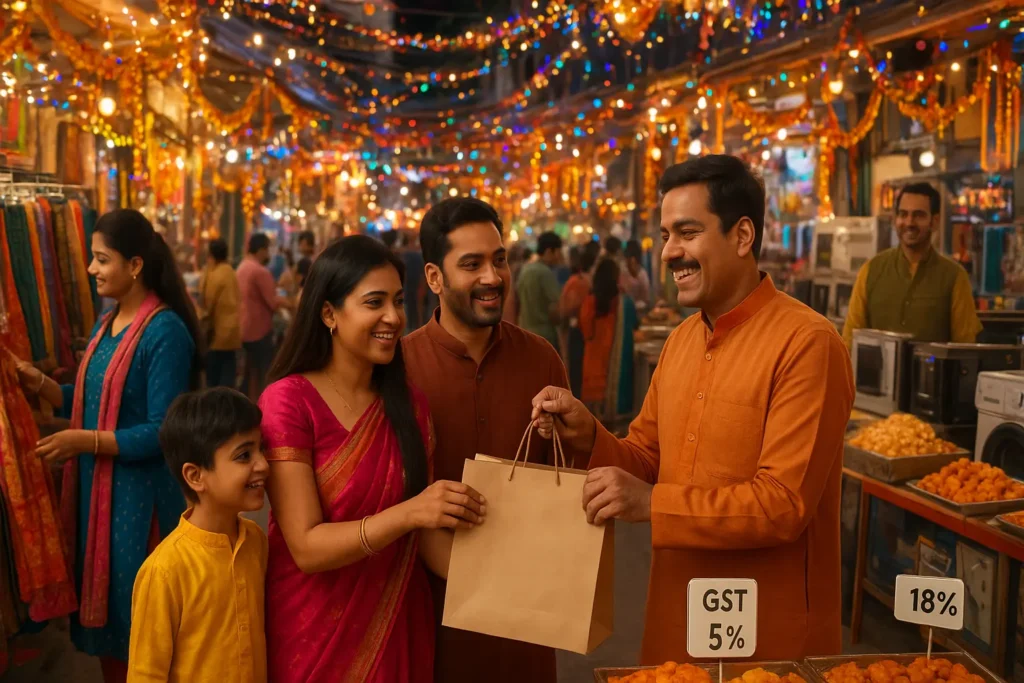
The Indian festive season just got brighter with the launch of GST 2.0 india, the Government of India’s biggest tax reform since the original GST rollout in 2017. Announced in September 2025, this new version of GST is not just a tax tweak—it’s a festive-season booster designed to put more money in the hands of consumers and simplify life for businesses.
By rationalizing GST slabs, slashing rates on everyday goods, and fixing long-standing anomalies, GST 2.0 is set to fuel demand at a time when families are shopping for Diwali, Navratri, and the wedding season. For MSMEs and small businesses, this is a golden chance to ride the festive wave and grow faster.
You may also like to read: GST Loan Explained: My MSME Experience, GST Loan Eligibility & CC Loan Comparison
GST 2.0 india in Simple Terms
- Most goods now fall under just two main slabs: 5% and 18%, making compliance easier.
- Festive favorites like chocolates, snacks, packaged foods, and small appliances now come with lower GST rates—some shifting from 12% or 18% down to 5%.
- Items like small cars, bikes up to 350cc, and certain electronics have dropped from the steep 28% slab to 18%.
- MSME-focused sectors such as textiles, handicrafts, and agricultural machinery also see reduced rates to encourage exports and rural incomes.
This streamlined approach means less confusion, fewer disputes, and more affordable products for buyers.
Festive Season Impact: Why GST 2.0 india is Perfectly Timed
The government couldn’t have picked a better moment. As consumers head out for festive shopping sprees, the reduced GST rates are already:
✨ Boosting demand – Retailers and e-commerce platforms are reporting higher-than-usual pre-Diwali sales.
✨ Lowering prices – Companies in automotive, FMCG, and durables have announced price cuts, making big-ticket buys easier.
✨ Increasing footfall – Malls, online marketplaces, and local stores are using “GST 2.0 discounts” as a marketing hook.
For families, this means more value for money. For businesses, it means faster inventory turnover and higher sales volumes.
Why GST 2.0 india is a Game-Changer for MSMEs and Small Businesses
- Simplified Tax System
Fewer slabs mean less confusion for small firms struggling with complex GST compliance. - Stronger Festive Sales
Affordable pricing leads to higher demand, directly benefiting MSMEs selling food, apparel, handicrafts, and electronics. - Better Margins & Competitiveness
Corrections in inverted duty structures reduce input costs, helping manufacturers and exporters stay competitive. - More Visibility
As large retailers advertise “GST savings,” MSMEs listed on their platforms enjoy increased reach. - Export-Friendly Opportunities
Lower rates on textiles, handicrafts, and agricultural products help MSMEs attract international buyers more easily.
Actionable Tips for MSMEs to Leverage GST 2.0 india
- Update pricing quickly to reflect reduced rates and promote them as festive discounts.
- Highlight GST savings in your ads, banners, and online listings to attract price-sensitive buyers.
- Train your team to explain the new prices and GST benefits to walk-in customers.
- Review product categories for new GST slabs and adjust your invoicing systems immediately.
- Follow up with distributors to make sure the benefit is passed on across the supply chain.
The Bigger Picture
GST 2.0 india is more than a festive-season gimmick. It’s a strategic move by the government to spur consumption, simplify taxation, and empower small businesses to compete on a larger stage. For MSMEs, this is the right time to scale up, experiment with new products, and use the festive momentum to strengthen customer loyalty.
As India gears up for Diwali lights and wedding season celebrations, GST 2.0 india has emerged as the perfect festive gift—one that benefits consumers, MSMEs, and the economy at large.
Frequently Asked Questions (FAQ) on GST 2.0
1. What is GST 2.0?
GST 2.0 is India’s revamped Goods and Services Tax system, introduced in September 2025. It simplifies the tax structure by reducing slabs, cutting rates on essential and festive goods, and fixing anomalies like inverted duty structures.
2. Which products got cheaper under GST 2.0?
Popular festive season items such as chocolates, packaged snacks, personal care goods, small cars, two-wheelers up to 350cc, and certain electronics have moved to lower GST slabs, making them more affordable.
3. How does GST 2.0 benefit MSMEs and small businesses?
It simplifies compliance, lowers input costs for manufacturers, boosts sales volumes during festivals, and increases visibility for MSMEs through promotions highlighting GST savings.
4. Is GST 2.0 only beneficial during festivals?
No. While it directly boosts festive sales, GST 2.0 also has long-term benefits—simplified taxation, lower costs for exporters, and improved competitiveness for small businesses.
5. What should MSMEs do to make the most of GST 2.0?
Update pricing to reflect reduced rates, highlight savings in promotions, train staff, and use e-commerce platforms and retail partners to showcase products with GST-linked discounts.