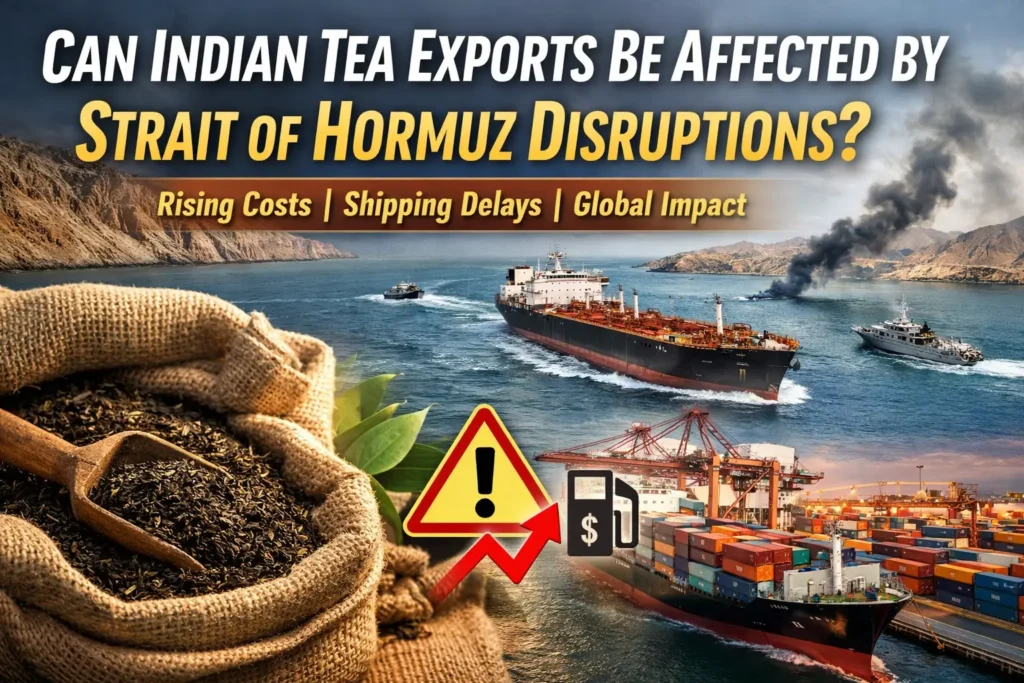
Global headlines often mention the Strait of Hormuz when oil prices rise or geopolitical tensions increase. But an important question many exporters are now asking is:
Can Indian tea exports be affected by Strait of Hormuz disruptions?
The short answer is yes — but mostly indirectly. While tea shipments do not depend on this route in the same way oil tankers do, disruptions in the region can still influence shipping costs, export planning, and profit margins for Indian tea export businesses.
Also any disruption in the middle eastern countries certainly going to impact tea exports from india to the region.
Let’s understand this in a clear and practical way, especially for exporters, traders, and MSMEs.
also read:How to Start Tea Export From India (Complete Guide 2026)
Why the Strait of Hormuz Matters to Global Trade
The Strait of Hormuz is one of the busiest maritime chokepoints in the world, connecting the Persian Gulf to international sea routes. A large share of global energy shipments passes through this narrow waterway.
Whenever tensions rise in the region, shipping companies respond by:
- Increasing safety measures
- Raising insurance premiums
- Adjusting routes or slowing vessel movement
- Charging higher freight rates
Even industries unrelated to oil can feel the impact because global shipping networks are connected.
Do Indian Tea Shipments Pass Through the Strait of Hormuz?
In most cases, Indian tea exports do not directly pass through the Strait of Hormuz.
Tea from India usually moves through ports such as:
- Kolkata / Haldia (Assam and North Indian tea)
- Kochi (South Indian tea)
- Mumbai / Nhava Sheva
However, many shipping routes serving Europe, the Middle East, and Africa operate in nearby maritime zones. When tensions rise in the Gulf region, the overall logistics environment changes.
This is where the indirect impact begins.
How Strait of Hormuz Disruptions Can Affect Indian Tea Exports
1. Higher Freight and Logistics Costs
The biggest impact for exporters is increased shipping cost.
When regional risks increase:
- Marine insurance charges rise
- Fuel costs go up
- Shipping companies raise container prices
Tea exporters working with competitive global pricing may experience pressure on profit margins.
2. Delivery Delays and Planning Challenges
Global shipping works on tight schedules. Disruption in a key trade corridor can cause:
- Delays in vessel movement
- Container shortages
- Uncertain delivery timelines
Buyers may postpone orders or negotiate pricing based on delayed supply.
3. Impact on Middle East Trading Hubs
Several Gulf countries act as major trading and re-export centers.
If uncertainty continues in the region:
- Importers may reduce inventory risk
- Payment cycles can slow
- Trade activity becomes cautious
This indirectly influences tea demand and export planning.
4. Rising Fuel Prices Affect Domestic Transportation
A hidden impact occurs within India itself.
Higher global oil prices can increase:
- Transport cost from tea gardens to ports
- Packaging and production expenses
- Warehouse and supply-chain costs
Even before export shipping begins, costs start rising.
What This Means for Tea MSMEs and Small Exporters
Large companies often have long-term freight contracts, but MSMEs may feel the pressure earlier.
Common challenges include:
- Reduced export margins
- Pricing pressure from international buyers
- Cash-flow stress during delays
- Difficulty planning future shipments
This is why understanding global logistics trends has become important for export-focused businesses.
Practical Steps Tea Exporters Can Take
Instead of worrying about global headlines, exporters can focus on smarter planning:
- Schedule shipments earlier during uncertain periods
- Compare multiple shipping options
- Diversify export markets
- Build strong coordination with freight partners
- Improve operational efficiency to absorb cost increases
Small planning improvements can help businesses stay stable even during global uncertainty.
The Bigger Business Lesson
The question — Can Indian tea exports be affected by Strait of Hormuz disruptions? — highlights a bigger reality:
Global events now influence even traditional industries like tea through logistics, energy costs, and trade psychology.
For modern exporters, global awareness is no longer optional. It is part of business strategy.
Final Conclusion
Yes, Indian tea exports may be affected by Strait of Hormuz disruptions — not because tea directly moves through the strait, but because global shipping costs, insurance rates, and fuel prices rise when the region becomes unstable.
For exporters and MSMEs, the key is not panic but preparation. Understanding global trade connections helps businesses protect margins and plan smarter.
🔹 FAQ
1. Can Strait of Hormuz disruption directly stop tea exports from India?
No. Indian tea exports usually do not pass directly through the strait, but regional shipping disruption can increase freight costs and cause delays.
2. Why does a Middle East shipping issue affect Indian tea exporters?
Because global shipping networks are interconnected. Higher risk in one major route increases insurance costs, freight rates, and delivery uncertainty worldwide.
3. Will tea prices increase if the Strait of Hormuz faces tension?
Tea prices may not rise immediately, but exporters can face higher logistics and fuel costs, which may eventually impact pricing and margins.
4. Which Indian tea exporters are most likely to feel the impact?
Exporters shipping to Europe, West Asia, and African markets may feel indirect cost pressure due to longer routes or increased freight charges.
5. How can tea MSMEs protect themselves from global shipping disruptions?
They can plan shipments earlier, diversify export markets, secure freight contracts in advance, and improve operational efficiency to manage rising costs.
6. Is this impact temporary or long-term?
It depends on how long regional tensions continue. Short disruptions mainly affect logistics, while prolonged instability can influence trade planning and pricing strategies.
AI Assistance Disclaimer
This article has been prepared using authentic information gathered from reliable global shipping and trade references. AI tools were used to assist in organizing and writing the content in a faster, clearer, and more helpful manner while maintaining a practical business-focused perspective suitable for readers of BusinessZindagi.com.