
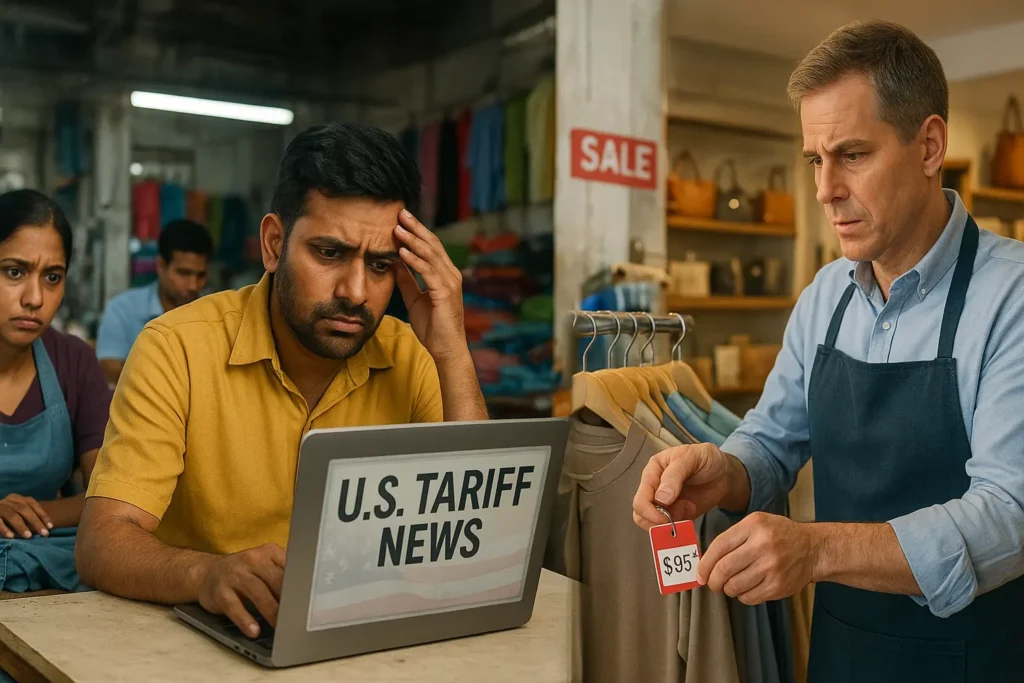
Global trade in 2025 is being reshaped by rising tariffs barriers. The recent US tariffs hikes on a wide range of imported goods have created ripple effects not only in India but also in the United States itself. While policymakers in Washington present tariffs as a way to protect domestic industries, the reality is more complex: both Indian MSMEs (micro, small, and medium enterprises) and US small businesses are feeling the pinch.
In this blog, we will explore the dual impact of tariffs hikes—first on Indian exporters, and then on the American small businesses that rely on global supply chains. We will also highlight which sectors are most seriously affected, which are moderately impacted, and how Indian MSMEs are showing remarkable resilience.
You may also like to read: US Tariff Hike: A Heavy Blow to Indian Textile MSMEs
Understanding Tariffs and US Tariff Policy
A tariff is a tax imposed by a government on imported goods. The intention behind tariffs is often to protect local industries by making foreign products more expensive, thereby encouraging consumers to buy domestic alternatives.
The US tariffs hikes in 2025 target multiple sectors, including textiles, jewellery, leather, footwear, and certain auto components. Tariff rates have been raised as high as 25–50% on some products, making Indian goods less competitive in the American market.
Impact of US Tariffs on Indian MSMEs
Indian MSMEs are heavily dependent on exports. For several industries, the United States is the largest buyer. With tariffs rising sharply, small exporters are losing price competitiveness overnight.
Most Seriously Affected Indian MSMEs
- Textiles and Garments
India’s textile MSMEs, especially small exporters in Tiruppur, Surat, and Ludhiana, rely heavily on the US market. A sudden 50% tariff makes it difficult to compete with cheaper suppliers from Southeast Asia. - Gems and Jewellery
Small units in Surat and Jaipur that polish diamonds or manufacture jewellery are reporting canceled orders. Thin margins make it impossible to absorb the extra tariff. - Leather and Footwear
Indian leather hubs in Kanpur and Agra have suffered due to higher duties on leather shoes and accessories. - Carpets and Handicrafts
Artisans and exporters in Kashmir, Bhadohi, and Jaipur face reduced demand as their handmade goods become costlier for US buyers. - Seafood and Marine Products
Exporters in Kerala and Andhra Pradesh, especially small-scale processors, are losing US orders due to tariff-driven price hikes.
Moderately Affected MSMEs
- Auto Components: Certain niche suppliers of vehicle parts are affected, but larger firms can redirect exports to Europe or Japan.
- Chemicals and Handicrafts: Some items fall under tariff categories, but diversification options reduce the pressure.
Sectors Largely Spared
- Pharmaceuticals, smartphones, and critical minerals have not faced major tariff hikes, protecting some large Indian export segments.
Impact of Tariffs on US Small Businesses
The narrative often presented is that tariffs benefit American businesses by shielding them from foreign competition. However, the impact of tariffs on small US companies tells a different story.
How US Small Businesses Are Affected
- Higher Input Costs
Many small manufacturers in the US import raw materials, textiles, parts, or jewellery components from India. With tariffs rising, their input costs are climbing sharply. - Reduced Competitiveness
Small retailers who rely on affordable imported goods are struggling to maintain margins. Either they raise prices and lose customers, or they absorb the costs and risk losses. - Disrupted Supply Chains
Unlike large corporations, small US businesses cannot easily diversify suppliers across multiple countries. Sudden tariffs leave them scrambling to adjust. - Consumer Pushback
When retail prices rise, consumer demand drops. This hurts small businesses disproportionately compared to larger corporations.
Legal Pushback: U.S. Small Businesses Challenge Tariffs
The impact of the US tariff hikes has gone beyond higher costs and disrupted supply chains — it has also entered the courtroom. In the case of Learning Resources v. Trump, a family-owned educational toy company challenged the tariffs, arguing that they were crushing small businesses. As reported by The New York Times, in an article by Adam Liptak titled “A Fiery Brief Fueled by Conservatives Helped Put Trump’s Tariffs in Peril”, the legal challenge gained momentum after a conservative-backed amici brief described the tariffs as “unprecedented and destructive.” This landmark case highlights how deeply tariffs are reshaping the realities for U.S. small businesses — forcing them not only to rethink supply chains but also to fight policy battles in court.
Industries in the US Most Affected
- Retailers importing garments and footwear from India.
- Jewellery businesses sourcing semi-finished or polished gems.
- Small auto workshops dependent on imported Indian parts.
- Food importers relying on Indian seafood or specialty items.
Resilience of Indian MSMEs Amid Tariffs Challenges
Despite the challenges, Indian MSMEs are not standing still. Their adaptability is being tested, but many have responded with creativity and determination.
How Indian MSMEs Are Coping
- Market Diversification
Exporters are turning towards Europe, the Middle East, Africa, and Southeast Asia to reduce dependence on the US. - Product Upgradation
MSMEs are moving into higher-value products, where quality and uniqueness matter more than price. - Front-Loading Shipments
Some exporters rushed orders before tariff deadlines, giving them a short-term cushion. - Collaboration and Government Support
Export promotion councils are lobbying for relief packages, while the government is encouraging MSMEs to explore new trade agreements. - Digital Platforms
Many artisans and small exporters are leveraging e-commerce platforms like Amazon Global and Etsy to reach consumers directly in multiple markets.
Long-Term Outlook: Tariffs as a Double-Edged Sword
The US tariff hikes are proving to be a double-edged sword. While they may provide temporary relief to a handful of American industries, they are raising costs for thousands of US small businesses and weakening their competitiveness.
For Indian MSMEs, tariffs are a roadblock, but also a catalyst for innovation and diversification. In the long run, the most resilient businesses will be those that upgrade, adapt, and explore new markets.
Frequently Asked Questions (FAQ)
Q1: What is a tariff and why does it matter for small businesses?
A tariff is a tax imposed on imported goods. For small businesses, tariffs matter because they directly raise the cost of inputs and finished products, reducing competitiveness.
Q2: Which Indian MSME sectors are most affected by the US tariff?
Textiles, garments, gems and jewellery, leather, footwear, carpets, and seafood are among the most seriously affected by US tariff hikes.
Q3: How do US tariffs impact American small businesses?
US small businesses face higher input costs, disrupted supply chains, and reduced competitiveness in retail and manufacturing sectors when tariffs are imposed.
Q4: How are Indian MSMEs showing resilience against tariff challenges?
Indian MSMEs are diversifying into new markets, upgrading products, leveraging e-commerce, and seeking government support to adapt to tariff shocks.
Q5: Will tariffs benefit US businesses in the long run?
While tariffs may protect certain industries temporarily, they often increase costs for downstream small businesses and reduce overall market efficiency.