
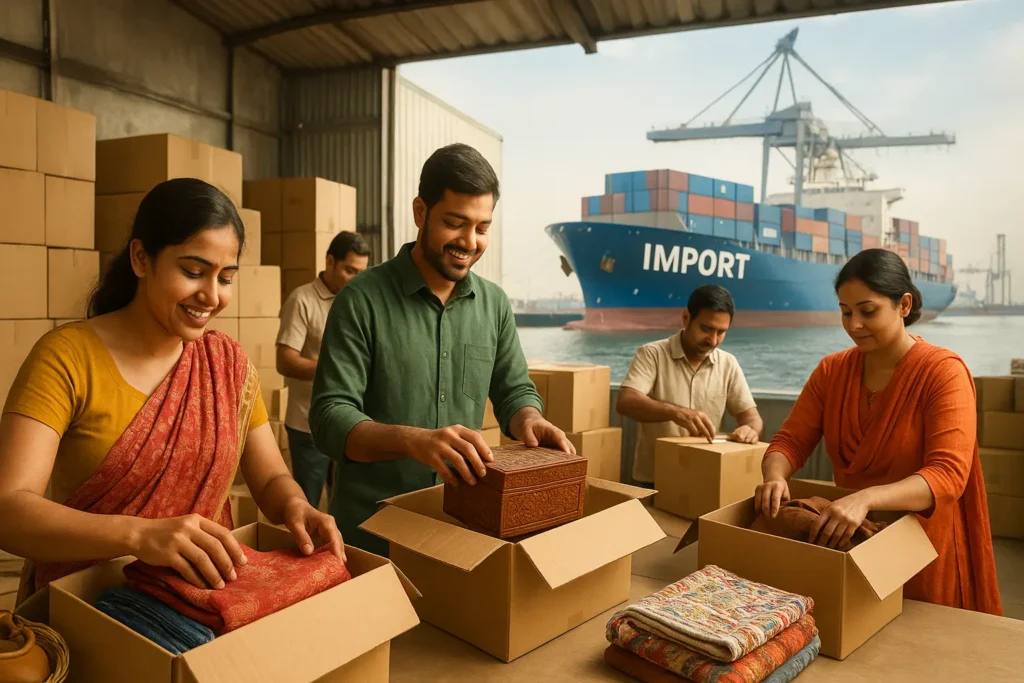
The India–EFTA Free Trade Agreement (FTA), signed in March 2024 and coming into effect on October 1, 2025, marks a historic milestone for India’s trade strategy. The agreement with the European Free Trade Association (EFTA) — comprising Switzerland, Norway, Iceland, and Liechtenstein — is expected to unlock new opportunities for Indian businesses, especially MSMEs (Micro, Small, and Medium Enterprises), amidst global trade tensions and rising tariffs.
With the recent US tariff hikes creating uncertainty in global markets, Indian MSMEs are looking at diversification and new markets. The India–EFTA Free Trade Agreement ( FTA) offers a timely avenue for these small businesses to expand their exports and reduce dependency on high-tariff markets like the U.S. (Reuters)
You may also like to read: Impact of Tariffs: How US Tariffs Affects Indian MSMEs and US Small Businesses
Key Highlights of the India–EFTA Free Trade Agreement
- Effective Date: October 1, 2025 (Times of India)
- Tariff Reductions:
- EFTA will cut tariffs on 92.2% of its tariff lines for Indian exports.
- India will offer concessions on 82.7% of its tariff lines, covering 95.3% of EFTA exports (Reuters).
- Investment Commitments:
- EFTA nations have pledged $100 billion investment in India over 15 years.
- Expected to generate around 1 million direct jobs (AP News).
- Scope: Goods, services, intellectual property, investment, procurement, and sustainable development.
- Exclusions: Sensitive sectors such as dairy, coal, certain agriculture products, and gold (Reuters).
This pact is India’s first Europe-facing trade agreement of this scale and demonstrates the country’s intent to reduce dependence on markets currently affected by rising tariffs (Economic Times).
Impact on Indian MSMEs from India–EFTA Free Trade Agreement in the Current Tariff Environment
Indian MSMEs face mounting pressure due to global tariff wars, particularly with the U.S. imposing higher duties on Indian exports. The India–EFTA FTA provides a vital lifeline by offering duty-free or reduced-duty access to high-value European markets (Moneycontrol).
Sectors Likely to Gain the Most
- Textiles & Apparel
- Cities like Tiruppur, Surat, and Ludhiana may benefit as reduced EFTA tariffs make Indian garments and fabrics more competitive in Europe (Business Standard).
- Leather & Footwear
- Hubs in Kanpur, Agra, and Chennai stand to gain from lower European duties on leather products, shoes, and accessories.
- Gems & Jewellery
- Small units in Surat and Jaipur exporting polished diamonds and jewelry will find EFTA markets more accessible.
- Handicrafts & Carpets
- Artisans in Kashmir, Bhadohi, and Jaipur can leverage duty-free access to luxury and niche markets in Europe.
- Processed Foods & Spices
- Exporters of packaged foods, organic products, and spices will benefit from tariff concessions, opening up premium European consumers.
- Watches, Chocolates & Luxury Items
- Swiss and European buyers will have greater access to Indian luxury goods, particularly small-scale exporters (IBEF).
Strategic Opportunities post India–EFTA Free Trade Agreement for MSMEs
- Market Diversification: Reduces reliance on U.S. and other high-tariff markets.
- Higher Value Products: MSMEs can upgrade offerings to compete in premium European markets.
- E-commerce Expansion: Platforms like Amazon Global, Etsy, and Europe-based marketplaces can help tap directly into European consumers.
- Government Support: Export promotion councils and trade facilitation bodies are guiding MSMEs to leverage FTA benefits (Economic Times).
Challenges to Watch
- Non-Tariff Barriers (NTBs): Despite lower tariffs, European standards and regulatory compliance remain a challenge.
- Logistics & Supply Chain: MSMEs must optimize shipments to remain competitive in delivery timelines and costs.
- Investment Utilization: Small exporters need to access EFTA investment initiatives effectively to scale production.
Frequently Asked Questions (FAQ)
Q1: What is the India–EFTA Free Trade Agreement?
A: It is a trade pact between India and the European Free Trade Association (Switzerland, Norway, Iceland, Liechtenstein) that reduces tariffs, promotes investment, and facilitates trade in goods and services (Wikipedia).
Q2: How will the India–EFTA FTA help Indian MSMEs?
A: MSMEs will gain duty-free or reduced-tariff access to European markets, enabling them to diversify, compete in premium sectors, and offset challenges from U.S. tariffs (Moneycontrol).
Q3: Which sectors of Indian MSMEs are expected to benefit the most?
A: Textiles, apparel, leather, footwear, gems and jewellery, handicrafts, carpets, processed foods, spices, watches, and luxury items.
Q4: What are the challenges for Indian MSMEs under this FTA?
A: MSMEs must comply with European standards, optimize logistics, and leverage investment opportunities efficiently to fully benefit from the FTA.
Q5: How does the FTA impact India in the current tariff war?
A: It provides an alternative market to counteract U.S. tariffs, stabilizes exports, and strengthens India’s position in global trade negotiations (Reuters).