
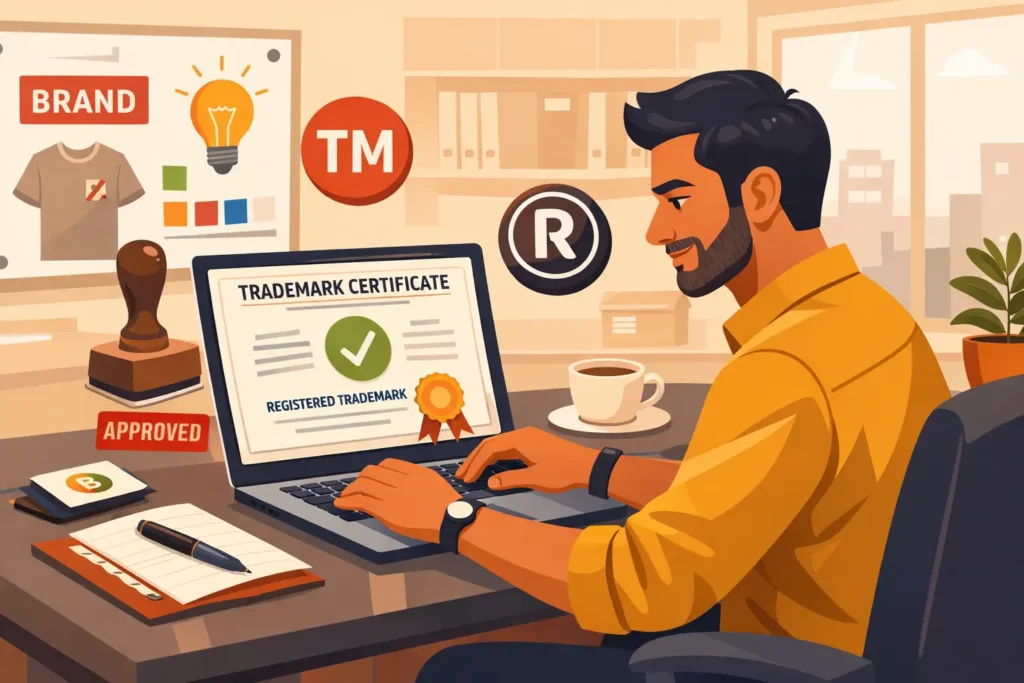
In today’s business world, your brand identity is one of your biggest assets. Whether you run a startup, MSME, e-commerce business, consultancy, or manufacturing unit — protecting your brand name and logo is essential.
Without trademark protection, your brand may be exposed to:
- copycats and imitations
- name misuse by competitors
- brand dilution and legal disputes
That is why more entrepreneurs today prefer to apply for trademark online instead of following manual paperwork or physical filing routes.
The online filing system has made trademark registration:
- simpler
- faster
- more transparent
- easier to track
This guide explains why applying for a trademark online is the best option, how the process works, and whether it truly is the easiest way to register a brand in India.
What Does It Mean to Apply for Trademark Online?
When you apply for trademark online, you submit your trademark application digitally through the official IP India trademark portal instead of visiting the trademark office or filing physical documents.
The online system allows you to:
- file your application from anywhere in India
- upload documents digitally
- pay government fees online
- receive application acknowledgment instantly
- track status in real-time
It removes dependency on physical paperwork and makes the entire process more convenient for entrepreneurs, freelancers and MSMEs.
Why Most Entrepreneurs Prefer to Apply for Trademark Online
Over the past few years, online trademark filing has increasingly become the preferred option for business owners because:
- the process is faster compared to offline filing
- there is less manual paperwork and documentation
- application status can be tracked anytime
- corrections and updates are easier
- no physical visits or submissions are required
For many founders, this makes the decision simple:
Applying for trademark online is more practical and business-friendly than traditional filing methods.
Is Applying for Trademark Online the Easiest Way?
In most cases — yes.
Applying for a trademark online is considered the easiest way because:
- the application process is step-based
- filing acknowledgement is generated immediately
- communication from the registry is received online
- delays due to courier or paperwork are avoided
- portal access is available 24×7
However, it remains the easiest method only when the application is prepared carefully, especially in areas such as:
- selecting the correct trademark class
- choosing a distinctive brand name
- attaching proper documents
- conducting a prior trademark search
So while online filing is simple and convenient, it still requires thoughtful preparation and correctness.
Step-by-Step Guide to Apply for Trademark Online in India
Trademark registration in India is handled by the Controller General of Patents, Designs and Trademarks under the Trademark Act, 1999.
Here is a simple step-by-step approach to apply for trademark online.
Step 1 — Conduct a Trademark Availability Search
Before filing, you must check whether a similar trademark already exists.
A trademark search helps avoid:
- objections
- rejection
- duplication conflicts
It is always recommended to verify availability before branding or filing.
Step 2 — Select the Correct Trademark Class
Every business activity falls under a specific trademark classification.
Choosing the wrong class may:
- weaken protection
- delay approval
- affect brand scope later
Selecting the right class is one of the most important steps when you apply for trademark online.
Step 3 — Create an Account on the IP India Trademark Portal
Register on the official government portal and complete profile details before filing.
Step 4 — File the Application Online (Form TM-A)
Upload necessary details including:
- applicant or business information
- brand name or logo
- class of goods or services
- description of mark
Government fees are paid digitally.
Once submitted, an acknowledgment is generated.
Step 5 — Start Using the ™ Symbol
After filing, you may begin using the TM symbol to indicate that your trademark application is under process.
Step 6 — Track Application Status Online
All further updates — examination, approval, objections, hearings or publication — can be tracked online through the portal.
Benefits of Choosing to Apply for Trademark Online
Applying for trademark online offers several advantages compared to offline submission.
Some key benefits include:
- faster application processing
- no physical paperwork or visits to offices
- reduced administrative effort and travel cost
- online acknowledgment and digital records
- real-time tracking and communication
- ability to upload corrections or responses online
For startups, founders and MSMEs — this makes the process far more practical and time-efficient.
When Should You Consider Professional Support?
Even though it is convenient to apply for trademark online, some situations may require expert guidance, such as:
- similar or conflicting trademarks already exist
- objection or examination reply is required
- multiple business classes are involved
- international filing is planned
Taking professional help in such cases can prevent rejection or procedural delays.
A combination of online filing + expert review is often the ideal approach.
Common Mistakes to Avoid When You Apply for Trademark Online
To increase the chances of approval, avoid:
- filing without a proper trademark search
- choosing a generic or descriptive brand name
- selecting the wrong trademark class
- entering incomplete business details
- misunderstanding objections raised later
A carefully prepared application leads to smoother approval.
Frequently Asked Questions (FAQs) About Trademark Registration in India
1. Can I apply for a trademark without hiring a lawyer?
Yes. You can apply for a trademark yourself through the official IP India website. However, if your application receives an examination objection or opposition, professional legal assistance may be helpful.
2. Can I use the ™ symbol before my trademark is registered?
Yes. You can use the ™ (Trademark) symbol once you start claiming your brand name or after filing your trademark application. It indicates that you are claiming rights over the mark.
3. When can I use the ® symbol?
You can use the ® (Registered Trademark) symbol only after your trademark has been officially registered by the Trademark Registry. Using the ® symbol before registration may attract legal consequences.
4. How long is a trademark valid in India?
A registered trademark is valid for 10 years from the date of registration. It can be renewed every 10 years by paying the prescribed renewal fee, allowing your brand to remain protected indefinitely.
5. Can one trademark cover multiple products or services?
No. Trademark registration is based on specific classes under the Nice Classification system. If your business operates in multiple classes, you may need to file separate applications for each relevant class.
6. What happens if someone objects to my trademark?
If an objection or opposition is raised, you will receive a notice from the Trademark Registry. You will have an opportunity to submit a reply, provide supporting documents, or attend a hearing before a final decision is made.
7. Can I sell or transfer my trademark?
Yes. A registered trademark is an intellectual property asset and can be sold, assigned, licensed, or transferred to another individual or business through the prescribed legal process.
8. Is GST registration mandatory for trademark registration?
No. GST registration is not mandatory for filing a trademark application. Individuals, sole proprietors, startups, and MSMEs can apply even without GST registration, provided they meet the applicable requirements.
™ vs ®: What’s the Difference?
Many first-time entrepreneurs are confused between the ™ and ® symbols. Here’s a simple comparison:
| Symbol | Meaning | When Can You Use It? |
|---|---|---|
| ™ | Indicates that you are claiming rights over a brand name or logo. | Before or after filing a trademark application. |
| ® | Indicates that the trademark is officially registered. | Only after receiving the registration certificate from the Trademark Registry. |
Tip: Never use the ® symbol before your trademark is officially registered.
Before You Apply: Trademark Registration Checklist
Before submitting your online trademark application, make sure you have completed the following:
- ✅ Finalize your brand name or logo.
- ✅ Conduct a trademark search to check for similar existing trademarks.
- ✅ Identify the correct trademark class for your products or services.
- ✅ Keep your Aadhaar, PAN, or other identity documents ready.
- ✅ Keep your business registration documents ready (if applicable).
- ✅ Keep a high-quality logo file (if registering a logo).
- ✅ Ensure the applicant’s name matches your supporting documents.
- ✅ Keep your email ID and mobile number active for official communication.
Completing this checklist can help reduce delays and improve the chances of a smoother registration process.
Can Foreign Businesses Register a Trademark in India?
Yes. Foreign individuals and companies can apply for trademark registration in India. They may file an application directly or through an authorized trademark agent or attorney, depending on their circumstances.
International businesses planning to sell products or services in India often register their trademarks to protect their brand identity and prevent unauthorized use.
If your business also plans to expand internationally, you may consider protecting your trademark in multiple countries through the Madrid System, subject to eligibility and applicable rules.
Why Trademark Registration Is Important for Small Businesses
Whether you are running a startup, MSME, online store, or export business, registering your trademark offers several long-term benefits:
- Protects your brand name and logo from unauthorized use.
- Builds customer trust and brand recognition.
- Creates a valuable business asset that can be licensed or sold.
- Makes it easier to expand through franchising or partnerships.
- Strengthens your business during investment or funding discussions.
- Helps exporters establish a trusted brand in international markets.
- Provides legal remedies against infringement and counterfeit products.
For many entrepreneurs, a trademark is one of the most valuable intangible assets their business will own.
However, accuracy, documentation and legal understanding still matter — because a well-filed application protects your brand, while an incorrectly filed one may lead to objections or disputes.
Applying online is the easiest method — but filing carefully is what makes it truly effective.
Affiliate Disclosure
Some links in this article may be affiliate links. If you purchase through them, BusinessZindagi.com may earn a small commission at no extra cost to you. We only recommend tools and services we believe are genuinely useful for entrepreneurs and MSMEs.
🚀 Recommended Tools
🌍 Find Global Buyers with Volza
Want to export your products after registering your trademark? Volza helps you find verified international buyers, analyze competitors, and explore export opportunities using global shipment data.
👉 Check ot free trail of Volza to grow your export business.
📊 Manage Your Business with Zoho
From accounting and GST invoicing to CRM and inventory, Zoho offers smart business software for startups, MSMEs, and exporters.
👉 Explore Zoho’s business solutions.try free trail
📚 Suggested Articles
You may also like:
- MSME Registration Online Guide
- Startup India Registration Explained
- Import Export Code (IEC) Registration
- FSSAI Registration Guide
- Madrid Protocol Explained
- CGTMSE Loan Scheme
- PMEGP Loan Scheme
- Best AI Tools for Small Businesses
- Best Accounting Software for MSMEs
- How to Find International Buyers Using Import Export Data
About the Author — BusinessZindagi
Tabrez is an entrepreneur, trader and MSME writer who shares practical insights on business growth, branding, trademark awareness, entrepreneurship and global business opportunities. Through BusinessZindagi, he helps Indian entrepreneurs understand complex business concepts in a simple and actionable way.
Disclaimer (Includes AI Disclaimer)
This article is written for educational and informational purposes only. Trademark rules, legal procedures and processing timelines may change over time and may vary based on individual case conditions, business structure and jurisdiction.
Some portions of this article may have been assisted using AI tools and later reviewed and refined by the BusinessZindagi editorial team. AI-assisted content may not always reflect the most recent legal or procedural updates.
This article should not be treated as professional legal advice. Readers are advised to consult a qualified trademark attorney, IP consultant or legal expert before making filing or compliance decisions.
BusinessZindagi.com and the author are not responsible for any actions taken based on this content.
Authentic Sources and Reference Links
IP India — Official Trademark Portal
https://ipindia.gov.in
Trademark Public Search — Government Portal
https://tmrsearch.ipindia.gov.in
Controller General of Patents, Designs and Trademarks
https://ipindia.gov.in/writereaddata/Portal/IPOHomeIPIndia/1_1_IPINDIA.html
Madrid Protocol — WIPO International Filing
https://www.wipo.int/madrid/en/
Trademark Act, 1999 — Legal Resource
https://legislative.gov.in