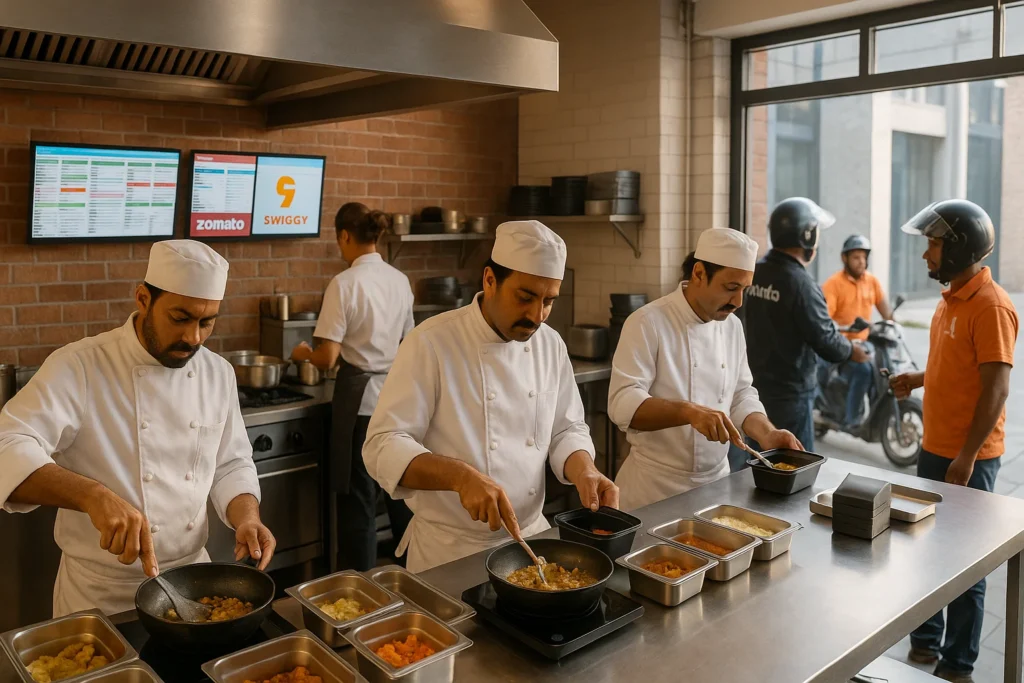
Why Cloud Kitchen Business Is Booming in India
India’s food industry is going through a massive digital transformation — and at the heart of it is the cloud kitchen business model.
A cloud kitchen (also called a dark kitchen or ghost kitchen) is a delivery-only restaurant that operates without dine-in space. It caters exclusively to online orders through apps like Zomato, Swiggy, and ONDC.
While this trend started in metros, the cloud kitchen business in Tier-II and Tier-III cities is now exploding — thanks to lower costs, growing online food demand, and digital payment adoption.
For small entrepreneurs and MSMEs, this is one of the most profitable business opportunities in 2025 with limited investment and unlimited scalability.
You may also like to read: FSSAI License Renewal: Why Every Food Business Must Renew on Time to Avoid Costly Penalties
Cloud Kitchen Business Growth Beyond Metros
The cloud kitchen business in India has evolved from a niche concept to a mainstream startup model. According to industry estimates, over 45% of India’s cloud kitchens now operate in Tier-II and Tier-III cities.
🔍 Why the Shift to Smaller Cities?
- 📱 Online food delivery boom: Affordable internet and smartphone access have expanded food delivery apps into smaller towns.
- 💰 Low operational costs: Rent, labor, and utilities are much cheaper outside metros.
- 🍲 Regional menu appeal: Cloud kitchens in smaller cities can serve authentic local cuisines with quick delivery.
“Cities like Indore, Lucknow, Jaipur, and Coimbatore are becoming India’s new food-tech hubs,” notes Entrepreneur India (2024).
Real Cloud Kitchen Success Stories in India
1️⃣ Rebel Foods – India’s Cloud Kitchen Giant
Founded in Mumbai, Rebel Foods (parent company of Faasos, Behrouz Biryani, Oven Story) pioneered the cloud kitchen business in India. With 450+ kitchens across 80 cities, it is now the world’s largest cloud kitchen brand.
👉 Lesson: Process-driven operations and strong tech integration are the backbone of cloud kitchen success.
Source: Entrepreneur.com
2️⃣ Nirmal Kitchen – Lucknow’s Local Success Story
In Tier-II India, Nirmal Kitchen (Lucknow) proved that small-town entrepreneurs can succeed without big capital. Focusing on hygiene, packaging, and delivery speed, it became a go-to brand for online orders.
👉 Lesson: Discipline and consistency can outshine marketing spend.
Source: TrustBridge Ventures
3️⃣ Kouzina Food Tech – Micro Franchise Model
Bengaluru-based Kouzina Food Tech, which operates brands like WarmOven and KaatiZone, is expanding its cloud kitchen business into smaller cities through franchise partnerships.
👉 Lesson: Collaboration helps cloud kitchens scale faster in emerging markets.
Source: Kouzina Food Tech
FSSAI and Legal Requirements for Cloud Kitchen Business
Starting a cloud kitchen business in India requires proper registration and compliance with food safety and tax laws.
✅ FSSAI License for Cloud Kitchens
Every cloud kitchen must obtain a valid FSSAI license as per the Food Safety and Standards Act, 2006.
| Type of License | Eligibility | Issuing Authority |
|---|---|---|
| Basic Registration | Turnover < ₹12 lakh/year | Local Authority |
| State License | Turnover ₹12 lakh – ₹20 crore | State FSSAI Office |
| Central License | Multi-state or export operations | Central FSSAI Authority |
Even home-based cloud kitchens must apply for at least an FSSAI Basic Registration before selling food online.
Other Registrations Required
- GST Registration (if turnover > ₹20 lakh)
- Trade or Health License from the local municipality
- Fire & Pollution NOC (depending on setup size)
- Shop & Establishment Registration (mandatory in most states)
How to Start a Cloud Kitchen Business in Small Cities
1. Select the Right Location
- Focus on areas close to residential or commercial clusters.
- Access to major delivery zones and riders is more important than street visibility.
2. Design an Efficient Kitchen Layout
- A compact, hygienic kitchen with proper exhaust, storage, and packaging space.
- Use commercial-grade appliances to improve efficiency.
3. Build a Smart Menu
- Limit your menu to 8–10 high-performing dishes.
- Serve food that travels well (biryani, bowls, wraps, snacks).
- Customize for local flavors — small cities prefer affordable comfort food.
4. Partner with Delivery Platforms
- Register on Zomato, Swiggy, and ONDC.
- Optimize your food photos, ratings, and delivery times.
- Offer combo meals, subscription plans, and loyalty programs.
5. Use Technology Wisely
- Invest in POS systems like Petpooja or POSist.
- Track your daily orders, margins, and inventory in real time.
- Aim for a 15–25% profit margin after delivery commissions.
6. Control Costs
- Share kitchen space or start from home to reduce rent.
- Monitor raw material wastage and packaging costs.
- Negotiate better rates with local suppliers.
Challenges in the Cloud Kitchen Business
- Aggregator Dependency: Diversify across apps and consider self-delivery.
- High Commission Fees: Plan pricing to offset delivery app charges.
- Quality Control: Maintain strict hygiene SOPs to retain customer trust.
- Demand Fluctuations: Use local events and festivals for targeted promotions.
Future of Cloud Kitchen Business in India
India’s cloud kitchen business market is projected to exceed $3 billion by 2028, driven by affordable delivery, changing lifestyles, and increasing youth population.
Small-town entrepreneurs are now at the center of this transformation. With strong execution and compliance, a Tier-II city kitchen can rival metro brands in profitability and brand recall.
“Cloud kitchens are democratizing food entrepreneurship — giving small-town dreamers a global stage.” — BusinessZindagi Insight, 2025
The cloud kitchen business is redefining how India eats — and how small entrepreneurs build brands.
Whether you’re in Lucknow, Indore, or Guwahati, you can start a low-cost, high-profit food venture with smart strategy and proper compliance.
- ✅ Start small, but start right.
- 🍛 Get your FSSAI license before you serve your first order.
- 🚀 Focus on quality, speed, and customer reviews — the rest will follow.
The next food startup success story could be your cloud kitchen in a small Indian city.
FAQs About Cloud Kitchen Business
Q1. Is FSSAI license mandatory for a cloud kitchen business?
Yes. Every food business, including home kitchens and cloud kitchens, must obtain an FSSAI license or registration.
Q2. How much does it cost to start a cloud kitchen business in India?
A basic setup in a Tier-II city can start from ₹3–5 lakh, including equipment, licensing, and marketing.
Q3. Can I run multiple brands from one cloud kitchen?
Yes. You can create multiple virtual brands from a single kitchen, provided all are covered under your FSSAI license.
Q4. How to market a cloud kitchen business?
Use social media (Instagram, WhatsApp Business), local influencers, and food delivery ads to promote your brand.
Q5. Which is more profitable — a restaurant or cloud kitchen?
Cloud kitchens usually have lower overheads, making them 20–30% more cost-efficient than dine-in restaurants.
✍️ About the Author
Tabrez Ahmad is an entrepreneur, exporter, trader, and blogger who writes on MSME growth, business compliance, and startup trends at BusinessZindagi.com. His insights combine practical experience and global business understanding to guide small entrepreneurs toward sustainable success.
🔗 References & Authentic Sources
- Entrepreneur.com – What’s Keeping Cloud Kitchens Flavorful?
- Kouzina Food Tech – Cloud Kitchen Opportunities in India
- TrustBridge Ventures – Nirmal Kitchen, Lucknow Success Story
- Rahul Malodia – Cloud Kitchen Business Model
- Entrepreneur India – Cloud Kitchen Market in India
- FSSAI Official Portal – Licensing & Registration