
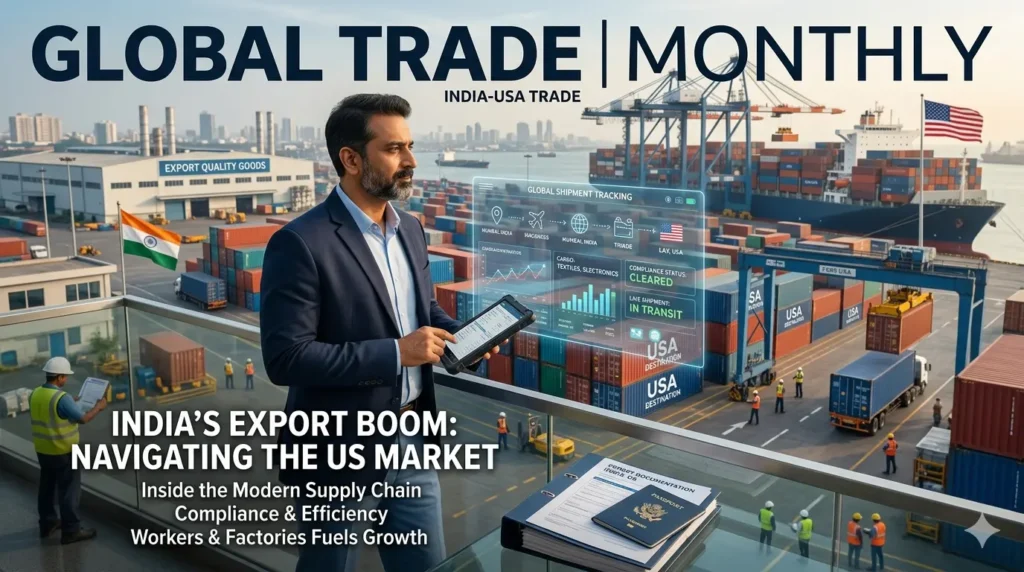
The rules of global trade are changing rapidly. For decades, exporters mainly competed on price, quality, and delivery speed. Today, another factor is becoming equally important—how products are made and whether labour practices throughout the supply chain meet international standards.
A recent proposal by the United States has once again brought this issue into focus. The US Trade Representative (USTR) has proposed additional tariffs on imports from several economies, including India, citing concerns related to forced-labour enforcement.
While the proposal is not yet final, it has sparked debate among exporters, policymakers, and businesses worldwide. For Indian MSMEs and export-oriented industries, the development is a reminder that compliance and supply-chain transparency are becoming critical business requirements.
related article: New Labour Code Compliance Checklist for Small Businesses (Downloadable PDF)

What Is Forced Labour?
Forced labour refers to work that people are compelled to perform against their will through threats, coercion, debt bondage, withholding of wages, confiscation of identity documents, intimidation, or other forms of pressure.
According to international labour standards, workers must have the freedom to choose employment and leave a job voluntarily. When that freedom is restricted through coercive practices, the work may be classified as forced labour.
The issue has gained increasing attention globally as governments seek to prevent products made using forced labour from entering international markets.
As a result, businesses should view the current proposal less as a trade conflict and more as a signal that compliance standards are becoming increasingly important in international commerce.
Why Has the US Proposed New Tariffs?
According to reports, the US Trade Representative has proposed additional tariffs ranging from 10% to 12.5% on imports from dozens of economies.
The proposal emerged from a Section 301 investigation that examined how countries enforce restrictions on goods produced through forced labour.
The US position is that weak enforcement in some countries may allow products linked to forced labour to enter global supply chains, creating unfair competition for businesses that comply with labour standards.
The tariff proposal is currently subject to consultations and further review before any final implementation.
Why Is India Included in the Proposal?
India is one of the world’s fastest-growing manufacturing and export economies. It exports textiles, pharmaceuticals, engineering goods, electronics, chemicals, agricultural products, gems and jewellery, and many other products to the United States.
The US proposal argues that India does not currently have a sufficiently comprehensive system to prohibit imports linked to forced labour in the same manner as certain other countries.
Indian authorities and industry bodies are expected to engage with US officials to discuss the concerns and present India’s position.
It is important to note that the proposal does not accuse all Indian businesses of using forced labour. Rather, it relates to regulatory and enforcement mechanisms within international trade frameworks.
Why Has the US Proposed New Tariffs?
According to reports, the US Trade Representative has proposed additional tariffs ranging from 10% to 12.5% on imports from dozens of economies.
The proposal emerged from a Section 301 investigation that examined how countries enforce restrictions on goods produced through forced labour.
The US position is that weak enforcement in some countries may allow products linked to forced labour to enter global supply chains, creating unfair competition for businesses that comply with labour standards.
The tariff proposal is currently subject to consultations and further review before any final implementation.
Why Is India Included in the Proposal?
India is one of the world’s fastest-growing manufacturing and export economies. It exports textiles, pharmaceuticals, engineering goods, electronics, chemicals, agricultural products, gems and jewellery, and many other products to the United States.
The US proposal argues that India does not currently have a sufficiently comprehensive system to prohibit imports linked to forced labour in the same manner as certain other countries.
Indian authorities and industry bodies are expected to engage with US officials to discuss the concerns and present India’s position.
It is important to note that the proposal does not accuse all Indian businesses of using forced labour. Rather, it relates to regulatory and enforcement mechanisms within international trade frameworks.
Why Should MSMEs Pay Attention?
Many small business owners may assume that labour-compliance issues affect only large corporations. That assumption is becoming increasingly risky.
In reality, multinational companies often source products from smaller suppliers. If large buyers face regulatory pressure, they may pass compliance requirements down the supply chain.
This means MSMEs may increasingly be asked to provide:
- Worker records
- Employment contracts
- Wage documentation
- Supplier declarations
- Compliance certificates
- Audit reports
- Supply-chain traceability information
Businesses that prepare early could gain a competitive advantage.
The Bigger Trend: Supply-Chain Transparency
The proposed tariffs highlight a broader shift taking place across global trade.
Governments and consumers increasingly want to know:
- Where products originate
- Who manufactured them
- How workers were treated
- Whether labour laws were followed
- Whether environmental standards were maintained
As a result, transparency is becoming a business asset rather than merely a compliance requirement.
Companies that can demonstrate ethical sourcing and responsible labour practices may find it easier to access international markets.
What Does This Mean for India’s Export Growth?
India has ambitious goals to expand exports and strengthen its role in global manufacturing.
While tariff proposals create uncertainty, they also present an opportunity.
Businesses that invest in stronger compliance systems, worker welfare, digital record-keeping, and supply-chain visibility may become more attractive partners for international buyers.
In many industries, future competitiveness may depend not only on producing goods at competitive prices but also on proving that those goods were produced responsibly.
Impact on India-US Trade Relations
The United States remains one of India’s most important trading partners.
Both countries continue to explore deeper economic cooperation and trade opportunities.
If implemented, additional tariffs could become a point of discussion in ongoing trade negotiations. However, many trade experts believe that both sides will continue working toward strengthening economic ties given the strategic importance of the bilateral relationship.
The final outcome will depend on consultations, negotiations, and policy decisions in the coming months
- – Forced Labor Enforcement
https://www.cbp.gov/trade/forced-labor - International Labour Organization (ILO) – Forced Labour Resources
https://www.ilo.org
About the Author
BusinessZindagi Editorial Team covers Indian business, MSMEs, startups, exports, government policies, entrepreneurship, technology, and economic developments that impact businesses and professionals across India.
AI Disclaimer
This article was researched and drafted with the assistance of artificial intelligence and reviewed by the BusinessZindagi editorial process. Readers are encouraged to verify policy developments and official announcements from government and regulatory sources before making business decisions.