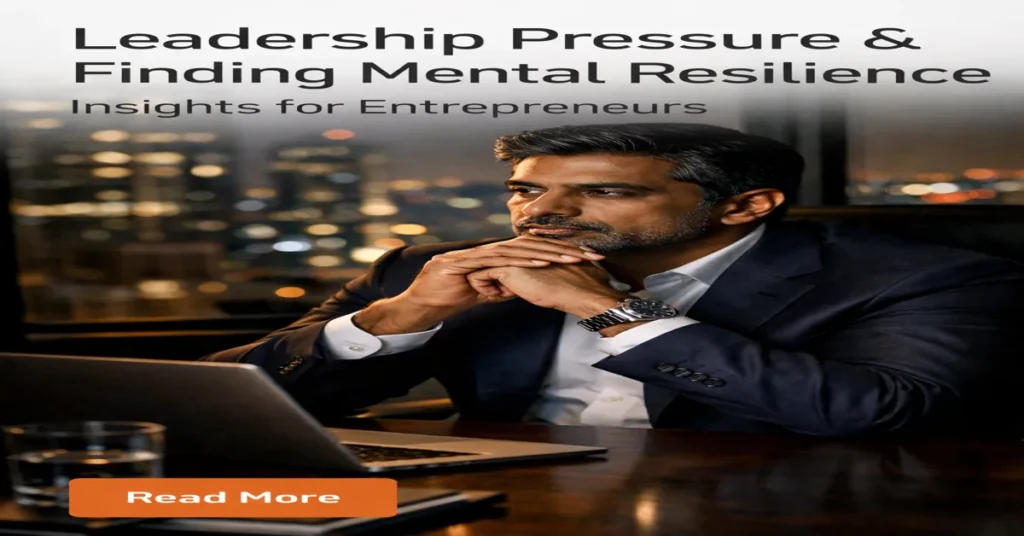
Entrepreneurship is often celebrated as a journey of freedom, ambition, and extraordinary achievement. Founders are admired for their courage, resilience, and ability to turn ideas into thriving businesses.
But behind many success stories lies a reality that is far less visible — yet deeply important.
Mental health for entrepreneurs is emerging as one of the most urgent conversations in today’s business world.
In recent months, difficult stories from the entrepreneurial ecosystem have forced a powerful realization:
👉 Success does not shield anyone from emotional struggle.
👉 Leadership does not eliminate vulnerability.
👉 Achievement does not guarantee inner stability.
It is time we talk openly about the psychological cost of building something meaningful — because businesses can recover from setbacks, but a human life cannot.
you make like to read: Self-Help Entrepreneur (SHE) Marts: How Budget 2026 Is Powering Women entrepreneurship
Why Mental Health for Entrepreneurs Deserves Urgent Attention
Running a business is not just financially demanding — it is emotionally intense.
Entrepreneurs operate in environments filled with uncertainty, high expectations, and constant decision-making. Over time, this pressure can quietly accumulate.
Many founders experience:
- Persistent financial stress
- Responsibility toward employees and stakeholders
- Investor expectations
- Fear of failure — especially after tasting success
- Long working hours with minimal recovery
- Pressure to appear confident even during crises
From the outside, entrepreneurship may look glamorous. From the inside, it can feel profoundly isolating.
Ironically, as businesses grow, so does the weight on the founder’s shoulders.
Success often brings bigger risks, tougher decisions, and greater psychological responsibility.
The Dangerous Myth That Hurts Founders
One of the most harmful beliefs in business culture is this:
👉 “Strong entrepreneurs don’t struggle mentally.”
The truth is exactly the opposite.
High performers are often more vulnerable to emotional exhaustion because they carry enormous responsibility and rarely allow themselves to pause.
Let’s be clear:
- Money does not guarantee emotional security
- Growth does not automatically create happiness
- Recognition does not remove anxiety
Many entrepreneurs suffer silently — not because they lack strength, but because they believe they must always demonstrate it.
But real leadership is not about suppressing pressure.
It is about recognizing when support is necessary.
The Psychological Weight of Being a Founder
Unlike traditional careers, entrepreneurship does not offer clean boundaries between work and personal life.
For many founders:
👉 Their business becomes their identity.
👉 Their company’s performance defines their self-worth.
👉 Rest begins to feel like irresponsibility.
This creates a dangerous mental loop where stepping back feels like falling behind.
Another overlooked factor is decision fatigue — the mental drain caused by making high-stakes choices every single day.
Over time, chronic stress can evolve into burnout.
And burnout is not simply “being tired.”
It is emotional depletion that reduces clarity, creativity, and resilience.
Left unaddressed, it can impact both the entrepreneur and the organization they lead.
When Entrepreneurship Tests You: A Founder’s Personal Reflection
Entrepreneurial journeys are rarely linear. Mine certainly was not.
I started extremely small — with limited resources but unlimited determination. Like many first-generation entrepreneurs, survival itself was the first milestone. There were days filled with uncertainty, moments of self-doubt, and constant pressure to keep the business afloat.
After years of persistence, I experienced my first taste of success. It was modest, but it validated my belief that choosing entrepreneurship had been the right decision.
Then came a phase of stronger growth as my export business began performing well. Confidence returned, stability improved, and the future looked promising.
But entrepreneurship has a way of testing resilience when you least expect it.
During and after the COVID-19 pandemic, business conditions deteriorated sharply. Global disruptions, market uncertainty, and operational challenges created one of the toughest periods of my professional life.
Like many entrepreneurs, I found myself asking a difficult question:
“Why did I choose this path when I could have pursued the security of a government or corporate job?”
It is a question countless founders silently confront during hard times.
Yet reflection brought clarity.
I realized something fundamental about myself — my mindset has always valued independence, creativity, and the freedom to build something of my own. Even in the face of setbacks, the idea of giving up entrepreneurship felt more painful than the struggle itself.
So instead of stepping back, I chose to step forward — with renewed perspective.
Entrepreneurship is not defined by uninterrupted success. It is defined by the courage to continue despite volatility.
Every setback strengthened my adaptability. Every challenge expanded my emotional endurance. Every uncertain phase forced me to grow — not just as a business owner, but as a person.
Today, I strongly believe:
If you keep moving forward as an entrepreneur, success stops being a possibility — and starts becoming an eventuality.
The journey may be unpredictable, but perseverance compounds over time.
And often, the very struggles we wish to avoid become the experiences that prepare us for meaningful success.
Warning Signs Entrepreneurs Should Never Ignore
Awareness is the first step toward prevention.
Every founder should learn to recognize early signals of mental overload — in themselves and in their peers.
Watch for:
- Constant exhaustion even after resting
- Loss of motivation
- Emotional numbness
- Increased irritability
- Withdrawal from friends or family
- Anxiety that refuses to switch off
- Sleep disturbances
- Feeling trapped despite visible success
These are not signs of weakness.
They are indicators that the mind needs attention — just like the body does.
Asking for help is not weakness.
It is a powerful act of leadership.
Practical Strategies to Protect Mental Health for Entrepreneurs
Awareness matters — but action changes lives.
Here are practical, research-backed approaches founders can adopt to protect their psychological well-being.
✅ Normalize Seeking Professional Support
Consulting a mental health professional should never be viewed as a last resort.
Globally, many top executives and elite performers work with psychologists and executive coaches to maintain mental clarity.
Think of therapy as performance infrastructure, not crisis management.
Your mind is your greatest business asset — invest in it.
✅ Build a Strong Founder Support Network
Entrepreneurship was never meant to be a lonely journey.
Surround yourself with:
- Fellow founders
- Mentors
- Advisors
- Trusted friends outside your industry
Sometimes, one honest conversation can release months of silent pressure.
Isolation amplifies stress — connection diffuses it.
✅ Separate Your Identity From Your Business
You are more than your valuation.
More than your revenue.
More than your latest setback.
Businesses fluctuate — human worth does not.
Entrepreneurs who cultivate identities beyond their companies tend to demonstrate stronger long-term leadership and emotional stability.
✅ Treat Rest as a Growth Strategy
Rest is not the opposite of productivity.
It is what sustains it.
Strategic recovery improves:
- Decision-making
- Creativity
- Emotional regulation
- Risk assessment
Remember:
Your business needs you healthy — not just busy.
✅ Learn the Power of Delegation
Many founders collapse under pressure simply because they try to carry everything alone.
Delegation is not a loss of control.
It is evolved leadership.
Trust your team so your mind has space to think, innovate, and breathe.
Why This Conversation Is Especially Important in India
Mental health is still surrounded by stigma in many parts of Indian society.
Founders often grow up hearing messages like:
- “Stay strong.”
- “Don’t show vulnerability.”
- “What will people say?”
At the same time, hustle culture glorifies overwork and sleep deprivation as symbols of ambition.
But this mindset is unsustainable.
Sustainable companies require sustainable founders.
Changing how we talk about mental health for entrepreneurs is no longer optional — it is essential for the future of India’s startup ecosystem.
A Question Every Founder Should Ask Today
When was the last time you checked on your own well-being?
You review financial statements.
You track growth metrics.
You evaluate team performance.
But do you measure your emotional health?
Protecting your mind is not separate from building your company — it is fundamental to it.
The strongest entrepreneurs are not those who endure endless pressure.
They are the ones who build success without losing themselves in the process.
Redefining Strength in Entrepreneurship
Let us redefine what strength truly means in modern leadership.
Strength is not silent suffering.
Strength is awareness.
Strength is seeking support.
Strength is choosing balance.
Entrepreneurship is a marathon — not a sprint powered by exhaustion.
Dream boldly.
Build fearlessly.
But protect the person behind the vision.
Because success is meaningful only when the one who creates it is well enough to experience it.
If You Are Struggling
If you or someone you know is experiencing emotional distress, consider speaking with a qualified mental health professional or reaching out to a trusted support system. Seeking help is a sign of strength — and no business achievement is more important than your well-being.
Frequently Asked Questions (FAQs)
Why is mental health important for entrepreneurs?
Mental health for entrepreneurs is critical because founders operate under constant uncertainty, financial pressure, and decision-making responsibility. Strong psychological well-being improves leadership ability, strategic thinking, resilience, and long-term business sustainability.
Do entrepreneurs face higher stress than employees?
Research suggests that entrepreneurs often experience elevated stress due to income unpredictability, operational risks, and emotional attachment to their businesses. While entrepreneurship offers independence, it also brings psychological demands that require proactive mental health care.
What are the early signs of entrepreneur burnout?
Common warning signs include chronic exhaustion, loss of motivation, irritability, sleep problems, emotional detachment, anxiety, and reduced decision-making ability. Recognizing these symptoms early allows founders to seek support before burnout intensifies.
How can entrepreneurs protect their mental health?
Founders can safeguard their mental well-being by building support networks, delegating responsibilities, maintaining work-life boundaries, taking recovery breaks, seeking professional guidance when needed, and separating personal identity from business outcomes.
Is seeking therapy a sign of weakness for business leaders?
Not at all. Many high-performing leaders work with psychologists and executive coaches to maintain mental clarity and emotional resilience. Seeking help reflects self-awareness and responsible leadership.
Can strong mental health improve business performance?
Yes. Entrepreneurs with stable mental health tend to make better decisions, manage crises effectively, foster healthier workplace cultures, and sustain long-term growth.
About author
Tabrez Khan
Founder, BusinessZindagi
Tabrez Khan writes about MSMEs, startups, and entrepreneurship with a mission to empower business owners through meaningful, practical insights that support sustainable success.
Disclaimer
This article is intended for awareness and educational purposes only and should not be considered a substitute for professional mental health advice.
AI Transparency
This article was created with the assistance of AI and carefully reviewed by the BusinessZindagi editorial team to ensure responsibility, accuracy, and reader value.
Sources & References
- World Health Organization (WHO) — Mental Health in the Workplace
👉 https://www.who.int/news-room/fact-sheets/detail/mental-health-at-work - Harvard Business Review — Entrepreneurs and Depression
👉 https://hbr.org/2018/10/entrepreneurs-and-depression-heres-how-to-foster-mental-health - National Institute of Mental Health (NIMH) — Caring for Your Mental Health
👉 https://www.nimh.nih.gov/health/topics/caring-for-your-mental-health