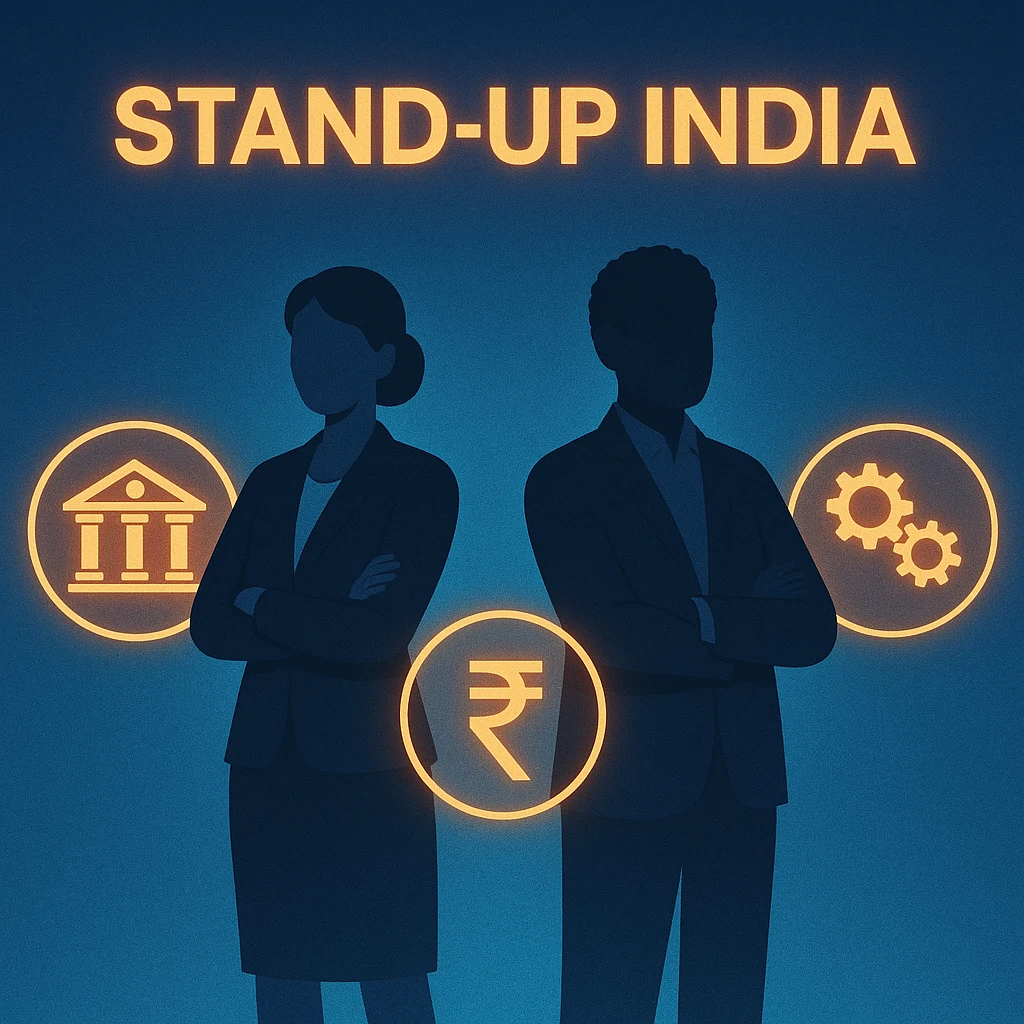
Starting your own business can feel like a dream, but lack of funding often holds back entrepreneurs—especially those from marginalized communities. To bridge this gap, the Government of India launched the Stand-Up India scheme.
This program provides easy access to loans for SC, ST, and women entrepreneurs, empowering them to build greenfield enterprises in manufacturing, trading, and services. In this blog, we’ll cover everything about Stand-Up India loan, Stand-Up Mitra portal, Stand-Up Yojna, and how you can apply in 2025.
You may also like to read:PMEGP Scheme: A Catalyst for First-Generation Entrepreneurs and Startups in India
What is Stand-Up India?
Stand-Up India is a government-backed loan scheme launched on 5 April 2016 by the Hon’ble Prime Minister of India. The scheme is designed to promote entrepreneurship among Scheduled Castes (SC), Scheduled Tribes (ST), and women entrepreneurs.
It ensures that every bank branch in India provides loans to at least one SC/ST borrower and one woman borrower for setting up a new business.
Key Features of Stand-Up India Scheme
- Loan Amount: Between ₹10 lakh and ₹1 crore.
- Type of Business: Greenfield projects in manufacturing, services, or trading sectors.
- Eligible Borrowers: SC/ST individuals and women entrepreneurs.
- Nature of Loan: Composite loan (includes term loan + working capital).
- Repayment Period: Up to 7 years, with a moratorium of 18 months.
- Collateral Security: As per bank norms, but loans are covered under the Credit Guarantee Scheme.
Who Can Apply? Eligibility Criteria
- Must be an SC/ST or a woman entrepreneur.
- Age limit: Above 18 years.
- The enterprise must be a greenfield project (first-time venture).
- For non-individual entities (like partnership firms or companies), at least 51% of the shareholding and controlling stake should be held by SC/ST or women entrepreneurs.
How to Apply for Stand-Up India Loan
Applying for a Stand-Up India loan is simple and digital. Here’s the step-by-step process:
- Visit the Stand-Up Mitra Portal: www.standupmitra.in
- Register Online: Fill in borrower details, category (SC/ST/woman), and business idea.
- Handholding Support: The portal connects you with Lead District Managers (LDMs) and banks for guidance.
- Loan Application: Submit documents including KYC, caste/women certificate, project report, and financial plan.
- Sanction & Disbursement: Loan is sanctioned by the bank and disbursed in phases for business setup.
Stand-Up Mitra Portal: Your Digital Assistant
The Stand-Up Mitra portal is the official platform to apply under the Stand-Up Yojna. It provides:
- Loan application forms and guidelines.
- Handholding support (through SIDBI and NABARD).
- Information on training programs and entrepreneurship development.
- Real-time tracking of applications.
Benefits of Stand-Up India Scheme
- Encourages inclusive growth by supporting SC/ST and women.
- Provides financial independence to first-time entrepreneurs.
- Backed by Credit Guarantee Scheme, reducing collateral burden.
- Promotes greenfield projects in India’s MSME sector.
- Digital application via Stand-Up Mitra portal for transparency.
Documents Required
- Identity & address proof.
- Caste certificate / Women entrepreneur proof.
- Business plan or project report.
- Bank account details.
- Partnership deed / company incorporation certificate (if applicable).
Why Stand-Up India Matters in 2025
With India’s focus on MSME growth and self-reliance, the Stand-Up India loan scheme has become a lifeline for entrepreneurs who were earlier excluded from the credit system. It not only funds businesses but also promotes social equality and women empowerment.
Quick FAQ
Q1: What is the loan amount under Stand-Up India?
→ Between ₹10 lakh and ₹1 crore.
Q2: Who is eligible for Stand-Up India?
→ SC/ST and women entrepreneurs above 18 years starting a new business.
Q3: How to apply?
→ Apply online via Stand-Up Mitra portal or directly at your bank branch.
Q4: What is the repayment period?
→ Up to 7 years, with 18 months moratorium.
Q5: Is collateral required?
→ Yes, as per bank norms. But loans are backed by the Credit Guarantee Scheme.