The Rise of Waaree Promoters on India’s Rich List
In a landmark moment for India’s clean-energy sector, the promoters of Waaree Energies — the Doshi brothers — have entered the Forbes India Rich List 2025, with a combined net worth of nearly $7.5 billion.
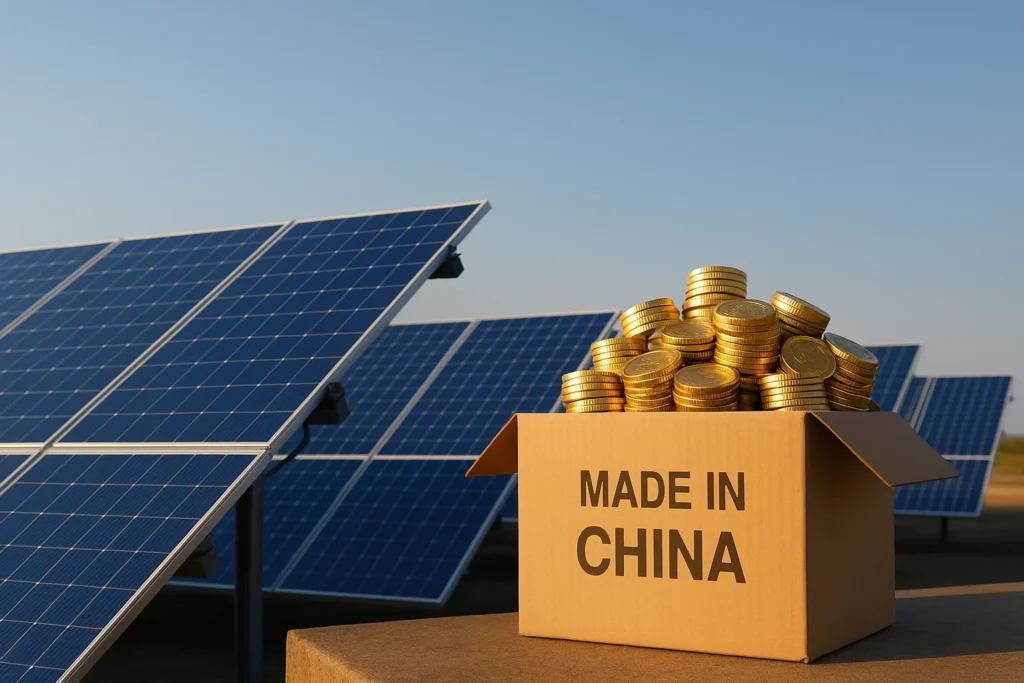
Their ascent reflects not only business acumen but also the strength of India’s solar manufacturing ecosystem, which is finally challenging the long-standing dominance of Chinese suppliers in the renewable space.
You may also like to read:Solar panels Startups in India 2025: Growth, Subsidies, and Future Opportunities
The Billionaire waaree promoters Brothers Behind Waaree Energies
Founded by Hitesh, Kirit, Pankaj, and Viren Doshi, Waaree Energies began as a small industrial instrumentation company in Mumbai in the 1980s. By pivoting into solar module manufacturing in the early 2000s, the brothers took a bold risk — betting on India’s yet-to-boom renewable energy market.
That vision paid off. Today, Waaree is not only India’s largest solar module manufacturer but also a global exporter to 68+ countries. Its growth story mirrors India’s ambition to become self-reliant in solar energy.
How Waaree Outperformed Chinese Solar Imports
One of Waaree’s most remarkable achievements is its ability to compete with low-cost Chinese solar imports — a challenge that has long crippled Indian manufacturers.
Here’s how Waaree managed to do what many thought impossible 👇
Early Investment in Manufacturing Scale
While most Indian players relied on assembling imported cells, Waaree invested early in full-scale solar module and cell production lines. This allowed the company to reach economies of scale and maintain competitive prices.
Quality and Technology Differentiation
Chinese products were cheaper — but not always better. Waaree positioned itself as the premium, reliable alternative, focusing on high-efficiency solar modules designed for India’s tough climatic conditions. Its R&D center in Surat continuously upgrades cell efficiency and material performance.
Leveraging “Make in India” and PLI Schemes
The waaree promoters aligned Waaree’s growth with government initiatives like Make in India, Atmanirbhar Bharat, and the Production Linked Incentive (PLI) scheme for solar manufacturing. These policies gave Waaree a strong domestic edge, ensuring cost parity with Chinese competitors.
End-to-End Integration
Unlike import-dependent companies, Waaree integrated across the solar value chain — from modules and EPC projects to solar rooftops and battery solutions. This vertical model reduced dependency on imports and boosted profit margins.
Global Export Footprint
Instead of merely defending the Indian market, Waaree expanded into Europe, the Middle East, and Africa — becoming one of the few Indian solar firms to export competitively even against Chinese players.
The Solar IPO That Created Billionaires
Waaree promoters bold strategies culminated in its blockbuster IPO in October 2024. Investors saw the company not just as a solar brand but as a flagbearer of India’s green economy.
The IPO was oversubscribed multiple times, and within days of listing, Waaree’s market value soared. The surge catapulted the Doshi brothers into billionaire status — ranking #37 on the Forbes India Rich List 2025.
Waaree’s Role in India’s Renewable Energy Sector 2025
The company’s success underscores India’s growing confidence in its domestic solar manufacturing ecosystem. Waaree’s rise shows that Indian firms can compete globally when they combine innovation, scale, and sustainability.
Its expansion aligns with India’s goal to achieve 500 GW of renewable capacity by 2030, as it leads the charge in reducing import dependency and nurturing solar MSMEs and green energy startups in the value chain.
Lessons for Indian Entrepreneurs and MSMEs
Waaree’s journey offers valuable lessons for entrepreneurs aiming to build sustainable empires:
- Invest in innovation and quality — even when facing cheaper imports.
- Align with national priorities — leverage government policies for scale.
- Think globally, act locally — build for India but sell to the world.
- Take calculated risks — Waaree’s IPO showed that conviction in clean energy pays.
What Waaree’s Billionaire Leap Means for India’s Green Economy
The Doshi brothers’ rise symbolizes more than personal wealth — it’s proof that India’s clean energy revolution can create world-class billionaires.
Their ability to outpace Chinese competitors highlights a turning point: India is no longer just a buyer of global solar tech — it’s a producer, exporter, and innovator in its own right.
Conclusion: India’s Solar Powerhouses Shine Bright
The story of the Waaree promoters on India’s rich list captures the essence of modern Indian entrepreneurship — innovation-driven, globally competitive, and purpose-led.
By turning challenges like cheap Chinese imports into opportunities for local growth, Waaree has proven that India can lead the solar world — not just follow it.
As India’s renewable economy continues to expand, the Doshi brothers’ journey from a small Mumbai workshop to a multi-billion-dollar enterprise stands as an enduring inspiration for entrepreneurs across the nation.
🔗 References
- Forbes India Rich List 2025
- Financial Express – Waaree IPO Creates New Billionaires
- NDTV Profit – Waaree Market Rally Elevates Doshi Siblings
- Forbes India – Waaree Energies: Seizing the Green Energy Opportunity
- MNRE India – Solar Manufacturing PLI Scheme