
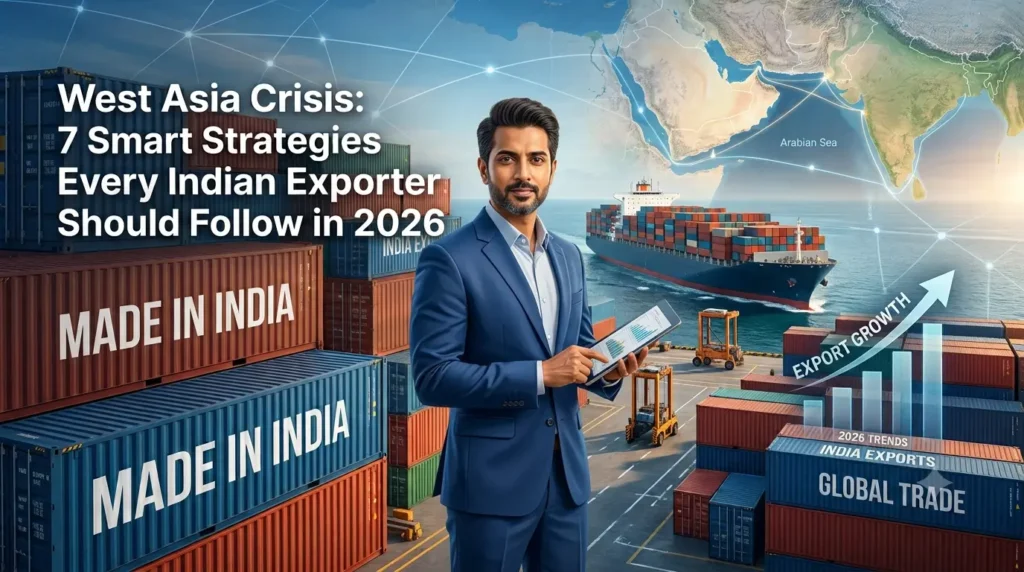
The West Asia Crisis Is a Wake-Up Call for Every Indian Exporter
If you are an exporter or planning to start an export business, the ongoing West Asia crisis is something you cannot ignore.
Whenever geopolitical tensions rise in an important trading region, the impact is felt across the world. Shipping routes become uncertain, freight charges increase, marine insurance becomes more expensive, and delivery schedules get delayed. Even businesses located thousands of kilometres away in India can be affected.
As an exporter from Assam, I have learned that international trade is not only about finding buyers. It is also about preparing for unexpected situations.
During my export journey, I have dealt with changing freight rates, shipping delays, documentation challenges, and continuous communication with overseas buyers. These experiences taught me one important lesson:
A successful exporter is not the one who never faces problems—it is the one who prepares for them before they happen.
Whether you export tea, spices, textiles, engineering goods, or handicrafts, these practical strategies can help protect your business during uncertain times.
Why Is the West Asia Crisis Affecting Indian Exporters?
West Asia is home to some of the world’s busiest shipping routes. When conflicts or geopolitical tensions increase, shipping companies often reroute vessels, increase freight charges, or face longer transit times.
This can result in:
- Higher freight costs
- Longer delivery times
- Increased marine insurance premiums
- Supply chain disruptions
- Delayed payments
- Reduced profit margins
For MSME exporters, even a small increase in logistics costs can significantly affect profitability.
The good news is that with proper planning, these risks can be managed.
1. Never Depend on Just One Export Market
One of the biggest mistakes exporters make is depending on a single country or region.
If political tensions, economic slowdown, or import restrictions affect that market, your business may suddenly lose orders.
I always believe exporters should continuously search for new buyers, even when business is going well.
For example, while exporting Assam tea, I realised that having buyers from different countries creates much greater stability than relying on just one destination.
Instead of putting all your efforts into one market, explore opportunities in:
- Europe
- Southeast Asia
- Africa
- Central Asia
- Australia
- Latin America
Diversification reduces business risk and creates long-term growth opportunities.
BusinessZindagi Tip: Don’t wait until a crisis begins to search for new buyers. Build relationships in multiple countries in advance.
2. Prepare for Higher Freight Costs
During global conflicts, freight charges can rise unexpectedly.
Many new exporters calculate their selling price based only on today’s freight rate. That can become a costly mistake if shipping costs increase before the cargo is dispatched.
Before confirming an export order:
- Get the latest freight quotation.
- Keep a small contingency margin in your pricing.
- Discuss possible delays with your buyer.
- Review freight rates regularly.
A little planning today can save thousands of rupees later.
From my own experience, I have seen freight costs change much faster than many first-time exporters expect. Always verify the latest shipping rates before finalising any quotation.
3. Marine Cargo Insurance Is Not an Expense—It’s Protection
Some exporters try to save money by reducing or avoiding marine cargo insurance.
This may reduce costs in the short term, but it can become very expensive if a shipment is delayed, damaged, or affected by unforeseen events.
During periods of geopolitical uncertainty, cargo faces additional risks such as:
- Route changes
- Port congestion
- Shipment delays
- Damage during extended transit
Proper marine cargo insurance protects your business against unexpected financial losses.
Think of insurance as a safety net for your export business—not as an optional expense.
Key Takeaways
✅ Don’t depend on a single export market.
✅ Plan for higher freight costs.
✅ Always protect shipments with adequate marine cargo insurance.
4. Keep Your Buyers Informed—Communication Builds Trust
One thing I have learned during my export journey is that buyers appreciate honesty more than excuses.
If you know a shipment may be delayed because of freight congestion or geopolitical issues, inform your buyer immediately. Most international buyers understand that global events are beyond your control, but they expect timely updates.
A simple email explaining the situation can strengthen your relationship and avoid misunderstandings.
BusinessZindagi Tip: A buyer who trusts you is more likely to place repeat orders, even after a delayed shipment.
5. Maintain Healthy Cash Flow
Global disruptions can also affect payments.
If shipments are delayed, payments may also be delayed. That’s why exporters should never depend on one payment to run their business.
Here are a few practical tips:
- Keep an emergency cash reserve.
- Follow up on outstanding payments regularly.
- Avoid giving unnecessary long credit periods.
- Use export finance facilities from banks whenever required.
Strong cash flow helps your business survive temporary disruptions without affecting daily operations.
6. Keep Finding New Buyers
One mistake many exporters make is stopping their marketing after getting a few regular customers.
I don’t believe that’s the right approach.
International markets change quickly. Some buyers stop importing, while new buyers enter the market every day.
Even today, I regularly look for new buyers for Assam tea because diversification is one of the best ways to reduce business risk.
BusinessZindagi Recommendation
Platforms like Volza Import Export Data help exporters identify companies that are already importing products similar to theirs. Instead of guessing who might buy your product, you can find active importers and study their shipment history.
👉 Looking for genuine international buyers? Explore Volza’s Import Export Data to discover verified importers, analyse shipment trends, and expand your export business with confidence.
Affiliate Disclosure :Some links on BusinessZindagi may be affiliate links. If you purchase through them, we may earn a small commission at no extra cost to you. This helps us continue publishing free, practical resources for entrepreneurs and exporters.
7. Stay Updated with Global Trade News
International trade changes every day.
Freight rates, exchange rates, shipping routes, trade agreements, and geopolitical developments all influence export business.
Spend at least 15–20 minutes every day reading reliable business news and government updates.
Follow:
- DGFT notifications
- Ministry of Commerce updates
- FIEO announcements
- Global shipping news
- International trade developments
Good decisions are based on good information.
My Personal Experience
I didn’t come from a business family.
Like many first-generation entrepreneurs, I learned export business through practical experience.
When I started exporting Assam tea, I realised that books can teach the process, but experience teaches the real lessons.
I have spent countless hours preparing export documents, coordinating with freight forwarders, discussing shipment schedules with buyers, and solving unexpected challenges.
Every shipment taught me something new.
Some shipments moved smoothly, while others required patience, quick decision-making, and constant communication.
These experiences have convinced me that risk management is just as important as finding international buyers.
That’s why I always encourage new exporters to prepare for uncertainty instead of hoping everything will go perfectly.
Final Thoughts
The West Asia crisis is undoubtedly creating challenges for exporters across the world.
However, every crisis also teaches valuable business lessons.
Exporters who diversify their buyers, manage freight costs wisely, purchase adequate insurance, maintain healthy cash flow, and stay informed will be much better prepared for future uncertainties.
Remember—
Successful exporters don’t wait for the next crisis. They prepare before it arrives.
If you are planning to start exporting or want to expand your international business, begin implementing these strategies today.
Frequently Asked Questions
How does the West Asia crisis affect Indian exporters?
The crisis can increase freight costs, insurance premiums, shipping delays, and supply chain disruptions, affecting the profitability of Indian exporters.
Should exporters stop exporting during the crisis?
No. Instead, exporters should diversify markets, improve planning, communicate proactively with buyers, and strengthen their risk management practices.
Why is buyer diversification important?
Selling to buyers in multiple countries reduces dependence on a single market and protects your business if one region experiences economic or political disruptions.
BusinessZindagi Pro Tip 💡
Don’t wait for business to slow down before looking for new buyers.
The best time to build new international relationships is when your current business is doing well. That way, if one market slows down, your business can continue growing through other markets.
Suggested Articles
- How to find Genuine Buyer for Export in 2026: What Has Changed and What Never Will
- India–UK FTA (CETA) 2026: Agreement Now in Force – Latest Updates, Benefits & MSME Export Guide
- Best Free Import Export Databases (Beginner Guide): How to Find Genuine Export Buyers Without Paying Thousands
- Exporter’s Dilemma: Should You Send Free Samples to Foreign Buyers?
About the Author
Tabrez is the founder of BusinessZindagi.com, a first-generation entrepreneur from Assam and an exporter with practical experience in the tea industry. Through BusinessZindagi, he shares actionable insights on exports, MSMEs, entrepreneurship, and government schemes to help Indian business owners build successful businesses.
AI & Editorial Disclosure
This article combines trusted public information with the author’s practical export experience. It has been reviewed to provide accurate, easy-to-understand, and actionable guidance for entrepreneurs and exporters.
Authentic References
- Ministry of Commerce & Industry (India): https://commerce.gov.in/
- Directorate General of Foreign Trade (DGFT): https://dgft.gov.in/
- Ministry of External Affairs (India): https://mea.gov.in/
- Federation of Indian Export Organisations (FIEO): https://www.fieo.org/
- International Maritime Organization (IMO): https://www.imo.org/
- Export Credit Guarantee Corporation (ECGC): https://www.ecgc.in/
If you found this article helpful, share it with fellow exporters and entrepreneurs. A single idea shared today could help someone avoid a costly mistake tomorrow.