
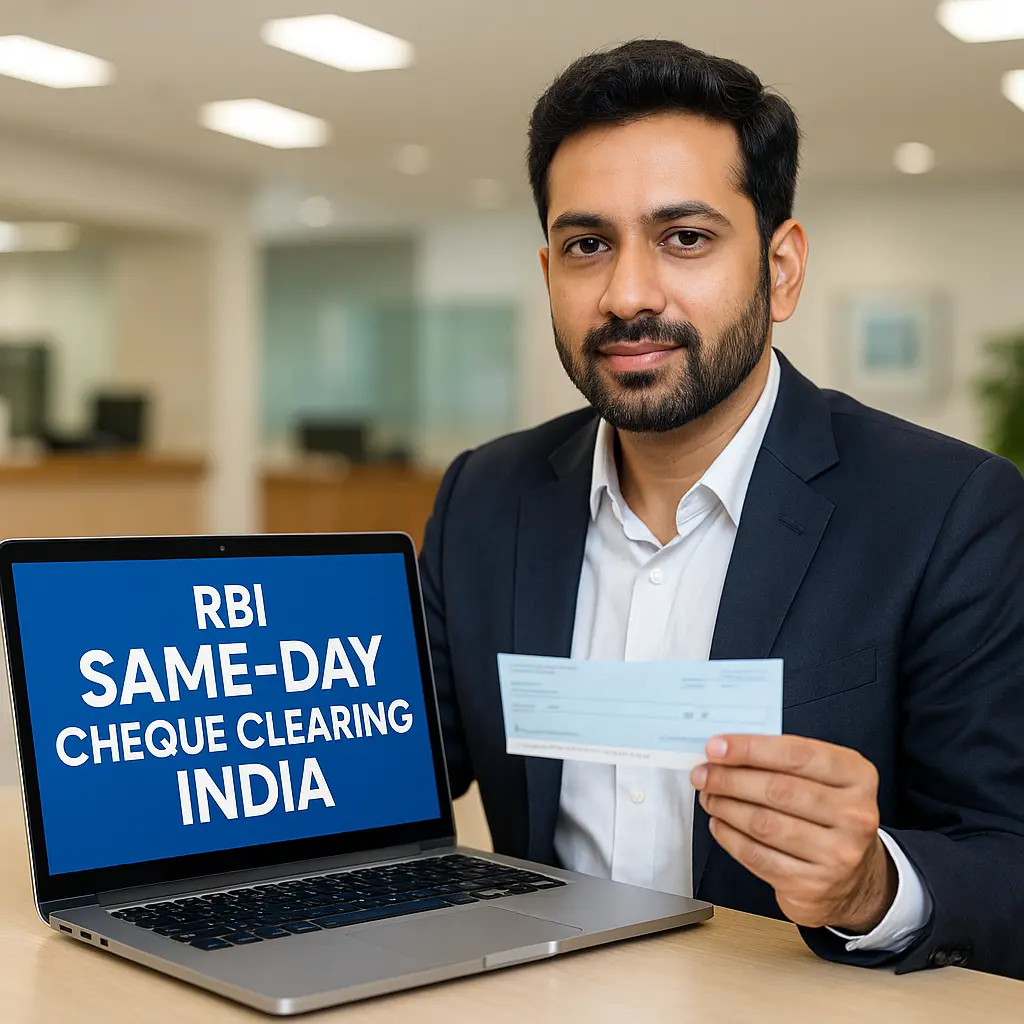
Remember When Cheques Took Two Days to Clear?
Those days are now history.
With the Reserve Bank of India introducing same day cheque clearing across India, banking transactions are set to move at the speed of UPI. What once took one or two working days will soon happen within hours — a move that could completely reshape how MSMEs and individuals handle cheques, payments, and even trust.
You may also like to read: Cheque Bounce vs cheque return: How One MSME Landed in Legal Trouble—and What You Must Learn from It.
What Is RBI’s Same Day Cheque Clearing Rule?
Starting October 4, 2025, the RBI launched a new cheque-processing mechanism under the Cheque Truncation System (CTS).
Here’s what it means in simple terms:
- All cheques presented before 4 p.m. will now be cleared on the same day.
- Banks must confirm whether a cheque is honoured or dishonoured by 7 p.m.
- From January 3, 2026 (Phase 2), this window tightens further — banks will have to confirm clearance within 3 hours of receiving a cheque.
- If no confirmation is made in time, the cheque may be deemed approved automatically for settlement.
In short: the float is gone.
This is RBI’s biggest step yet toward faster settlements, transparency, and reducing paper-based inefficiencies in the banking system.
Why RBI Brought Same Day Cheque Clearing Change
The RBI’s move is driven by one big idea — “speed and certainty.”
According to the RBI, India’s financial system has matured beyond the days when cheques needed physical presentation and multi-day processing. With the entire system now digitized, a cheque can be scanned, verified, and settled in hours.
This upgrade aims to:
✅ Reduce waiting time for customers.
✅ Bring cheque payments closer to the instant nature of UPI and IMPS.
✅ Cut frauds due to delays or post-dated manipulation.
✅ Improve liquidity and cash-flow management for businesses.
What ‘Same Day Cheque Clearing” Means for Cheque Bounce Cases
Now comes the part that everyone is asking:
What happens to cheque bounce under the same-day clearing system?
Let’s break it down 👇
🔸 Faster Bounces, Faster Action
If a cheque bounces (due to insufficient funds, mismatched signature, or any reason), the payee will know within hours, not days. This means:
- You can issue a legal notice or follow-up faster.
- Businesses can immediately act to recover payments or adjust credit terms.
🔸 Less “Buffer Time” for Drawers
Earlier, many people used the 1-2 day clearing window to manage their balance. Not anymore.
Now, if you issue a cheque, make sure funds are available immediately — because clearance could happen the same afternoon.
🔸 Legal Provisions Stay the Same
Section 138 of the Negotiable Instruments Act, 1881 still governs cheque-bounce penalties.
That means the same rules apply:
- Legal notice within 30 days of dishonour.
- 15 days grace to make payment.
- Non-payment can still lead to prosecution.
Only the timeline of discovery (finding out a cheque bounced) has changed — it’s now much faster.
Is “Same Day Cheque Clearing” Change Good or Bad?
✅ The Good:
- Instant clarity — no more “in process” anxiety.
- Easier cash-flow planning for MSMEs and freelancers.
- Reduces cheque-fraud and misuse.
- Makes the system more transparent and accountable.
⚠️ The Bad:
- Little to no buffer for the issuer; any shortfall can cause instant bounce.
- Technical rollout issues could create confusion during the transition period.
- Auto-approval risk — if the drawee bank misses the 3-hour window, the cheque could be deemed cleared, causing back-end reconciliation headaches.
What Businesses Should do now after “Same Day Cheque Clearing” rule
If you issue cheques:
- Always keep funds ready before issuing.
- Avoid post-dated cheques unless absolutely necessary.
- Use digital payment modes for time-sensitive transactions.
If you receive cheques:
- Deposit them early in the day for same-day processing.
- Track return memos digitally — you’ll get bounce alerts much faster.
- Update your accounting process for shorter payment cycles.
The Bigger Picture
This move is not just about faster cheque clearing — it’s about trust, technology, and time.
When cheques clear in hours, not days, the accountability in business transactions increases.
It rewards those who maintain transparency and punishes casual issuers who depend on “float time.”
So yes, for genuine businesses and disciplined individuals, the new system is a good change. For the careless — it’s a wake-up call.
FAQs
1️⃣ What is “Same-day cheque clearing India”?
It’s RBI’s new rule where cheques presented before 4 p.m. are processed and cleared within the same day — or within 3 hours (from 2026).
2️⃣ Will this stop cheque bounce cases?
No. Cheques can still bounce for reasons like insufficient funds or mismatched details. Only the clearing timeline has shortened.
3️⃣ Is cheque bounce still punishable?
Yes. The legal provisions under Section 138 of the Negotiable Instruments Act remain the same.
4️⃣ How should small businesses prepare?
Ensure funds availability before issuing cheques, deposit early, and shift gradually toward digital payments for faster, error-free settlements.
✍️ About the Author
BusinessZindagi Editorial Team
Simplifying finance and business for everyday entrepreneurs.
We decode RBI updates, MSME policies, and startup strategies in plain language — helping you grow confidently in a changing India.