
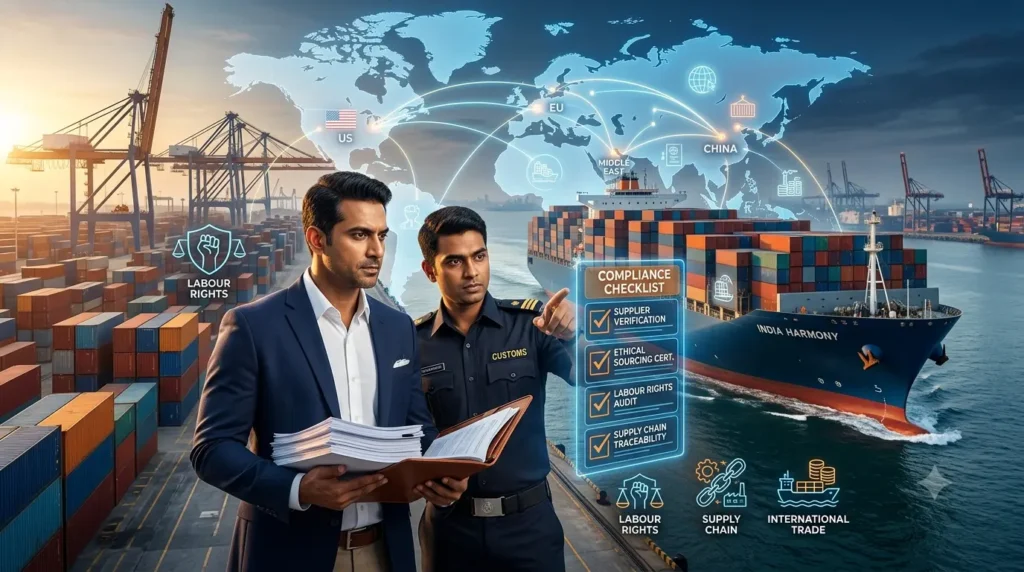
DGFT Bans Imports of Goods Produced Using Forced Labour
DGFT Notification No. 23/2026-27
Date: 13 July 2026
Subject: Prohibition on Import of Goods Produced Using Forced Labour – Insertion of Para 2.20B and Para 11.64 in the Foreign Trade Policy (FTP) 2023.
The Directorate General of Foreign Trade (DGFT) has amended India’s Foreign Trade Policy (FTP) to prohibit the import of goods produced using forced labour.
This is an important development for Indian importers, manufacturers, traders, and MSMEs that source products from overseas.
If your business imports raw materials, machinery, consumer goods, or finished products, it’s time to pay closer attention to your suppliers and supply chain.
What Has Changed?
DGFT has introduced a provision stating that goods manufactured or produced using forced labour cannot be imported into India.
The objective is to strengthen ethical sourcing and align India’s trade policy with internationally accepted labour standards.
This does not mean imports will become more difficult, but it does mean importers should exercise reasonable due diligence before sourcing products.
What Is Forced Labour?
According to the International Labour Organization (ILO), forced labour refers to work performed by people against their will under the threat of punishment, coercion, or intimidation.
Examples include:
- Bonded labour
- Human trafficking for labour
- Forced prison labour
- Workers compelled to work under threats or coercion
Who Could Be Affected?
The new rule is relevant for:
- Importers
- Trading companies
- Manufacturers importing raw materials
- E-commerce importers
- MSMEs sourcing products from overseas
If you regularly import products, reviewing your supplier selection process is a good business practice.
A Practical Question Every Importer Will Ask
“How do I know whether my supplier is using forced labour?”
The reality is that there is no single certificate that universally proves goods were not produced using forced labour.
Instead, importers should be able to demonstrate that they carried out reasonable due diligence before placing orders.
Think of it as “Know Your Supplier”, similar to how banks follow Know Your Customer (KYC) procedures.
What Documents Should You Ask Your Supplier For?
Before placing large import orders, consider requesting:
✅ Business Registration Certificate
✅ Factory Address and Manufacturing Details
✅ Export Licence (where applicable)
✅ Company Profile
✅ Declaration stating the goods are not produced using forced labour
✅ Human Rights or Labour Policy (if available)
✅ Social Compliance Audit or Certification (if available)
Not every supplier—especially smaller businesses—will have every document. However, asking these questions demonstrates responsible sourcing and due diligence.
Verify Your Supplier—Don’t Buy Only on Price
Apart from documents, ask practical questions such as:
- Who is the actual manufacturer?
- Is the supplier a trader or a factory?
- Where is the factory located?
- Do they use subcontractors?
- How long have they been exporting?
The more you understand your supplier, the lower your business risk.
BusinessZindagi Tip 💡
The cheapest supplier isn’t always the best supplier.
Choosing a reliable exporter with transparent business practices can help you avoid compliance issues, shipment delays, and long-term business risks.
Use Trade Intelligence Before Importing
One of the best ways to reduce supplier risk is to research their export history.
Before placing a large order, check:
- Whether the supplier has exported regularly
- Which countries they export to
- Shipment frequency
- Product descriptions
- Major overseas buyers
⭐ BusinessZindagi Recommendation
Tools like Volza can help importers analyse shipment data, identify established exporters, and better understand global trade patterns before finalising a supplier.
While shipment data cannot confirm whether forced labour was used, it can help verify that you’re dealing with an experienced exporter with a proven export history.
What Should Importers Do Now?
Instead of worrying, businesses should take a few simple steps:
✔ Know your supplier.
✔ Maintain proper supplier records.
✔ Request ethical compliance declarations where possible.
✔ Keep documentation related to your sourcing decisions.
✔ Stay updated with DGFT notifications and Foreign Trade Policy changes.
Responsible sourcing is becoming an increasingly important part of international trade.
Final Thoughts
The DGFT’s latest amendment is a reminder that international trade today is not only about price and quality.
Importers are increasingly expected to understand their supply chains, work with reliable suppliers, and maintain proper documentation.
Businesses that follow good due diligence practices today will be better prepared for future compliance requirements and will build stronger, more sustainable international partnerships.
Key Takeaways
- DGFT has prohibited imports of goods produced using forced labour.
- There is no universal “forced labour free” certificate.
- Importers should carry out reasonable supplier due diligence.
- Ask suppliers for business, factory, and ethical compliance information.
- Use shipment intelligence and supplier verification before placing large orders.
- Maintain proper documentation to demonstrate responsible sourcing.
Suggested Articles
- FOB vs CIF: Which Is Better for Exporters and Importers?
- India–UK CETA Explained for MSMEs
- Best Free Import Export Databases (Beginner Guide): How to Find Genuine Export Buyers Without Paying Thousands
- Import from China or Start Manufacturing in India? What is MSMEs future after next 5 years..
Official References
- Directorate General of Foreign Trade (DGFT): https://dgft.gov.in
- Ministry of Commerce & Industry: https://commerce.gov.in
- International Labour Organization (ILO): https://www.ilo.org
- DGFT Notification – Prohibition on Import of Goods Produced Using Forced Labour (Insertion of Para 2.20B and Para 11.64 in FTP 2023)
According to the notification:
“The import of goods produced or manufactured, wholly or in part, through the use of forced labour is prohibited.” It also inserts Para 2.20B and Para 11.64 into the Foreign Trade Policy (FTP) 2023 and provides the framework for investigating and prohibiting such imports.
AI Disclosure: This article was researched, structured, and edited with the assistance of AI. It has been reviewed and enriched with practical insights and real-world experience by the BusinessZindagi editorial team.
Editorial Disclaimer: This article is for informational purposes only and should not be considered legal, tax, or professional trade advice. Always refer to official government notifications or consult a qualified professional before making business decisions.
Affiliate Disclosure: This article may contain affiliate links. If you purchase through these links, BusinessZindagi may earn a small commission at no extra cost to you. This helps us continue creating free, practical business content.