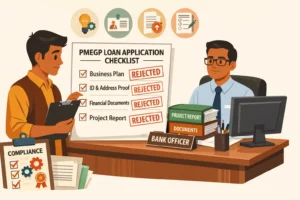
Imagine having a promising idea, energy, and drive — but being turned away from banks simply because you don’t own land, a building, or assets to pledge. That was my early entrepreneurial life. Traditional lenders assessed me not on my potential but on the value of things I didn’t own. For many first-generation business owners, this is the harsh reality.
A collateral free business loan removes that invisible wall. It says: “We’ll trust your business idea, not your property.” It’s a lifeline to people who have talent, willpower, and dreams — but not property deeds.
Why collateral free business loan matters:-
These loans are more than financial instruments — they’re social equalizers. Here’s why they matter:
- Breaking the wealth barrier: Young entrepreneurs or economically weaker individuals often lack collateral. Collateral-free loans let them compete on ideas, not assets.
- Faster entry into business: Without lengthy asset valuation or guarantee negotiations, credit decisions can move faster — critical in early business days.
- Building a credit track record: Even modest, timely repayments help you build credit history, unlocking bigger loans later.
- Leveling systemic inequality: Schemes targeted at women, SC/ST, or rural entrepreneurs help broaden access where finance has historically been concentrated.
When the underbanked get credit, they start micro businesses, find dignity, and fuel local economies.
You may also like to read: How CGTMSE Loan Helped My Small Business Grow Without Collateral: A very important scheme for New Entrepreneurs.
My Journey — From Rejection to Redemption (Thanks, Mudra)
When I first knocked on banks’ doors seeking a small business loan, I was repeatedly told: “No collateral, no loan.” I was stuck in limbo — good plan, no support.
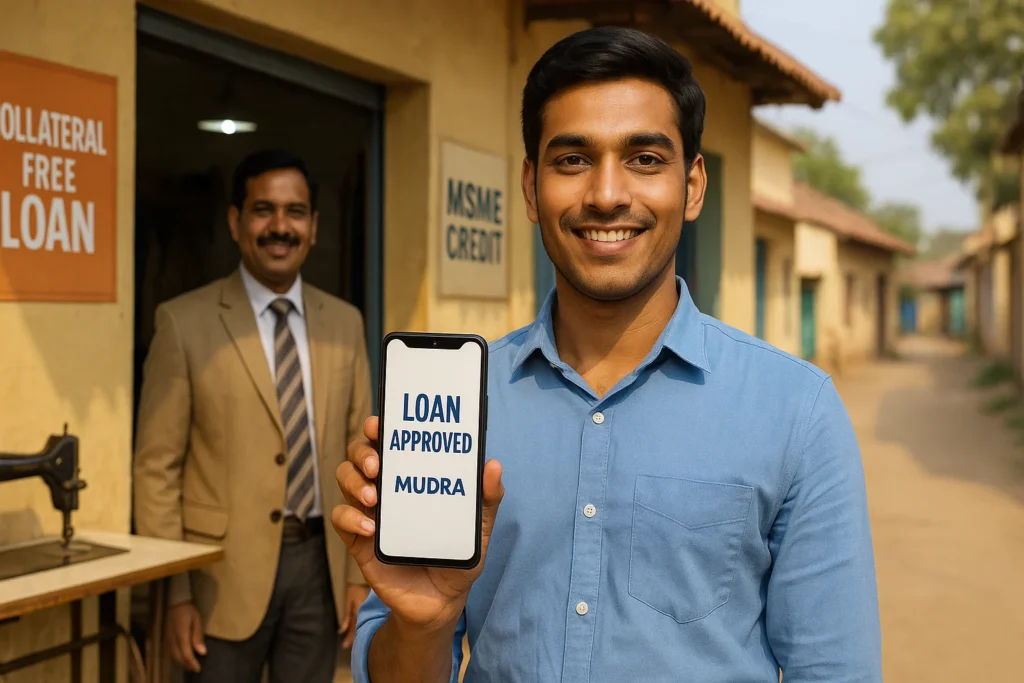
Then came Mudra. As soon as I discovered Pradhan Mantri Mudra Yojana, a genuine MSME collateral free business loan offering, I took a leap of faith. Thanks to Mudra’s design, which allows small amounts without property collateral (under specified limits), I secured my first business loan. That was the turning point: capital in hand, confidence intact, and momentum regained.
Collateral Free business loan Schemes in India (2025’s Active Options & Their Launches)
Here are the key collateral-free or guarantee-backed loan schemes in India as of 2025 — with launch dates, how they work, and official sources:
| Scheme | Launch / Start | Purpose & Details |
|---|---|---|
| CGTMSE (Credit Guarantee Fund Trust for Micro and Small Enterprises) | 2000 (operational form) | It gives guarantee cover to lenders so they can extend collateral-free credit to micro and small enterprises. Source: MSME/CGTMSE documents. |
| Pradhan Mantri Mudra Yojana (PMMY / MUDRA) | 8 April 2015 | Offers collateral-free loans up to specified limits to micro & small businesses (non-farm, non-corporate). |
| PMEGP (Prime Minister’s Employment Generation Programme) | 15 August 2008 (merged from earlier schemes) | Credit-linked subsidy and easier small business credit including components with low collateral requirements. |
| Stand-Up India | 5 April 2016 | Bank loans from ₹10 lakh to ₹1 crore for SC/ST and women, supported by credit guarantee or special margins. |
| ECLGS / GECL (Emergency Credit Line Guarantee Scheme) | May 2020 | A pandemic-era scheme offering fully guaranteed, collateral-free working capital and term loans to MSMEs. |
| NCGTC / Guarantee Products & State Programs | Various years | Additional guarantee windows (via National Credit Guarantee Trustee Company and state schemes) support collateral-free lending for startups, MSMEs, and targeted sectors. |
Each scheme has evolving limits, conditions, guarantee percentages, and sector coverage. Always consult the latest official guidelines.
Sources: MUDRA, MSME, CGTMSE, PIB, NCGTC scheme portals.
Mechanics Behind Collateral-Free Lending — How Do They Function?
- Guarantees take on risk: Agencies like CGTMSE, NCGTC or scheme-specific guarantee funds promise to absorb a portion of default risk, letting banks lend without property collateral.
- Caps & categories: Not all loans are collateral-free—schemes set maximum limits (e.g., up to ₹10 lakh or ₹1 crore depending on scheme).
- Documentation still matters: Even without collateral, lenders require identity, business proof, bank statements, Udyam registration, etc.
- Fees & guarantee charges: Lenders may levy nominal guarantee premium or fees — the cost of substituting collateral with risk cover.
Why These Loans Are Especially Critical for First-Generation Entrepreneurs
- Access without legacy assets: Many first-time business owners don’t come from wealthy families — these loans give them access based on merit, not inheritance.
- Faster, fairer assessment: New entrepreneurs can be judged on their business plan, potential, and income projections rather than property valuations.
- Inclusive upliftment: Women, rural, SC/ST, and low-income groups gain access to credit and can build enterprises, employment, and dignity.
- Formalizing the informal: As more micro businesses access formal credit, they become part of the organized economy — facilitating further growth.
Steps to Apply — Tips for Collateral-Free Loan Seekers
- Gather required documents: Udyam registration, Aadhaar, PAN, bank statements, basic business plan or cash flow.
- Check guarantee scheme eligibility: Ask your lender whether CGTMSE / NCGTC guarantee cover applies.
- Apply at multiple lenders: Public banks, private banks, NBFCs and MFIs may have varying interest rates and schemes.
- Start small, repay well: Even a modest loan with on-time repayment builds your creditworthiness.
- Stay updated on scheme changes: Terms, caps, guarantee percentages often change — check the official site before applying.
Things to Be Careful About (Risks & Limitations)
- Overborrowing risk: With ease of access, some entrepreneurs may borrow from multiple lenders irresponsibly.
- Higher costs of risk: Because lenders take more risk, interest rates or guarantee premiums may be higher than secured loans.
- Scheme changes: Some programs are temporary or change over time (e.g. ECLGS was specifically a pandemic response).
- Strict underwriting still applies: “Collateral-free” doesn’t mean “no scrutiny.” Lenders still evaluate business viability, cash flows and credit history.
you may also like to read: The Dark Side of Collateral-Free Business Loans: My Hard-Learned Lesson Every Entrepreneur Should Know.
Collateral-Free Loans — The Bridge to Opportunity
Collateral free business loans are not merely financial instruments but tools of equity and empowerment. They help level the playing field so talented, driven entrepreneurs — even without property — can build, scale, and dream. They matter most to first-generation founders, low-income aspirants, women and rural business owners.
My own journey — from rejection after rejection to finally accessing a Mudra loan — is proof that these schemes can unlock human potential. As you embark on your entrepreneurial path, explore collateral-free business loan options, build a strong repayment record, and let opportunity, not assets, define your trajectory.
🏢 Top Private Lenders Offering Collateral-Free Business Loans
| Lender | Loan Range | Highlights |
|---|---|---|
| HDFC Bank | ₹50,000 – ₹50 lakh | Fast processing, digital onboarding |
| ICICI Bank | ₹1 lakh – ₹50 lakh | Flexible eligibility, online application |
| Bajaj Finserv | ₹1 lakh – ₹45 lakh | Pre-approved offers, low paperwork |
| Lendingkart | ₹50,000 – ₹2 crore | Quick funding for MSMEs |
| NeoGrowth | ₹1 lakh – ₹75 lakh | Based on daily card transactions |
📄 Documents You’ll Typically Need
- PAN & Aadhaar Card (Individual & Business)
- Udyam (MSME) Registration
- ITR for the last 1–2 years
- GST returns (if applicable) and copy of GST registration certificate also
- 6–12 months of bank statements
- Business incorporation proof such as trade license copy
💡 Tips From My Experience
- Be honest with your financials – lenders will verify everything.
- File taxes regularly – clean ITRs build credibility.
- Maintain your credit score above 720 atleast – it’s often a deal breaker.
- Start with NBFCs or fintechs – they’re more flexible than traditional banks,but they charge higher interests .
- Follow up professionally – responsiveness matters.
Official Sources & References
PMEGP / KVIC scheme literature
MUDRA — official site and scheme pages (Pradhan Mantri Mudra Yojana)
CGTMSE — guarantee scheme details from MSME / CGTMSE portals
ECLGS / GECL — government / NCGTC announcements and scheme texts
Stand-Up India scheme documentation (SBI / government portals
About the Author
Tabrez is an entrepreneur, exporter, and founder of Business Zindagi, a platform dedicated to MSMEs, small businesses, and startups. After facing real financial and operational challenges in his own entrepreneurial journey, he now writes practical, experience-based guides that help business owners avoid costly mistakes and grow with clarity.
Disclaimer
The information in this article is for educational and awareness purposes only. It is based on general industry practices, publicly available data, and the author’s personal experience as an entrepreneur. This content should not be considered financial, legal, or professional loan advice.
Loan terms, interest rates, eligibility, and lender policies vary widely across banks, NBFCs, and fintech companies. Before applying for any collateral-free or secured business loan, readers are strongly advised to:
- Review the official terms and conditions of the lender,
- Consult a certified financial advisor if needed, and
- Carefully evaluate their own financial situation, cash flow, and repayment ability.
The author and Business Zindagi are not responsible for any financial decisions or consequences arising from the use of this information. Always borrow responsibly.