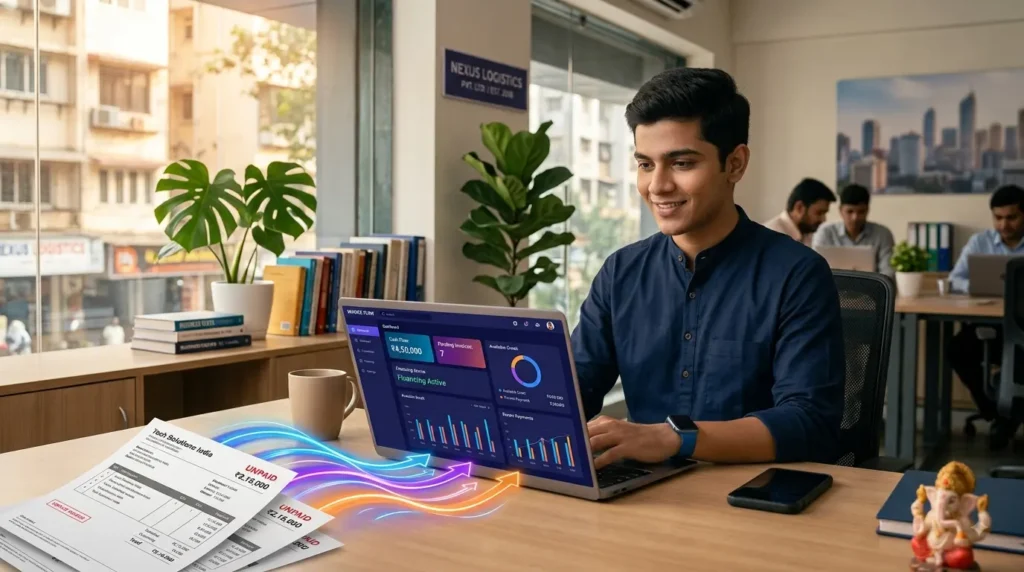
If your MSME sells to large companies, PSUs, government departments or other eligible buyers, TReDS can help you convert eligible unpaid invoices into working capital instead of waiting for the normal payment cycle.
And in 2026, TReDS has become even more important. The Ministry of MSME’s current portal specifically asks MSME units to onboard on TReDS and currently points users toward RXIL, M1xchange and Invoicemart.
But how do you actually register?
Here is the simple step-by-step process.
🚨 Latest Update — 25 September 2026
CGTMSE guarantee cover is now live on TReDS. The Ministry of MSME has integrated the facility with TReDS platforms including M1xchange, RXIL and DTX (KredX).
This can help eligible MSMEs access working capital against their trade receivables instead of waiting for buyers to make payment.
Important: CGTMSE guarantee coverage is subject to applicable eligibility and transaction conditions; it does not automatically apply to every TReDS invoice.
Source: Ministry of MSME, Government of India.
What Is TReDS Registration for MSMEs?
TReDS (Trade Receivables Discounting System) is an RBI-regulated electronic platform that facilitates financing of MSME trade receivables.
Instead of waiting for a buyer to pay an invoice after 30, 60 or 90 days, an eligible receivable can be financed through TReDS.
The basic flow is:
MSME → Invoice → Buyer accepts → Financiers bid → MSME gets funds → Buyer pays financier
RBI describes a Factoring Unit (FU) as the electronic representation of an invoice or bill of exchange representing a confirmed buyer obligation.
Who Can Register on TReDS?
For the MSME side, the platform is designed for MSME sellers with eligible trade receivables.
You are more likely to benefit if your business supplies:
- Large companies
- PSUs
- Government departments
- CPSEs
- Other eligible corporate buyers
The Ministry of MSME itself currently encourages MSME units to onboard on TReDS.
💡 BusinessZindagi Tip
If your biggest problem is “sales are good, but customers take too long to pay,” TReDS is worth exploring.
TReDS Registration for MSMEs: Documents & Details You Should Keep Ready
Exact requirements can vary by TReDS operator and your business structure, so check the platform’s current onboarding checklist.
However, keep your basic business and financial information ready, such as:
- Udyam Registration details
- PAN
- GSTIN, where applicable
- Business/constitution details
- Registered business address
- Bank account details
- Authorised person’s details
- Business/contact information
- KYC documents
- Digital banking/payment details where required
Don’t have Udyam Registration?
Start with the official Udyam Registration portal rather than a third-party website.
How to Register on TReDS as an MSME
Step 1 — Choose a TReDS platform
The Ministry of MSME’s current MyMSME portal lists these three platforms for MSME onboarding:
RXIL | M1xchange | Invoicemart
Don’t choose a platform simply because you saw an advertisement.
First ask your major customers:
“Which TReDS platform do you use for MSME invoices?”
That can make the onboarding process much easier.
Step 2 — Visit the platform’s official website
Go directly to the operator’s website and look for the MSME Seller / Seller Registration / Onboarding option.
Avoid registering through random websites, agents or links sent through WhatsApp.
Step 3 — Select yourself as the MSME seller
TReDS has different participants.
For your business, you generally need to register as the seller/MSME supplier.
RBI’s framework identifies sellers, buyers and financiers as the key participants in TReDS.
Step 4 — Enter your business details
You’ll typically need to provide your business identification and contact information.
Keep your:
PAN + GST details + Udyam details + bank information
close at hand.
Step 5 — Complete KYC and verification
The platform will verify the information submitted and may ask for additional documents depending on your business constitution and onboarding requirements.
Don’t upload documents to unofficial websites.
Step 6 — Add your buyer
This is one of the most important steps.
TReDS financing works around an eligible receivable from a buyer.
So identify the companies, PSUs or government buyers who owe your business money.
Example
You supply goods worth:
₹10 lakh
Buyer payment period:
60 days
Instead of simply waiting 60 days, an eligible invoice may be submitted through TReDS for financing.
Step 7 — Create or submit the invoice/Factoring Unit
Once you have an eligible invoice, the receivable can be represented through a Factoring Unit (FU) on TReDS.
RBI says an FU can be created either by the MSME seller or the buyer. When the seller creates it, it is called factoring; when the buyer creates it, it is called reverse factoring.
Step 8 — Buyer confirms the invoice
This is critical.
TReDS financing isn’t simply:
Upload invoice → automatically receive money
The buyer needs to accept/confirm the relevant receivable according to the platform’s process.
Once confirmed, financiers can participate in financing the receivable.
Step 9 — Compare financing offers
Financiers can bid to finance eligible receivables.
You can then evaluate the available offer and the applicable financing cost before accepting it.
Remember:
TReDS is not free money.
You are effectively receiving your receivable earlier, so compare the financing cost with the benefit of getting cash immediately.
Step 10 — Receive the funds
Once the transaction is completed, the MSME receives the financed amount according to the platform’s settlement process.
The buyer subsequently pays according to the agreed arrangement.
RBI’s TReDS framework is designed to facilitate financing and settlement of MSME trade receivables electronically.
TReDS Registration vs TReDS Invoice Discounting
Don’t confuse these two.
TReDS Registration
You create your MSME seller account/onboard your business.
Invoice Discounting
You use the platform to seek financing against an eligible receivable.
So:
Register first → onboard buyer → submit eligible invoice → buyer acceptance → financier bids → financing
Is TReDS Registration Free?
Don’t assume that every TReDS operator has exactly the same fee structure.
Registration, transaction and financing charges can depend on the operator and transaction.
Before accepting an offer, check:
- Financing rate
- Platform charges
- Other applicable fees
- Settlement terms
- Net amount you will actually receive
⚠️ 5 Common TReDS Registration Mistakes
1. Registering through a fake website
Use the official operator website.
2. Not keeping Udyam/GST/PAN information consistent
Mismatched business details can create verification problems.
3. Registering without identifying your buyers
TReDS works around actual eligible receivables.
4. Assuming every invoice will automatically be financed
Buyer acceptance and financier participation matter.
5. Looking only at the headline financing rate
Always check the actual net amount you receive after applicable charges.
What Has Changed for MSMEs in 2026?
TReDS is becoming increasingly important in India’s MSME payment ecosystem.
The Union Budget 2026-27 proposed stronger use of TReDS for CPSE purchases from MSMEs, along with measures involving CGTMSE-backed invoice discounting and GeM–TReDS integration.
For MSMEs supplying government-linked buyers, this makes TReDS particularly worth understanding.
The practical takeaway: don’t wait until you have a serious cash-flow problem to learn how TReDS works.
🚀 BusinessZindagi Tip
If you regularly sell to large buyers, make a simple list:
| Buyer | Outstanding | Due in | TReDS? |
|---|---|---|---|
| Buyer A | ₹8 lakh | 45 days | Check |
| Buyer B | ₹12 lakh | 60 days | Check |
| Buyer C | ₹5 lakh | 30 days | Check |
Then ask each major buyer:
“Which TReDS platform do you use for MSME receivables?”
That one question can save you a lot of time.
TReDS + Better Business Records
Once you start dealing with multiple invoices and receivables, proper accounting becomes increasingly important.
Zoho Books provides invoicing, expense tracking, inventory, GST reporting, payment reminders and other accounting functions for Indian businesses.
CTA:
👉 Keep your invoices and business finances organised with Zoho Books.
For Exporting MSMEs: Find Better Buyers
TReDS helps with receivables after you make a sale.
But if you’re an exporting MSME, the bigger question is often:
Who should I sell to in the first place?
For exporters and importers, Volza trade data can help research import-export shipment data, buyers and suppliers across international markets. Volza currently offers an affiliate program for publishers and business-focused websites.
CTA:
👉 Looking for overseas buyers? Explore Volza’s trade data.
Final Takeaway
TReDS registration isn’t the end goal.
The real objective is to build a faster sales → invoice → financing → cash-flow cycle.
If your MSME frequently waits weeks or months for large customers to pay, onboarding on TReDS can be worth exploring.
Register → connect your buyers → submit eligible receivables → compare financing → improve cash flow.
FAQs
Is TReDS registration mandatory for MSMEs?
The Ministry of MSME currently encourages MSME units to onboard on TReDS. MSMEs participate primarily as sellers; applicability can depend on the transaction and current rules.
Which TReDS platforms can MSMEs use?
The current MyMSME portal lists RXIL, M1xchange and Invoicemart for MSME onboarding.
Do I need Udyam Registration?
TReDS onboarding requirements can vary by operator, but MSMEs should have their Udyam/business identification information ready.
Can TReDS finance any invoice?
No. The receivable must meet the applicable requirements, and buyer acceptance and financier participation are important.
What is a Factoring Unit?
An FU is the electronic representation of an invoice or bill of exchange representing a confirmed buyer obligation.
🔗 Suggested BusinessZindagi Reads
- Already using TReDS? → TReDS in India: Complete Guide
- Want the latest TReDS mandate? → TReDS Portal Mandate 2026
- Need Udyam first? → Udyam Registration Guide
- Facing delayed payments? → MSME Digital Platforms & SAMADHAAN 2.0
- Want to improve MSME creditworthiness? → CIBIL Rank & Company Credit Report
🔗 Official Sources
- RBI — TReDS FAQs
- Ministry of MSME — MyMSME Portal
- Official Udyam Registration Portal
- Ministry of MSME — Know Your Lender Handbook
🤖 AI & Editorial Disclaimer
Editorial: This article is for general educational purposes and is not financial, legal or professional advice. TReDS rules and platform requirements can change; verify current requirements with RBI, the Ministry of MSME and the relevant TReDS operator before acting.
AI: Parts of this article were prepared with AI assistance and reviewed/edited for clarity and practical usefulness.
Affiliate: Some links may be affiliate links. If you purchase through them, BusinessZindagi may earn a commission at no additional cost to you. This does not change our editorial recommendations.